
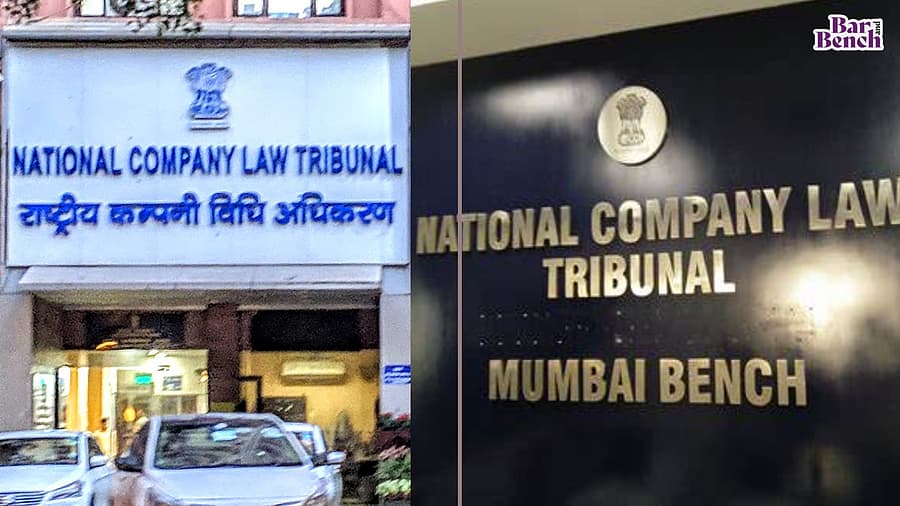
Supreme Court: MCA Hijacked NCLT Administration, Impinging Autonomy
Summary
- The Supreme Court expressed serious concern that the National Company Law Tribunal's administration has been "completely hijacked" by the Ministry of Corporate Affairs.
- A bench comprising CJI Surya Kant and Justices Joymalya Bagchi and V Mohana made these observations during a suo moto plea on NCLT infrastructure and staff issues.
- The Court stated that the Ministry appeared determined to exercise complete control over the tribunal, which impinges on its autonomy.
- These concerns were triggered by a counsel's submission about the MCA outsourcing NCLT staff recruitment to a foreign company.
- The outsourcing contract, awarded on October 6, aims to deploy administrative personnel and could displace existing contractual employees from November 1 or 2.
Judicial Scrutiny of NCLT Administration
This direct challenge to the Ministry's involvement suggests a deep concern within the judiciary about the separation of powers and the functional integrity of a key adjudicatory body for corporate insolvency and company law matters.
The Supreme Court of India recently voiced profound apprehension regarding the operational independence of the National Company Law Tribunal (NCLT), asserting that its administration has been "completely hijacked" by the Ministry of Corporate Affairs (MCA). This significant observation came from a bench comprising Chief Justice of India Surya Kant, alongside Justices Joymalya Bagchi and V Mohana, during proceedings for a suo moto plea. The plea itself addresses critical issues plaguing NCLT benches nationwide, including insufficient infrastructure, numerous staff vacancies, and overarching administrative challenges that impede effective judicial processes.
The Court's remarks underscored a perception that the MCA is exerting undue influence over the tribunal's internal workings. Justices explicitly stated their compulsion to observe this "hijacking," identifying it as a fundamental problem that "is impinging with the autonomy of the institution." This direct challenge to the Ministry's involvement suggests a deep concern within the judiciary about the separation of powers and the functional integrity of a key adjudicatory body for corporate insolvency and company law matters. The Court's strong stance indicates a desire to protect the NCLT from what it views as executive overreach.
Outsourcing Sparks Deeper Concerns
The Supreme Court's strong comments regarding the NCLT administration Supreme Court relationship were notably prompted by specific concerns raised during the hearing. A counsel involved in a related petition brought to light the Ministry of Corporate Affairs' decision to outsource the recruitment of NCLT administrative personnel to a private entity. This move, the counsel argued, exemplified the pervasive Ministry Corporate Affairs NCLT control that the judiciary found so troubling, suggesting a pattern of administrative interference.
Details emerged that the Ministry had, on October 6, awarded a contract to a foreign company operating within India. This contract's explicit purpose was to deploy various administrative staff, including Deputy Registrars, Assistant Registrars, and stenographers, across NCLT benches. The counsel further contended that this arrangement could lead to the immediate displacement of existing contractual employees as early as November 1 or 2, raising serious questions about job security, procedural fairness, and the rationale behind such a significant administrative change impacting the tribunal's workforce.
Autonomy Under Threat
The judiciary's pointed critique highlights a fundamental tension concerning the Supreme Court NCLT functioning and its administrative oversight. The bench articulated that the Ministry appeared intent on maintaining a "complete grip over the institution," a situation the Court described as "most unfortunate." This sentiment reflects a broader concern about the potential for executive interference to compromise the impartiality and effectiveness of judicial or quasi-judicial bodies, which are designed to operate independently.
The issue of NCLT staff recruitment outsourcing to a private firm, particularly one that is foreign-owned but operating in India, served as a tangible example of the MCA's perceived overreach. Such administrative decisions, when viewed through the lens of the Supreme Court, raise critical questions about transparency, accountability, and the long-term impact on the NCLT's ability to operate independently in its crucial role. The Court's intervention in this suo moto plea signals a serious intent to safeguard the tribunal's institutional autonomy against what it perceives as excessive executive control, aiming to ensure its proper and unbiased operation.
Practical Implications
Lawyers should be aware that the Supreme Court has expressed serious concerns regarding the Ministry of Corporate Affairs' influence over NCLT administration. This could potentially impact the perceived independence and operational efficiency of the NCLT, which may affect case timelines, procedural fairness, and the overall judicial process for corporate insolvency and company law matters. Practitioners should monitor further developments in this suo moto plea as it may lead to significant administrative reforms or judicial directives concerning NCLT operations.
Source
How does this affect you?
Get an AI analysis of this article grounded in your jurisdictions, practice areas, and any policy documents you've uploaded to Wansom.
Finish Reading the Full Story and the Expert Analysis.
Wansom is AI and can make mistakes.