
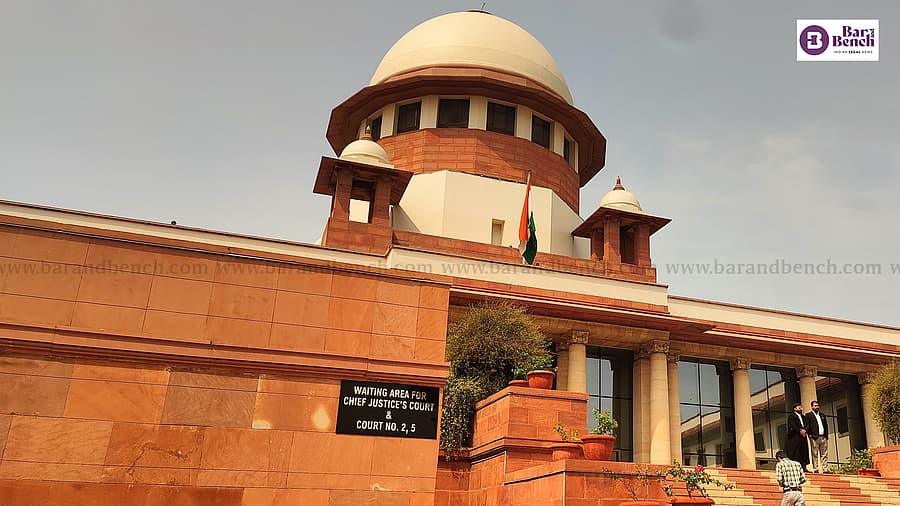
Supreme Court: Upholds Anil Tuteja Bail in Chhattisgarh Scam Cases
Summary
- The Supreme Court declined to interfere with the regular bail granted to former IAS officer Anil Tuteja.
- The bail pertains to his involvement in the alleged liquor scam and custom rice milling scam cases.
- The Court clarified that High Court observations during bail proceedings are not binding on the trial court.
- The Chhattisgarh government retains the right to seek bail cancellation if Tuteja misuses his liberty.
- The Supreme Court emphasized that strong suspicion alone does not constitute legal proof for conviction.
The Supreme Court's Decision
The state government retains the right to seek cancellation of bail if any misuse of the granted liberty is established.
The Supreme Court of India recently declined to intervene in the regular bail previously granted to Anil Tuteja, a former Indian Administrative Service officer from the Chhattisgarh cadre. This decision came after the Chhattisgarh government filed appeals challenging the bail orders issued in connection with two prominent cases: the alleged liquor scam and the custom rice milling scam. A bench comprising Chief Justice of India Surya Kant, Justice Joymalya Bagchi, and Justice V Mohana presided over the matter, ultimately dismissing the state's petitions.
The apex court's refusal to set aside the bail means that Mr. Tuteja will continue to remain out of custody, upholding the High Court's earlier decisions. These bail orders, which the state government sought to overturn, were initially issued in December or January, allowing the former IAS officer to be released. The Supreme Court Anil Tuteja bail decision reinforces the principle that once bail is granted, its cancellation requires specific grounds, typically involving a misuse of the liberty provided.
Judicial Directives on Bail Conditions
During the proceedings, the Supreme Court issued crucial clarifications regarding the scope and implications of bail orders. The bench explicitly stated that any observations made by the High Court while granting bail to Anil Tuteja were solely for the limited purpose of deciding his bail applications. Consequently, these findings are not intended to influence or bind the trial court as it adjudicates the substantive merits of the corruption cases, including the Chhattisgarh liquor scam bail and the Chhattisgarh rice milling scam bail. This distinction is vital for ensuring that the trial court remains impartial and bases its judgment strictly on evidence presented during the trial, rather than preliminary observations from bail hearings.
Furthermore, the Supreme Court underscored the state's prerogative to seek the cancellation of Mr. Tuteja's bail should there be any evidence of him misusing his granted liberty. Chief Justice Kant specifically advised that if any such misuse of the concession of bail were to occur, the Chhattisgarh government could approach the High Court for immediate cancellation. This provision serves as an important safeguard, allowing authorities to address potential abuses of the bail system and ensuring that individuals adhere to the conditions under which their freedom is granted. This highlights that while the Supreme Court did not interfere with the initial bail, the state retains a powerful mechanism to address non-compliance.
Principles of Justice and Due Process
The Supreme Court's ruling also touched upon fundamental principles of criminal jurisprudence, emphasizing that strong suspicions of corruption, while potentially valid, cannot substitute for concrete legal proof during a trial. The court cautioned against equating suspicion with evidence, reinforcing the high bar required for conviction. This distinction is particularly relevant in high-profile cases like those involving Anil Tuteja corruption cases bail, where public perception might be swayed by initial allegations. The judiciary's role is to ensure that justice is served based on established facts and legal evidence, not mere conjecture.
This decision, therefore, serves as a reminder of the delicate balance between an individual's right to liberty and the state's interest in prosecuting alleged offenses. It clarifies that while bail provides temporary freedom, it comes with responsibilities, and any deviation from these can lead to its revocation. The Supreme Court's refusal to interfere with Anil Tuteja's bail, coupled with its directives on the limited nature of High Court bail observations trial and the state's right to seek cancellation for misuse, collectively outlines important parameters for the administration of justice in India, particularly concerning the handling of bail in corruption cases.
Practical Implications
This ruling reinforces that High Court observations made during bail proceedings are for the limited purpose of granting bail and do not bind the trial court on the merits of the case. Lawyers should advise clients that while bail may be granted, the state retains the right to seek cancellation if bail conditions are misused, emphasizing the need for strict compliance with such terms.
Source
How does this affect you?
Get an AI analysis of this article grounded in your jurisdictions, practice areas, and any policy documents you've uploaded to Wansom.
Finish Reading the Full Story and the Expert Analysis.
Wansom is AI and can make mistakes.