
Supreme Court: Krishna Janmabhoomi Shahi Idgah Adjournments Slammed
Summary
- The Supreme Court expressed frustration over repeated adjournments in the Krishna Janmabhoomi-Shahi Idgah mosque dispute, calling the matter "jinxed."
- Justices Sanjay Kumar and Sanjeev Sachdeva made the remarks while hearing a plea challenging an Allahabad High Court order that appointed a representative for Hindu devotees.
- The Court's comments followed reports that plaintiffs in the High Court had failed to reach an understanding, despite earlier hopes for a settlement among the Hindu side.
- The underlying civil suit, filed on behalf of Bhagwan Shri Krishna Virajman and Hindu devotees, seeks the removal of the Shahi Idgah Masjid, claiming it was built on Krishna Janmabhoomi land.
- Despite stating its intent to hear the case on its merits, the Supreme Court adjourned the plea to November 6 due to a lack of time.
Supreme Court's Frustration Over Adjournments
The Court's frustration underscores the challenges inherent in managing complex, multi-party religious land disputes, particularly when internal disagreements among plaintiffs impede progress.
The Supreme Court of India recently expressed significant exasperation regarding the persistent delays in a case pertaining to the Krishna Janmabhoomi-Shahi Idgah mosque dispute. A bench comprising Justices Sanjay Kumar and Sanjeev Sachdeva characterized the matter as "jinxed," a direct comment on the repeated adjournments that have plagued its progress.
During the hearing, the Court was addressing a petition that contested an order issued by the Allahabad High Court. This High Court directive had designated a single Hindu party to act as the representative for all devotees of Lord Krishna in the ongoing legal proceedings. The Supreme Court's pointed remarks, including the statement, "We will have to hear all of you. This matter is jinxed in that sense. Getting adjourned from date after date…," came after it was informed that the plaintiffs involved in the High Court proceedings had failed to reach a mutual understanding. Despite earlier indications of a potential settlement among the Hindu parties, this consensus remained elusive.
The Supreme Court signaled its intention to proceed with hearing the parties on the merits of the case, indicating a desire to move past the procedural impasses. However, due to time constraints, the plea was ultimately adjourned, with the next hearing scheduled for November 6. This decision highlights the ongoing procedural complexities even as the Court aims for substantive resolution in the Krishna Janmabhoomi Shahi Idgah adjournments saga.
Origin of the Religious Land Dispute
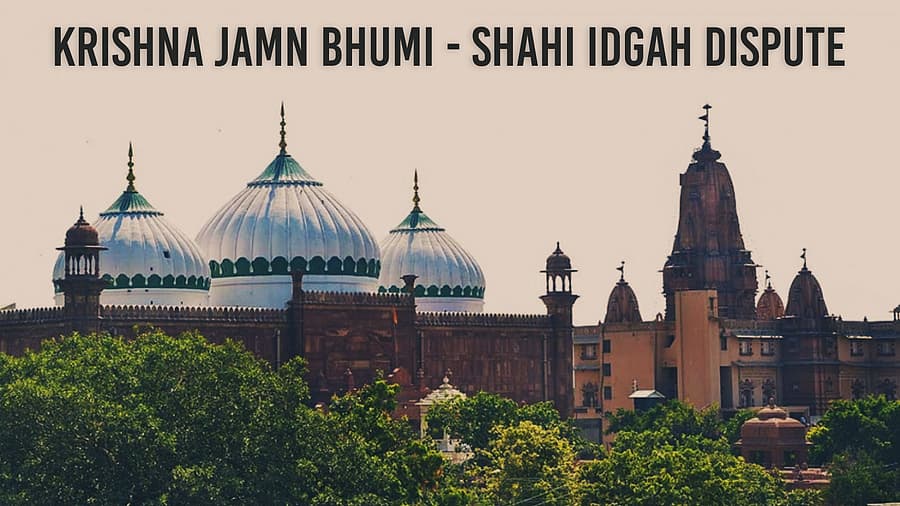
At the heart of the controversy is a civil suit initiated by the Hindu side, which asserts that the Shahi Idgah Masjid was constructed on land historically recognized as the birthplace of Lord Krishna, known as Krishna Janmabhoomi. This claim forms the basis of the broader Krishna Janmabhoomi dispute, a sensitive religious land dispute that has seen extensive litigation.
The civil suit was formally filed on behalf of the Hindu deity Bhagwan Shri Krishna Virajman, alongside several Hindu devotees. The primary objective of the plaintiffs in this Shahi Idgah mosque civil suit is to secure the removal of the mosque from its current location. They contend that various indicators and historical evidence support their belief that the Shahi-Idgah Mosque is, in fact, built upon the site of a former Hindu temple, thereby justifying their demand for its relocation.
Legal Context and Future Direction
The specific plea before the Supreme Court challenged an Allahabad High Court representative order, which sought to streamline the multi-party litigation by appointing a single representative for all Hindu devotees. This mechanism, while intended to manage complex religious land dispute case management, appears to have encountered difficulties, particularly given the reported lack of understanding among the plaintiffs themselves.
The Court's frustration underscores the challenges inherent in managing complex, multi-party religious land disputes, particularly when internal disagreements among plaintiffs impede progress. The Justices Sanjay Kumar Sanjeev Sachdeva remarks clearly indicate a judicial inclination to move beyond procedural delays and address the substantive issues. The upcoming November 6 hearing is anticipated to be a crucial step towards hearing the matter on its merits, potentially setting a precedent for how such intricate cases are handled in the future.
Practical Implications
Lawyers handling complex, multi-party religious or land disputes should note the Supreme Court's clear signal of impatience with repeated adjournments and lack of party consensus, indicating a likely push to hear such matters on their merits. This also highlights the challenges in managing representative suits where parties struggle to reach an understanding.
Source
How does this affect you?
Get an AI analysis of this article grounded in your jurisdictions, practice areas, and any policy documents you've uploaded to Wansom.
Finish Reading the Full Story and the Expert Analysis.
Get the latest legal & regulatory intelligence in India
Wansom is AI and can make mistakes.