
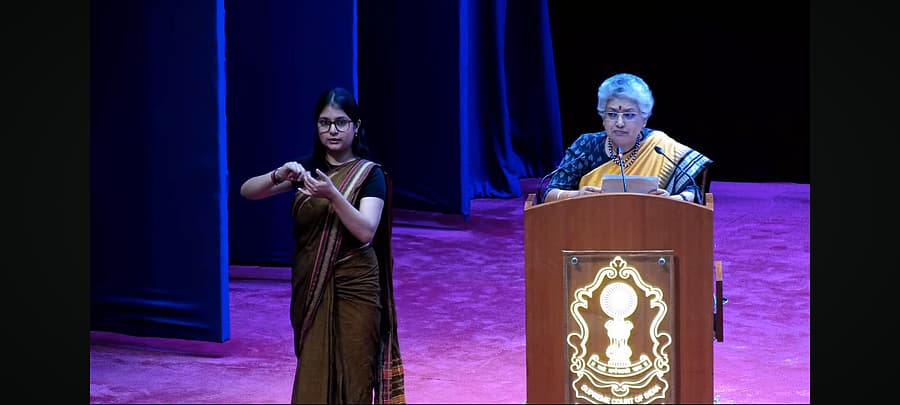
Justice BV Nagarathna: Juvenile Justice Act 2015 Focuses on Rehabilitation
Summary
- Justice BV Nagarathna emphasized that India's juvenile justice system must prioritize rehabilitation over punishment, stating that the law should not break a child.
- Her remarks were made at a consultation marking ten years of the Juvenile Justice (Care and Protection of Children) Act, 2015, held at the Supreme Court.
- Justice Nagarathna clarified that Juvenile Justice Boards (JJBs) are not intended to function as miniature criminal courts.
- A November 2025 India Justice Report study cited by Justice Nagarathna found that 55% of JJB cases across 18 States and two Union Territories were pending in 2023.
- The study also revealed that 24% of responding JJBs were operating without their full complement of members, impacting the India juvenile justice rehabilitation efforts.
Prioritizing Child Rehabilitation
Justice Nagarathna articulated a guiding principle: "when a child breaks the law, the law must not break the child."
Supreme Court Justice BV Nagarathna recently underscored the critical importance of rehabilitation over punitive measures within India's juvenile justice framework. Speaking at the National Annual Stakeholders Consultation, an event commemorating a decade since the enactment of the Juvenile Justice (Care and Protection of Children) Act, 2015, Justice Nagarathna articulated a guiding principle: "when a child breaks the law, the law must not break the child."
Her opening remarks, delivered at the Supreme Court, set a clear tone for the future direction of child law in the country. She highlighted the inherent capacity for growth and transformation in children, a fundamental tenet that should inform all interactions within the justice system. This perspective emphasizes that the primary goal is to reintegrate children in conflict with law into society as productive individuals, rather than merely punishing their transgressions.
The Mandate of Juvenile Justice Boards
Justice Nagarathna further elaborated on the specific function of Juvenile Justice Boards (JJBs), asserting that these bodies are not designed to operate as scaled-down criminal courts. This distinction is crucial for upholding the rehabilitative spirit of the Juvenile Justice (Care and Protection of Children) Act, 2015, which aims to provide care, protection, and development for children, rather than subjecting them to the rigors of adult criminal proceedings.
The Supreme Court Justice also addressed the complex and sensitive issue of how the justice system handles children accused of serious offenses. She characterized the debate surrounding whether to treat a child in conflict with law as an adult as one of the most "delicate fault lines" within India's broader criminal justice system. This observation points to the ongoing challenge of balancing societal safety with the unique developmental needs and rights of children.
Addressing Systemic Deficiencies and Backlogs
Despite the progressive intent of the Juvenile Justice Act, significant institutional shortcomings continue to impede its effective implementation. Justice Nagarathna drew attention to these issues by referencing a November 2025 India Justice Report study, which revealed alarming statistics regarding the operational efficiency of JJBs. According to the study, a substantial 55% of cases brought before Juvenile Justice Boards across 18 States and two Union Territories remained pending in 2023.
Further compounding these challenges, the same report indicated that nearly a quarter, specifically 24%, of the responding JJBs were operating without their full complement of members. This understaffing likely contributes to the considerable backlog and delays in case resolution. Justice Nagarathna stressed that merely disposing of cases should not be the sole metric of success for the juvenile justice system, poignantly stating, "After all, a disposed case is not necessarily a rehabilitated child." This highlights the need for a holistic approach that prioritizes the child's well-being and successful reintegration over administrative expediency.
Practical Implications
Lawyers practicing juvenile justice in India should be aware of the Supreme Court's clear stance on prioritizing rehabilitation over punishment and the highlighted systemic issues within Juvenile Justice Boards, which could inform case strategy, advocacy efforts, and expectations regarding case timelines and outcomes.
Source
How does this affect you?
Get an AI analysis of this article grounded in your jurisdictions, practice areas, and any policy documents you've uploaded to Wansom.
Finish Reading the Full Story and the Expert Analysis.
Get the latest legal & regulatory intelligence in India
Wansom is AI and can make mistakes.