
Supreme Court: Condemns 14-Year-Old CJP Protest Harassment
Summary
- The Supreme Court strongly condemned the harassment of a 14-year-old girl who participated in Cockroach Janta Party protests.
- CJI Surya Kant stated that intimidation of children or their families, especially to hinder criminal proceedings, is a serious matter.
- Right-wing influencer Swatantra Bhardwaj initially faced charges under Bharatiya Nyaya Sanhita 115(2) and 126(2) for assaulting the girl's father.
- Bhardwaj was later arrested after more serious charges were added following a protest by the girl's family and party leaders.
- The court's stance highlights a firm commitment to protecting minors from vigilante action and harassment during protests in India.
Judicial Condemnation of Harassment
The Supreme Court has unequivocally stated that matters involving violence against children cannot be treated lightly, signaling a robust judicial commitment to safeguarding minors from intimidation and harassment.
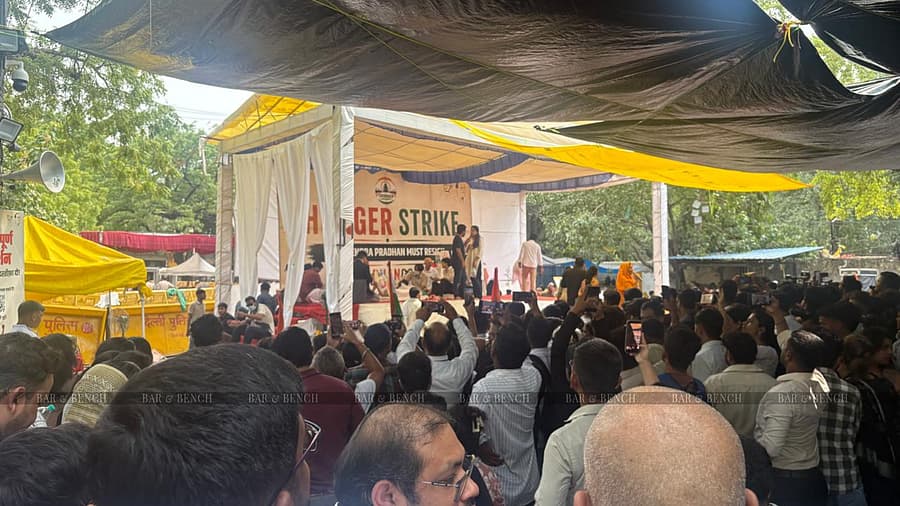
The Supreme Court recently issued a strong rebuke against the harassment and intimidation of a 14-year-old girl who participated in the Cockroach Janta Party protests in Delhi's Jantar Mantar. A bench comprising Chief Justice of India (CJI) Surya Kant, alongside Justices Joymalya Bagchi and V Mohana, emphasized the gravity of such actions, particularly when directed at minors.
CJI Surya Kant's harassment remarks underscored the judiciary's firm stance, stating that allegations of browbeating the girl or her family members constitute a serious matter that cannot be taken lightly. The court stressed that no individual should be shielded if violence against a child is involved, indicating a zero-tolerance approach to such incidents.
The bench further warned that if those accused of such acts were permitted to remain at large and continued attempts to intimidate the child or her family to prevent criminal proceedings, it would be viewed with extreme seriousness. This judicial intervention highlights a critical focus on the protection of minors involved in public demonstrations, setting a precedent against vigilante action targeting vulnerable individuals in India.
The Incident and Legal Ramifications
The court's strong reaction stemmed from an incident involving right-wing influencer Swatantra Bhardwaj, who publicly admitted on social media to assaulting the girl's father during the Cockroach Janta Party protests. Initially, Bhardwaj faced charges under Sections 115(2) and 126(2) of the Bharatiya Nyaya Sanhita (BNS), pertaining to causing simple hurt and wrongful restraint, respectively.
Following his initial booking, Bhardwaj continued to post on social media, claiming he had fractured the girl's father's skull and was only detained by the police for a few hours. He also asserted connections to leaders within the National Democratic Alliance (NDA), seemingly attempting to downplay the severity of his actions and potential consequences.
However, the situation escalated after leaders of the Cockroach Janta Party, accompanied by the 14-year-old girl and her father, staged a protest at the Parliament Street police station. This demonstration led to the addition of more serious charges against Bhardwaj, culminating in his subsequent arrest. The Supreme Court condemns 14-year-old CJP protest harassment, signaling that such actions will not be tolerated.
Broader Implications for Child Protection
The Supreme Court's unequivocal condemnation sends a clear message regarding the sanctity of child protection, especially in the context of public protests. The court's remarks serve as a crucial reminder that vigilante action targeting children or their families, particularly to obstruct justice, will be met with severe judicial scrutiny and potential penalties. This stance reinforces the legal framework designed to ensure the safety and well-being of minors across India.
This development is particularly significant for the protection of minors protest India, emphasizing that participation in democratic processes should not expose children to harassment or violence. The judiciary's proactive approach aims to deter individuals from engaging in intimidation tactics, ensuring that vulnerable participants in protests are afforded due legal safeguards. The Supreme Court has unequivocally stated that matters involving violence against children cannot be treated lightly, signaling a robust judicial commitment to safeguarding minors from intimidation and harassment.
Practical Implications
Lawyers should note the Supreme Court's strong stance against vigilante harassment, particularly of minors involved in protests, indicating a heightened judicial scrutiny and potential for severe penalties under the new Bharatiya Nyaya Sanhita for such actions. This serves as a precedent for advising clients on protest-related conduct and potential legal recourse against intimidation, emphasizing the court's commitment to protecting vulnerable individuals.
Source
How does this affect you?
Get an AI analysis of this article grounded in your jurisdictions, practice areas, and any policy documents you've uploaded to Wansom.
Finish Reading the Full Story and the Expert Analysis.
Get the latest legal & regulatory intelligence in India
Wansom is AI and can make mistakes.