
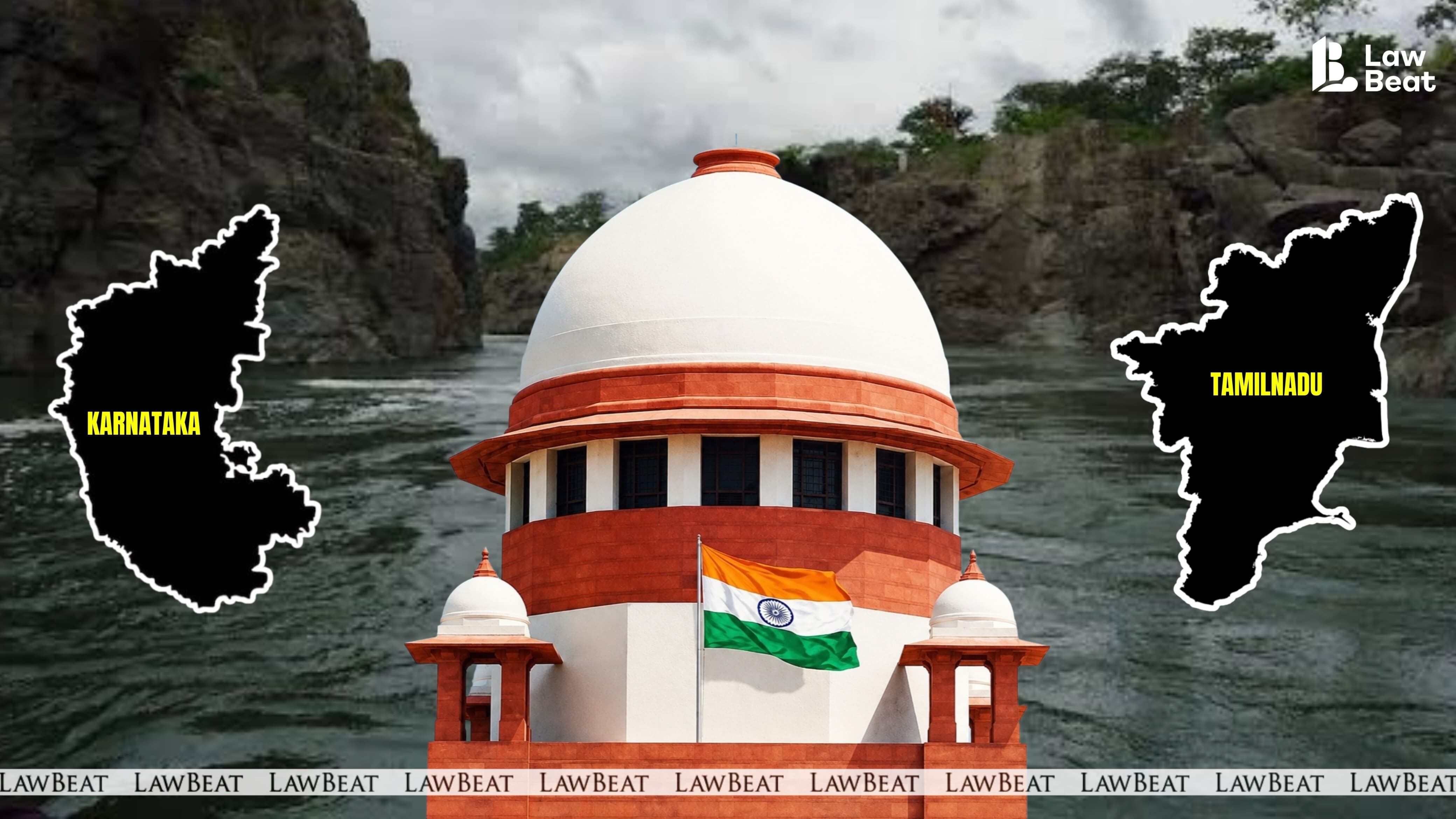
Supreme Court: Cauvery Water Dispute Hearing September 15
Summary
- The Supreme Court noted Karnataka is releasing 9,000 cusecs of Cauvery water to Tamil Nadu and scheduled a further hearing for September 15.
- Tamil Nadu's plea highlights a significant shortfall in water release, impacting 24,700 acres of agricultural land, and seeks enforcement of CWMA directives.
- Karnataka disputes inadequate release, citing recent figures exceeding 9,000 cusecs, and points to severe drought conditions in parts of its Cauvery basin.
- The Cauvery Water Management Authority (CWMA) and Cauvery Water Regulation Committee (CWRC) are continuously monitoring and issuing orders every 15 days.
- The Supreme Court directed parties to record subsequent developments, underscoring the ongoing judicial and regulatory oversight of the inter-state water dispute.
Supreme Court Addresses Cauvery Water Dispute
The Supreme Court has scheduled a further hearing on September 15 to address the long-standing inter-state water dispute concerning the Cauvery River, particularly focusing on water releases from Karnataka to Tamil Nadu.
The Supreme Court recently convened to deliberate on the ongoing inter-state water dispute concerning the Cauvery River, specifically addressing a plea from Tamil Nadu seeking directives for Karnataka to release its allocated share. A bench comprising Justices Vikram Nath and Sandeep Mehta presided over the proceedings. During the hearing, the court acknowledged that Karnataka is currently releasing 9,000 cusecs of Cauvery water to its downstream neighbor, Tamil Nadu.
Despite this ongoing release, the court has scheduled a further hearing on September 15 to address the complexities of the dispute. This development comes as both states present their arguments regarding water availability and agricultural necessities. The Supreme Court's continued oversight underscores the critical nature of this water-sharing conflict, which significantly impacts agricultural communities in both Karnataka and Tamil Nadu.
Tamil Nadu's Plea for Water Security
Senior Advocate C. S. Vaidyanathan, representing Tamil Nadu, articulated the severe challenges faced by the state's agricultural sector due to insufficient water releases. He highlighted that approximately 24,700 acres of agricultural land in Tamil Nadu are reliant on Cauvery water, and farmers are struggling to meet irrigation demands. According to Tamil Nadu's submissions, Karnataka had released only 49 TMC ft of water by August 27, falling significantly short of the required 104 TMC ft at Biligundlu, the designated inter-state water measuring station.
Tamil Nadu has formally requested the Supreme Court to direct Karnataka to release the outstanding balance of 17.604 TMC ft of Cauvery water, calculated on a pro-rata basis as of August 27. The state also seeks the enforcement of a Cauvery Water Management Authority (CWMA) directive for Karnataka to release 9,000 cusecs from August 26 to September 8, 2026, and to compensate for any shortfall between the actual flows recorded at Biligundlu and the CWMA-mandated quantum. Furthermore, the Dravida Munnetra Kazhagam (DMK) has independently approached the Supreme Court, urging the urgent release of Cauvery River water in compliance with recent CWMA directions, which upheld a Cauvery Water Regulation Committee (CWRC) order for 3,500 cusecs per day for 15 days.
Karnataka's Defense and Drought Concerns
In response to Tamil Nadu's allegations, Senior Advocate Shyam Divan, representing Karnataka, contested claims of inadequate water release. He informed the bench that Karnataka had released 9,888 cusecs on August 30, exceeding the CWMA-mandated 9,000 cusecs. Divan further stated that the release had surpassed 11,000 cusecs by 8 AM on the day of the hearing, affirming Karnataka's commitment to meet the 9,000 cusecs requirement.
Karnataka also brought to the court's attention the severe drought conditions declared in certain areas of the state, including parts of the Cauvery basin, on August 27. The Supreme Court noted that Karnataka had already increased its water releases from 11,000 cusecs to 12,000 cusecs starting August 12, indicating efforts to address the downstream requirements amidst its own challenges.
Regulatory Oversight and Future Implications
The Supreme Court emphasized that any decision rendered by the Cauvery Water Management Authority must be challenged through appropriate legal channels. While the CWMA had acknowledged a backlog in water releases, it had not issued a specific directive for Karnataka to compensate for the shortfall. Both the CWMA and the Cauvery Water Regulation Committee (CWRC) are actively engaged in considering the complex issue, issuing orders every 15 days to manage the water allocation.
Given the ongoing nature of the dispute and the continuous regulatory actions, the Supreme Court directed all parties to meticulously document and present any subsequent developments for its consideration. The listing of the matter for September 15 highlights the judiciary's continued role in overseeing this long-standing inter-state water dispute, which originated in 1974 when Karnataka, as the upper riparian state, began diverting water without Tamil Nadu's consent. The outcome of these proceedings and subsequent directives from the CWMA will significantly influence water management and agricultural planning in both states.
Practical Implications
Lawyers advising clients in agriculture, water management, or related industries in Karnataka and Tamil Nadu must closely monitor the Supreme Court's September 15 hearing and subsequent directives from the CWMA/CWRC. These ongoing judicial and regulatory developments will dictate water allocation, impacting operational planning, compliance obligations, and potential litigation strategies for affected parties.
Source
How does this affect you?
Get an AI analysis of this article grounded in your jurisdictions, practice areas, and any policy documents you've uploaded to Wansom.
Finish Reading the Full Story and the Expert Analysis.
Wansom is AI and can make mistakes.