
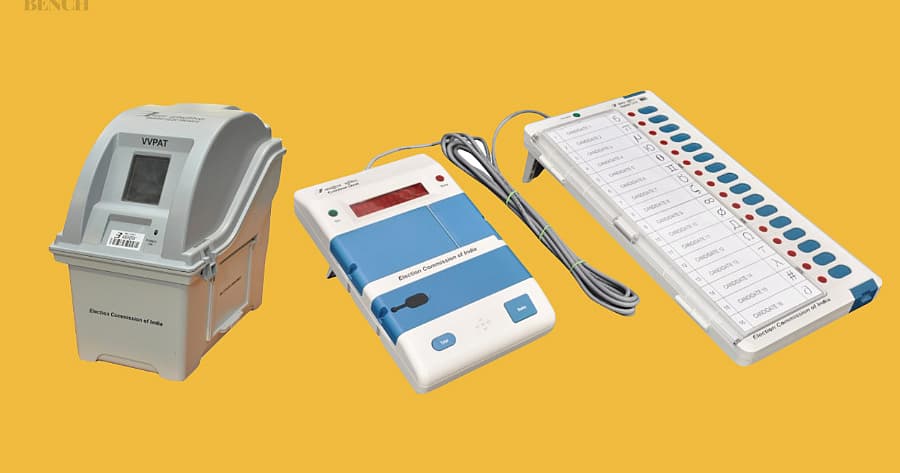
Supreme Court Asks Centre: Examine EVM Totalisers for Voter Secrecy
Summary
- The Supreme Court has directed the Union government to examine the introduction of totaliser machines for EVM vote counting.
- The primary goal of totalisers is to protect voter secrecy and prevent the identification of voting patterns at individual polling booths.
- A totaliser combines votes from multiple EVMs before results are disclosed, making booth-specific outcomes anonymous.
- The Election Commission of India supports the principle of anonymizing voter choice but cited the need for a statutory amendment and challenges to Form 17C cross-checking.
- The Supreme Court has instructed the ECI to submit a proposal to the Union of India, which will then decide on the matter.
Supreme Court Directs Review of EVM Totalisers
This development signals a potential shift in election procedure and law regarding EVM vote counting, specifically concerning voter anonymity.
India's Supreme Court has instructed the Union government to thoroughly examine the potential implementation of totaliser machines for counting votes cast via Electronic Voting Machines (EVMs). This directive stems from a plea advocating for the introduction of these machines, with the primary objective of safeguarding the confidentiality of voting patterns and preventing the identification and potential intimidation of voters at individual polling stations.
A bench comprising Chief Justice of India (CJI) Surya Kant, Justice Joymalya Bagchi, and Justice V Mohana presided over the hearing. A totaliser machine functions by aggregating the votes recorded across multiple EVMs before the final results are disclosed. This process effectively obscures the voting outcome of any single polling booth, thereby making it significantly more challenging to discern how a particular locality or segment of the electorate voted. The Court's intervention underscores a commitment to enhancing voter anonymity and safeguarding the integrity of the electoral process against potential intimidation.
Legal and Procedural Hurdles Identified by ECI
While the Election Commission of India (ECI), represented by Senior Advocate Dama Seshadri Naidu, expressed its support for the fundamental principle of anonymizing voter choices, it also highlighted several practical challenges associated with the totaliser proposal. A significant hurdle identified is the necessity for a statutory amendment to existing election laws. The current legal framework, which mandates detailed vote recording at each polling station, would require modification to accommodate the aggregated counting method.
Another key difficulty flagged by the ECI concerns the ability of candidates to cross-check election results. Under the present system, Form 17C serves as a crucial document, meticulously recording the votes polled at each individual polling station. The introduction of totaliser machines, by design, would complicate or even undermine the current method of verifying results against these booth-specific records, potentially impacting the transparency and accountability mechanisms currently in place for election challenges.
Path Forward and Broader Implications
Following the submissions, CJI Surya Kant issued a clear directive, stating, "We would like to know what are the impediments, if any, and whether there would be any negative impact because of introduction of such a mechanism. The Election Commission may make a suitable proposal/representation to the Union of India. The Union of India shall take a call on the proposal." This instruction places the onus on the Election Commission to formulate a comprehensive proposal or representation detailing its findings and recommendations to the Union government, which will then make the ultimate decision.
This development signals a potential shift in election procedure and law regarding EVM vote counting, specifically concerning voter anonymity. The examination of the India EVM totaliser machine by the Centre, prompted by the Supreme Court, could lead to significant statutory amendments affecting how election results are verified and challenged. Lawyers advising political parties or involved in election litigation should closely monitor the Union Government's and ECI's examination of the Election Commission totaliser proposal, as any changes could profoundly impact the verification process, particularly concerning the existing provisions of Form 17C.
Practical Implications
This development signals a potential shift in election procedure and law regarding EVM vote counting, specifically concerning voter anonymity. Lawyers advising political parties or involved in election litigation should monitor the Union Government's and ECI's examination of totalisers, as it could lead to statutory amendments affecting election challenges and the verification process (e.g., Form 17C).
Source
How does this affect you?
Get an AI analysis of this article grounded in your jurisdictions, practice areas, and any policy documents you've uploaded to Wansom.
Finish Reading the Full Story and the Expert Analysis.
Wansom is AI and can make mistakes.