
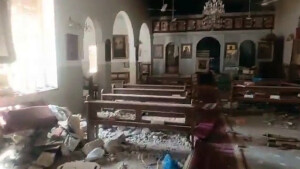
Sudan Advisory Board: Details RSF Church Attacks in Sudan
Summary
- A new documentary report has been released by the Advisory Board of Sudan’s Transitional Sovereignty Council.
- The report accuses the Rapid Support Forces (RSF) of carrying out "attacks on churches."
- Radio Dabanga was cited as a key source for the information contained within this report.
- The report details alleged violations specifically targeting religious institutions in Sudan.
What the Report Alleges
The issuance of this documentary report by a body linked to Sudan's transitional government carries substantial implications for potential accountability.
A new documentary report, issued by the Advisory Board of Sudan’s Transitional Sovereignty Council, has brought to light serious accusations concerning the conduct of the Rapid Support Forces (RSF). This formal document specifically details alleged "attacks on churches" attributed to the RSF, marking a significant development in the ongoing scrutiny of actions by armed groups in Sudan. The report's emergence from a body associated with the transitional government underscores the gravity with which these allegations are being treated.
The findings within this report represent a compilation of information regarding specific incidents. By formally documenting these alleged "attacks on churches," the Advisory Board is providing a structured account of events that, if confirmed, would constitute severe violations. The focus on religious sites highlights a particular dimension of the alleged abuses, drawing attention to potential targeting of places of worship and religious communities.
Context of the Accusations
The accusations leveled against the Rapid Support Forces in this report are particularly noteworthy given the RSF's prominent role in the current Sudanese conflict. The report's focus on "attacks on churches" points to alleged actions that could be interpreted as violations of international humanitarian law, which mandates the protection of civilian objects, including religious buildings, during armed conflict. Such allegations raise concerns about the protection of religious freedom and the safety of religious communities within Sudan.
The Advisory Board of Sudan’s Transitional Sovereignty Council, as the source of this report, adds a layer of official weight to these claims. Its role in the transitional governance structure means that its findings are not merely anecdotal but represent a more formal assessment of alleged abuses. The detailed nature implied by a "documentary report" suggests an effort to systematically record and present evidence related to these specific incidents involving religious institutions.
The Role of Documentation
Crucially, the report explicitly cites Radio Dabanga as a key source for its information. This detail highlights the vital function of independent media and local reporting in uncovering and verifying incidents of human rights abuses and conflict-related violence. The inclusion of Radio Dabanga as a referenced source underscores the importance of on-the-ground journalism in contributing to official documentation efforts, particularly in regions where access and information can be challenging.
The reliance on media outlets like Radio Dabanga for foundational information in an official report emphasizes the interconnectedness between investigative journalism and formal accountability mechanisms. It suggests that the Advisory Board has drawn upon publicly available or independently gathered information to substantiate its claims regarding the alleged "attacks on churches" by the Rapid Support Forces. This collaboration, or at least cross-referencing, between official bodies and independent media is a significant aspect of the report's methodology.
Implications for Accountability
The issuance of this documentary report by a body linked to Sudan's transitional government carries substantial implications for potential accountability. By formally accusing the Rapid Support Forces of "attacks on churches," the report could serve as a foundational document for further investigations into alleged war crimes or other serious international crimes. Such official documentation is often a precursor to calls for justice, sanctions, or international legal proceedings.
The report's existence signals an official acknowledgment of these grave allegations, which could exert pressure on both domestic and international actors to address the conduct of the RSF. The specific nature of the accusations—targeting religious sites—may also draw particular attention from human rights organizations and religious freedom advocates globally, amplifying calls for protection and redress for affected communities. This formal documentation marks a critical step in the process of bringing alleged violations to light and potentially holding perpetrators responsible.
Practical Implications
Lawyers specializing in international humanitarian law or human rights should monitor this report for potential evidence of war crimes or crimes against humanity by the RSF, which could inform future accountability efforts, sanctions, or international legal proceedings. Compliance officers for organizations operating in Sudan should assess the risk of association with entities involved in or complicit in such violations.
Source
How does this affect you?
Get an AI analysis of this article grounded in your jurisdictions, practice areas, and any policy documents you've uploaded to Wansom.
Finish Reading the Full Story and the Expert Analysis.
Get the latest legal & regulatory intelligence in Sudan
Wansom is AI and can make mistakes.