
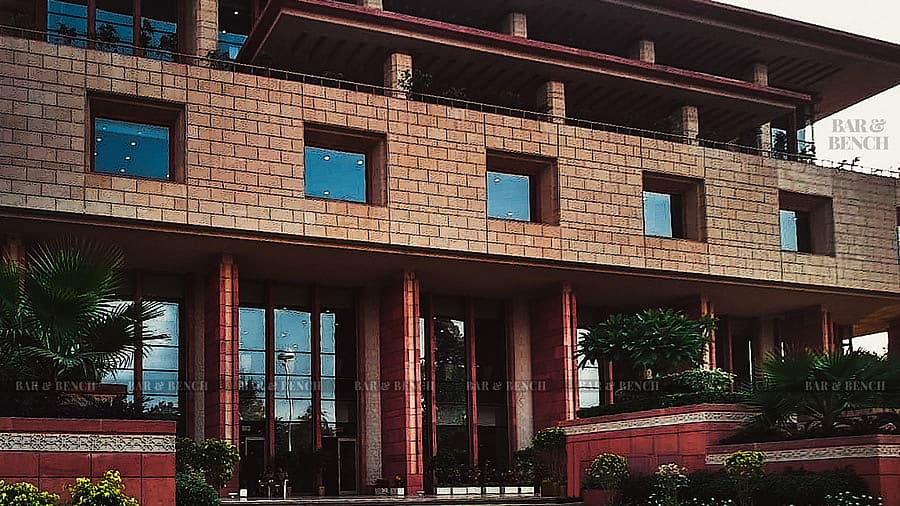
Delhi HC: Dumpala Meenavathi, Adhyatmik Vidyalaya Ashram Residence Upheld
Summary
- The Delhi High Court refused to compel an adult woman to leave the Adhyatmik Vishwa Vidyalaya ashram, where she resides voluntarily.
- The woman's parents had petitioned the court, alleging she was missing, but a police inquiry confirmed her voluntary residence since 2015 due to spiritual inclination.
- A Division Bench, led by Chief Justice Devendra Kumar Upadhyaya, affirmed that directing her residence would violate her Article 19 constitutional rights.
- The ruling emphasizes an adult's fundamental right to freedom of movement and residence, even against familial wishes.
What Happened
This significant Delhi High Court ruling reinforces the fundamental right to freedom of movement and residence for adults under Article 19 of the Indian Constitution.
The Delhi High Court recently upheld an adult woman's right to choose her residence, declining to intervene in her decision to live at the Adhyatmik Vishwa Vidyalaya ashram in Rohini, Delhi, despite her parents' objections. This ruling came in the case of Dumpala Meenavathi and Anr. Vs Union of India and Ors., where the parents had petitioned the court, alleging their daughter was missing from the spiritual institution.
The court's decision followed an investigation initiated on August 24, when it directed the Delhi Police to conduct a preliminary inquiry into the parents' claims. The police investigation subsequently confirmed that the woman was, in fact, residing at the ashram and was not missing. Her own statement to the authorities further corroborated that her stay at the Adhyatmik Vidyalaya ashram was entirely voluntary.
It was revealed during the proceedings that the woman had been living at the ashram since 2015, driven by her inclination towards spirituality. The Delhi High Court, after reviewing both the police inquiry report and the woman's personal testimony, concluded that she was an adult exercising her fundamental rights.
Legal Context
The Division Bench, comprising Chief Justice Devendra Kumar Upadhyaya and Justice Tejas Karia, underscored the constitutional protections afforded to adults in India. Their ruling firmly rooted itself in Article 19 of the Indian Constitution, which guarantees citizens the fundamental right to freedom of movement and residence. The judges emphasized that the court could not compel an adult to reside in a particular place or prevent them from doing so, as such a directive would directly contravene these enshrined freedoms.
Chief Justice Devendra Kumar Upadhyaya, delivering the ruling, articulated the court's reasoning by questioning the judiciary's authority to dictate an adult's place of residence. He pondered whether a court could compel an individual to go to or refrain from going to a specific location, regardless of whether the directive originated from parents, in-laws, or a spouse. Such an action, he noted, would fundamentally contradict Article 19, which guarantees essential freedoms, including the right to move freely. The Chief Justice underscored that restricting an adult's freedom in this manner would be unconstitutional. The Delhi High Court adult woman residence choice was thus protected under this fundamental right.
Why It Matters
This significant Delhi High Court ruling reinforces the fundamental right to freedom of movement and residence for adults under Article 19 of the Indian Constitution. The Adhyatmik Vishwa Vidyalaya Rohini case sets a strong precedent, affirming that an adult's choice of residence, particularly for spiritual pursuits, cannot be overridden by familial wishes or judicial intervention. It serves as a crucial reminder of individual liberty and autonomy in a society where personal choices, especially those diverging from traditional family expectations, can often face challenges.
The decision by Chief Justice Devendra Kumar Upadhyaya and Justice Tejas Karia provides a clear legal framework for lawyers defending an adult's autonomy against family intervention or challenging petitions seeking to restrict such freedom. By explicitly stating that the court cannot direct an adult's residence without violating their constitutional rights, the ruling strengthens the position of individuals making independent life decisions. This judgment in Dumpala Meenavathi and Anr. Vs Union of India highlights the judiciary's role in safeguarding constitutional freedoms, ensuring that adults can pursue their spiritual inclinations or other life choices without undue restriction, thereby upholding the spirit of Article 19 freedom of movement India.
Practical Implications
This ruling reinforces the fundamental right to freedom of movement and residence for adults under Article 19 of the Indian Constitution, providing a strong precedent for lawyers defending an adult's autonomy against family intervention or challenging petitions seeking to restrict such freedom, particularly in cases involving personal choices like spiritual residence.
Source
How does this affect you?
Get an AI analysis of this article grounded in your jurisdictions, practice areas, and any policy documents you've uploaded to Wansom.
Finish Reading the Full Story and the Expert Analysis.
Wansom is AI and can make mistakes.