
SSOA Faction South Sudan Party Registration Defense: Compliance Affirmed
Summary
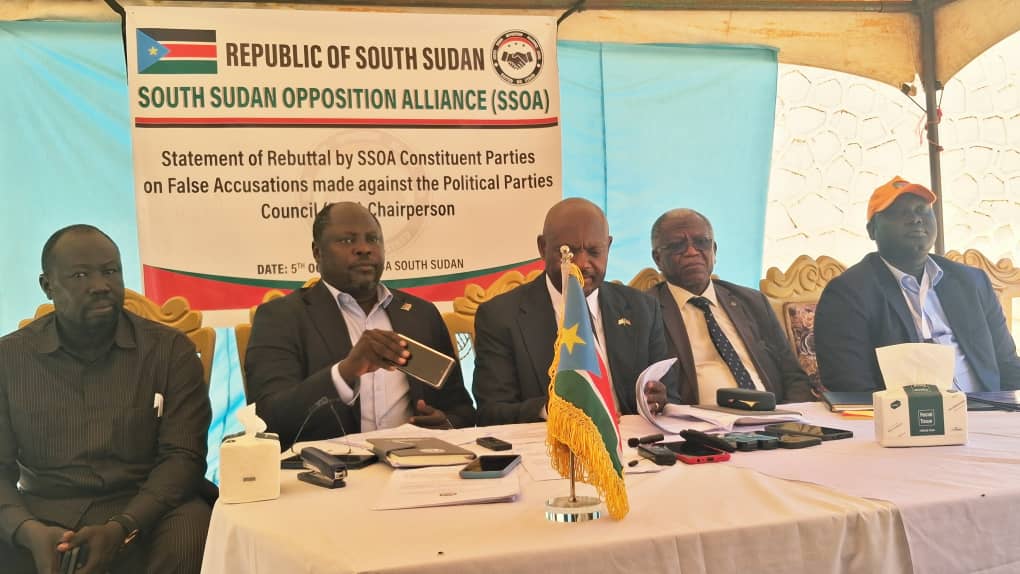
- A faction of the South Sudan Opposition Alliance (SSOA) is defending the registration of seven of its constituent parties with the Political Parties Council (PPC).
- The defending faction asserts its leaders relinquished military command in December 2025, fulfilling Section 26 of the Political Parties Act of 2012 (as amended 2022).
- Rival SSOA groups, including the NDM and SSNMC from the Josephine Lagu faction, accuse the PPC of fraudulent registrations and the defending parties of non-compliance.
- The defending faction's Secretary-General, Changkuoth Bichiock, counter-accused rivals of maintaining independent military structures while seeking registration.
- Representatives from the defending parties emphasized their commitment to civilian politics and adherence to legal requirements under South Sudan's laws and the 2018 peace agreement.
SSOA Faction Defends Party Registrations
This ongoing dispute underscores the critical importance of demonstrating clear separation from military structures to meet legal requirements for civilian political operation.
A particular segment of the South Sudan Opposition Alliance (SSOA) has recently articulated a strong defense concerning the registration of seven of its affiliated political parties. This defense comes amidst a broader internal dispute within the SSOA, which is notably fractured into two primary factions, alongside various smaller groups aligning with either side. One significant faction operates under the leadership of former Vice President Hussein Abdelbagi Akol, and is widely perceived to maintain close ties with the governing Sudan Peoples Liberation Movement (SPLM). The opposing faction is headed by former Vice President Josephine Lagu.
This defense directly addresses accusations leveled by the National Democratic Movement (NDM), led by Lam Akol, and the South Sudan National Movement for Change (SSNMC), under the leadership of Moro Isaac Genesio. Both NDM and SSNMC are constituent parties of the SSOA faction led by Josephine Lagu. Their allegations claim that the Political Parties Council (PPC) engaged in fraudulent alterations of their registration records and improperly registered other parties without due adherence to legal prerequisites. In response, the defending SSOA faction asserts that its constituent parties have fully complied with all necessary legal frameworks for their operation as civilian entities.
Compliance with Legal Mandates for Civilian Operation
Central to the SSOA faction's defense is the assertion that the leaders of the seven parties in question have successfully relinquished their military commands, thereby fulfilling a critical legal requirement for political party registration in South Sudan. Changkuoth Bichiock, Secretary-General for the defending SSOA faction, speaking from Juba, confirmed that these groups initiated and largely completed their registration processes with the Political Parties Council well in advance of the June 30, 2026, deadline. The parties whose registration is being defended include the South Sudan Patriotic Movement (SSPM), the South Sudan National Movement for Change (SSNMC), the Federal Democratic Party (FDP), and the National Salvation Front (NASF), the latter led by Gassim Barnaba Kisanga.
Bichiock elaborated that the registration timeline experienced delays due to the prior association of some parties with military wings. He emphasized that their leaders were first required to divest themselves of military authority before these groups could transition to functioning exclusively as civilian political organizations. According to Bichiock, the seven political parties have demonstrated full compliance with this stipulation, possessing official clearance confirming that their forces have been successfully integrated into the regular armed forces under a unified central command. This relinquishment of military command by the leaders of these seven parties reportedly occurred in December 2025, with their forces being surrendered to the commander-in-chief of the regular forces. Bichiock underscored the relevance of Section 26 of the South Sudan Political Parties Act of 2012, as amended in 2022, which explicitly forbids political parties from establishing or maintaining covert or military formations, armed forces, or paramilitary units. He maintained that the PPC did not arbitrarily add these parties to the register post-deadline, but rather finalized processes that had been protracted by what he termed a 'legal impediment' related to their transition.
Accusations of Continued Military Ties
In a counter-accusation, Changkuoth Bichiock alleged that groups associated with Lam Akol and Moro Isaac Genesio have failed to meet the same fundamental requirement of relinquishing military structures. He claimed that these rival entities continue to maintain independent military formations even as they pursue registration as legitimate political parties. Bichiock firmly stated that the law is impartial, applying equally to all political actors, and urged Lam Akol and Moro to dismantle their military structures and adhere to the legal framework if they wish to secure registration for their political organizations.
This ongoing dispute underscores the critical importance of demonstrating clear separation from military structures to meet legal requirements for civilian political operation. Clement Juma Mbugoniwa, representing the SSNMC, affirmed that the seven parties had meticulously followed all legal procedures mandated for registration under South Sudan's laws and the provisions of the 2018 peace agreement. He highlighted that legal requirements are governed by the Revitalised Agreement on the Resolution of the Conflict in South Sudan (R-ARCSS) itself, the Political Parties Act, and the national Constitution. Mbugoniwa stressed their commitment to civilian politics, aligning with the demands of the South Sudanese populace.
Transition to Civilian Politics and Future Implications
Gassim Barnaba of the National Salvation Front (NASF) further supported the defending faction's stance, confirming that his own group had successfully transitioned from a military movement into a political organization. Barnaba emphasized the non-negotiable nature of this requirement, stating that without the relinquishment of forces, political entities would not receive clearance for registration. He articulated a clear principle that political parties should not retain military wings, citing the potential for such structures to intimidate civilians. Barnaba concluded by asserting that any entity maintaining a military wing should not engage in political activities.
This contentious issue highlights the broader challenges and requirements for political parties in South Sudan to fully comply with the R-ARCSS political party provisions and the South Sudan Political Parties Act 2012, particularly concerning the Political Parties Council registration requirements. The insistence on relinquishing military command for political parties in South Sudan (SS) is a cornerstone of the nation's transition towards stable civilian governance, ensuring that political competition occurs through democratic means rather than military influence.
Practical Implications
Lawyers advising political parties in South Sudan must ensure strict compliance with Section 26 of the Political Parties Act 2012 (as amended 2022) regarding the relinquishment of military command to secure and defend party registration with the Political Parties Council. This ongoing dispute underscores the critical importance of demonstrating clear separation from military structures to meet legal requirements for civilian political operation.
Source
Source: Original reporting via {source}
How does this affect you?
Get an AI analysis of this article grounded in your jurisdictions, practice areas, and any policy documents you've uploaded to Wansom.
Finish Reading the Full Story and the Expert Analysis.
Get the latest legal & regulatory intelligence in South Sudan
Wansom is AI and can make mistakes.