
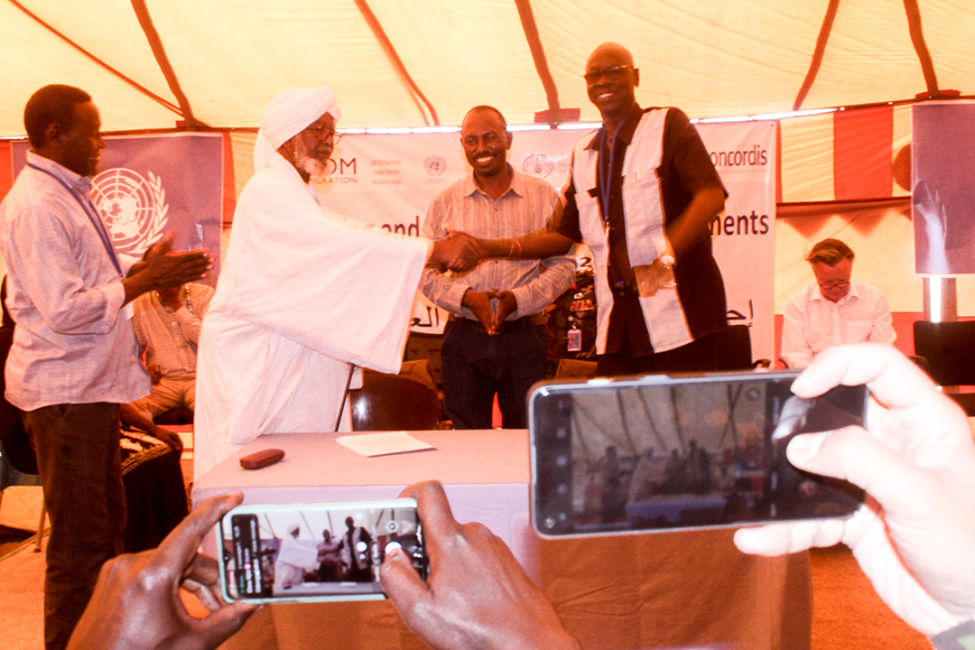
UNISFA: Abyei Amiet Market Reopening Agreement Reached
Summary
- Joint peace committees representing the Ngok Dinka and Misseriya communities have agreed to immediately reopen the Amiet market in the disputed Abyei region.
- The agreement, signed on Monday, mandates that UNISFA, community police, and youth from both groups will be responsible for market protection.
- Specific security measures include prohibiting other forces from entering the market and banning all military vehicles and weapons from October 10, 2026.
- The accord follows recent armed clashes that resulted in approximately 40 fatalities and the complete closure of the market.
- Community leaders urged residents to disregard rumors and emphasized the agreement's goal to protect traders and prevent future violence.
Landmark Agreement Reopens Key Market
The primary objective of the new agreement is to safeguard both the market and its traders, thereby preventing any recurrence of the tragic incidents witnessed in the past.
Representatives from the Ngok Dinka and Misseriya communities, who inhabit the contested Abyei region straddling the border between Sudan and South Sudan, have reached a significant accord. On Monday, joint peace committees from both groups formalized an agreement to immediately facilitate the reopening of the Amiet market. This pivotal decision, aimed at restoring vital commercial activity, was documented in a joint statement following a meeting held at the headquarters of the United Nations Interim Security Force for Abyei (UNISFA) Pakistani Battalion, located in the Todach area. The Abyei Amiet market reopening UNISFA initiative signals a renewed commitment to stability in the volatile area.
A central tenet of this Ngok Dinka Misseriya peace agreement is the immediate resumption of trade at the Amiet market, a crucial hub for the local economy. The agreement stipulates that the responsibility for safeguarding the market will be jointly borne by UNISFA, local community police, and youth representatives drawn from both the Ngok Dinka and Misseriya populations. This collaborative approach underscores a shared desire to prevent a recurrence of past conflicts that have plagued the region.
Comprehensive Security and Community Oversight
Beyond the immediate reopening, the agreement outlines stringent Amiet market security arrangements designed to ensure lasting peace and safety. Crucially, the accord explicitly forbids any other military forces affiliated with either community from entering the market premises. Looking ahead, a more definitive measure will take effect on October 10, 2026, when all military vehicles and weaponry will be permanently barred from the market area. To enforce these provisions, UNISFA forces are tasked with continuously monitoring all entrances and exits of the market, specifically to prevent the illicit introduction of weapons. This robust UNISFA Abyei market protection framework is intended to create a demilitarized zone for commerce.
Doguir Mitanq, the Chairman of the Ngok Dinka Youth, confirmed that the joint peace committees had indeed reached a consensus for the immediate reopening of the shared marketplace. He further elaborated that security would be managed by UNISFA in conjunction with a dedicated 17-member committee specifically appointed to oversee these arrangements. Mitanq also appealed to local residents to dismiss any unsubstantiated rumors that might seek to undermine the fragile security, emphasizing that the agreement was a product of the committees' own initiative and mutual understanding.
Addressing Underlying Tensions and Promoting Peace
The recent agreement comes on the heels of significant unrest, as Abyei experienced an armed confrontation just days prior, resulting in approximately 40 fatalities. This violent episode had directly led to the complete closure of the Amiet Market, highlighting the urgent need for effective Abyei community peace committees and robust security measures. Mahdi Juma, the Misseriya Youth Chairman, directly addressed the root causes of inter-communal friction, attributing tensions to groups actively disseminating rumors designed to erode the social fabric. He cited examples, including a rumor among the Ngok Dinka community that the Misseriya were planning an attack, and a counter-rumor alleging an impending Ngok Dinka assault from the southern gate.
Juma issued a stern warning to members of both communities against allowing individual acts of violence to escalate into broader tribal mobilization. He underscored that such criminal incidents can occur even in highly secure urban environments, yet communities possess the capacity to convene and resolve their differences peacefully. Reaffirming a steadfast commitment to reconciliation, Juma asserted that neither community would abandon its pursuit of peace. He clarified that the primary objective of the new agreement is to safeguard both the market and its traders, thereby preventing any recurrence of the tragic incidents witnessed in the past.
Implications for Regional Stability and Trade
This significant Abyei Amiet market reopening UNISFA agreement holds considerable promise for fostering stability and revitalizing Sudan South Sudan border trade in the disputed Abyei region. By establishing clear security protocols and fostering inter-communal cooperation, the accord aims to transform the Amiet market into a secure and reliable economic hub. The involvement of UNISFA, alongside community police and youth, creates a multi-layered protection system that could serve as a model for other contentious areas.
The commitment from both Ngok Dinka and Misseriya leaders to actively counter destabilizing rumors and prevent the escalation of individual incidents into tribal conflicts is crucial for long-term peace. This collaborative effort, spearheaded by the Abyei community peace committees, demonstrates a collective will to move beyond cycles of violence. The successful implementation and sustained adherence to these Amiet market security arrangements will be vital in ensuring the market's role as a catalyst for economic recovery and a symbol of enduring peace between the two communities.
Practical Implications
Lawyers advising clients on trade, investment, or humanitarian operations in the Abyei region should note this agreement as a potential indicator of improving stability and renewed commercial activity, enabling reassessment of supply chain logistics and risk profiles for engaging with the market under UN protection.
Source
How does this affect you?
Get an AI analysis of this article grounded in your jurisdictions, practice areas, and any policy documents you've uploaded to Wansom.
Finish Reading the Full Story and the Expert Analysis.
Get the latest legal & regulatory intelligence in South Sudan
Wansom is AI and can make mistakes.