
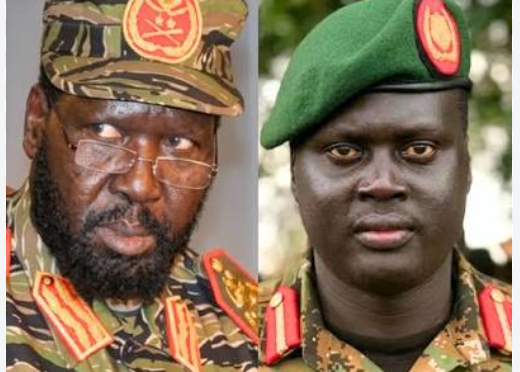
Kiir Appoints Son Presidential Guard South Sudan: Atem Leads Elite Unit
Summary
- President Salva Kiir Mayardit has appointed his son, Major General Atem Salva Kiir, as commander of the elite Tiger Division, South Sudan's presidential guard.
- Major General Atem, 36, was promoted from brigadier general just prior to assuming command of the unit, which is part of the South Sudan Peoples Defence Forces (SSPDF).
- This appointment, alongside that of Kiir's daughter, Adut Salva Kiir, as Senior Presidential Envoy in August 2025, has fueled speculation about the family's future political role.
- The SSPDF confirmed the appointment as an official military directive based on merit, dismissing reports that Atem had declined the post.
- The developments occur as South Sudan prepares for elections in December 2026, with President Kiir, 74, having led the nation since its independence in 2011.
President's Son Assumes Key Security Role
The perceived consolidation of power through familial ties can heighten political risk, as it may be interpreted as a move towards entrenching a particular lineage rather than fostering broad-based institutional development.
President Salva Kiir Mayardit of South Sudan has appointed his son, Major General Atem Salva Kiir, to lead the nation's elite presidential guard, known as the Tiger Division. This unit, a specialized component of the South Sudan Peoples Defence Forces (SSPDF), is tasked with safeguarding the president and other senior government officials, and has also been involved in security operations within and around the capital, Juba. The appointment of Atem Salva Kiir as the South Sudan Tiger Division commander follows his recent elevation from brigadier general to major general.
Prior to this significant military command change, the 36-year-old General Atem served as the commander of the Special Force within the Internal Bureau of the National Security Service (NSS). The SSPDF's assistant director of information and public relations, Colonel Garang Ateny Alier, confirmed the appointment, stating that it was an official military directive enacted through established command structures and based on merit. Ateny emphasized that General Atem's new assignment was solely a function of the military command process, unrelated to his familial ties to the president.
Reports suggesting that President Kiir's son had initially declined the post were dismissed by Colonel Ateny. Further corroboration came from Bol Akok Mayar, a family member, who affirmed that Major General Atem has indeed taken command of the presidential guard. The family also refuted earlier claims disputing the appointment, expressing their full backing for Atem's new military responsibilities. General Atem commenced his career in the security services in 2012, beginning his tenure with the NSS, and his rapid ascent within the security establishment has drawn considerable attention.
Broader Pattern of Family Appointments
The appointment of Major General Atem Salva Kiir to a pivotal security position is not an isolated incident within President Kiir's administration. In August 2025, President Kiir also appointed his daughter, Adut Salva Kiir, as the Senior Presidential Envoy for Special Programmes. Ms. Adut has since represented her father at various high-level gatherings both domestically in South Sudan and internationally. These Salva Kiir family appointments have intensified public discussion regarding the potential roles the president's children might play in the nation's political future.
Such developments have fueled Kiir succession speculation South Sudan, prompting comparisons to other regional leaders. Notably, questions have arisen about whether President Kiir is mirroring the approach of his ally, Uganda's long-serving President Yoweri Museveni, whose son, Muhoozi Kainerugaba, has ascended to become Uganda's top military commander. While these appointments have sparked considerable debate about a potential dynastic succession, President Kiir has not publicly indicated that either of his children is being prepared to succeed him in the country's highest office.
Political Landscape and Future Governance
These significant personnel changes occur as South Sudan gears up for general elections slated for December 2026. President Kiir, who is 74 years old, has been at the helm of the nation since its independence in 2011. He concurrently holds the leadership of the ruling Sudan Peoples Liberation Movement (SPLM) and serves as the commander-in-chief of the SSPDF, in addition to being the supreme commander of all other regular forces within the country. Despite his advanced age and long tenure, President Kiir has not yet announced any plans for his retirement.
The concentration of power within the presidential family, particularly in key security and diplomatic roles, signals a potential consolidation of influence that could shape South Sudan's political trajectory for years to come. The strategic placement of family members in critical government and military functions, such as the Kiir appoints son presidential guard South Sudan move, underscores a dynamic that warrants close observation by both domestic and international stakeholders.
Implications for Stability and Investment
The recent high-profile appointments, particularly within the security apparatus, carry significant implications for South Sudan's political stability and its appeal to international investors. The perceived consolidation of power through familial ties can heighten political risk, as it may be interpreted as a move towards entrenching a particular lineage rather than fostering broad-based institutional development. This dynamic could influence the predictability of governance and the rule of law, which are crucial factors for a stable investment climate.
For legal and compliance professionals, these developments necessitate careful monitoring. Changes in military and political leadership, especially those involving close family members, can signal shifts in power structures that might affect regulatory enforcement, contractual obligations, and the overall operating environment for businesses. The potential for increased political volatility stemming from succession speculation or perceived power grabs could impact foreign direct investment and the implementation of international agreements, making vigilance essential for those navigating South Sudan's complex political and economic landscape.
Practical Implications
The appointment of the President's son to a key security role, alongside other family appointments, indicates a consolidation of power that could heighten political risk and influence future governance in South Sudan. Lawyers and compliance officers should monitor these developments for potential impacts on political stability, investment climate, and regulatory enforcement.
Source
How does this affect you?
Get an AI analysis of this article grounded in your jurisdictions, practice areas, and any policy documents you've uploaded to Wansom.
Finish Reading the Full Story and the Expert Analysis.
Wansom is AI and can make mistakes.