
South Sudan: Pre-Election Civic Space Restrictions Worsen Ahead of 2026 Vote
Summary
- South Sudan's civic and political space is severely restricted ahead of the December 2026 elections.
- The South Sudan Human Rights Defenders Network documented at least 18 arbitrary arrests and detentions of activists and journalists between September 2024 and September 2026.
- Journalists and civil society organizations face significant censorship, including confiscation of equipment and denial of access to parliamentary proceedings.
- These restrictions foster a climate of fear, hindering public scrutiny of government actions and undermining genuine democratic participation.
- The Human Rights Defenders Network has called for the government to ensure fundamental freedoms of assembly, association, and expression.
Escalating Restrictions Ahead of 2026 Elections
These pervasive restrictions are fostering a pervasive climate of fear among journalists and civil society groups, significantly impeding their ability to scrutinize government actions and engage in meaningful political discourse.
South Sudan's civic and political landscape is currently characterized by significant restrictions, according to a recent assessment by a human rights organization, as the nation prepares for general elections scheduled for December 2026. The South Sudan Human Rights Defenders Network (SSHRDN) highlighted a concerning pattern of arbitrary arrests and detentions targeting activists and journalists. Their documentation reveals at least 18 such instances occurring between September 2024 and September 2026.
The majority of those impacted by these detentions were identified as human rights defenders and members of the press. John Ador, the program development officer for the SSHRDN, indicated that the actual number of individuals affected could be considerably higher, as monitors faced challenges in accessing all those who had been arrested or detained. While some individuals were eventually released without formal charges, they were reportedly issued stern warnings against publicly discussing their experiences, effectively silencing their accounts.
These findings underscore a tightening grip on public discourse and assembly in the lead-up to the crucial December 22, 2026 elections, which are slated to proceed under a timetable established as part of the country's transitional political process. The SSHRDN is expected to release its comprehensive findings on the state of civic and political space in South Sudan in October, providing a more detailed account of the challenges faced by citizens and civil society.
Targeting Journalists and Civil Society
Beyond arbitrary detentions, the SSHRDN's records also detail at least ten specific cases of restrictions imposed on journalists, media organizations, and civil society groups during the same two-year period. These incidents illustrate a concerted effort to control information and limit independent reporting. Journalists, in particular, have faced severe impediments to their work, including the confiscation of their mobile phones and cameras, direct orders to delete recorded material, and systematic denial of access to critical press briefings.
Further undermining media freedom, reporters have been explicitly prevented from covering parliamentary proceedings. A notable example cited involved a recent session where constitutional amendments were being deliberated, denying the public insight into significant legislative changes. In regions affected by conflict, civil society organizations have also been subjected to directives that dictate what they are permitted to report or discuss, effectively imposing a form of pre-publication censorship. These actions collectively represent significant South Sudan media censorship elections and contribute to a chilling effect on independent reporting and public discourse, including South Sudan arbitrary arrests journalists.
Impeding Democratic Participation
These pervasive restrictions are fostering a pervasive climate of fear among journalists and civil society groups, significantly impeding their ability to scrutinize government actions and engage in meaningful political discourse. John Ador articulated the paradox inherent in the current situation, noting that while citizens are encouraged to participate in the upcoming elections, they are simultaneously disallowed from openly discussing politics or politicians. This creates a fundamental contradiction for South Sudan 2026 elections human rights.
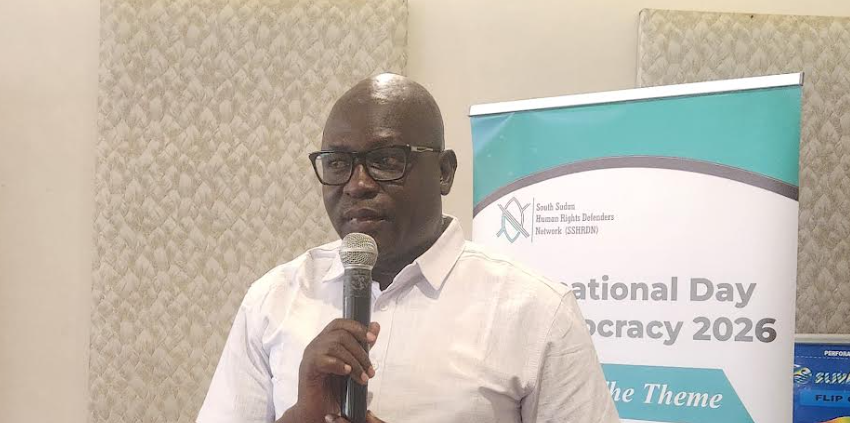
James Bidal Roba, the Head of the SSHRDN Secretariat, emphasized that merely holding elections does not inherently guarantee democratic participation if citizens are unable to exercise their fundamental rights without the threat of intimidation or harassment. He asserted that for a genuine democracy to flourish, an open civic and political space is indispensable, allowing for scrutiny and accountability of institutions. Roba specifically called upon the government to uphold the rights of citizens to assemble peacefully, form associations, and freely express their views. He also condemned the restrictions placed on journalists covering parliamentary sessions, stressing the public's right to be informed about the activities of their elected representatives, citing instances where media were barred from covering proceedings related to peace agreement amendments. Furthermore, the report indicated that political activities of various parties have also encountered disruption or restriction, further narrowing the South Sudan pre-election civic space restrictions and highlighting South Sudan freedom of expression violations.
Practical Implications
Lawyers advising clients operating in South Sudan, particularly those in media, civil society, or political analysis, should be aware of heightened risks of arbitrary detention, censorship, and restrictions on freedom of assembly and expression as the 2026 elections approach. This necessitates updated risk assessments and advice on operational security or public engagement strategies to mitigate potential legal and human rights exposures.
Source
How does this affect you?
Get an AI analysis of this article grounded in your jurisdictions, practice areas, and any policy documents you've uploaded to Wansom.
Finish Reading the Full Story and the Expert Analysis.
Get the latest legal & regulatory intelligence in South Sudan
Wansom is AI and can make mistakes.