
South Sudan Elections: Bishops Warn on Inadequate Preparations
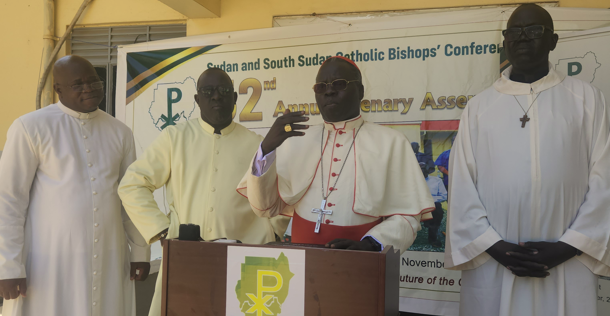
Catholic bishops from Sudan and South Sudan, following their 52nd Annual Plenary Assembly in Torit, Eastern Equatoria State, recently issued a communique cautioning against holding general elections in South Sudan without adequate preparations, citing significant institutional and security challenges. The bishops expressed deep concern over institutional weaknesses, pervasive insecurity, political mistrust, and the incomplete implementation of the Revitalized Agreement on the Resolution of the Conflict in South Sudan (R-ARCSS), emphasizing that the country should not be compelled into elections without the necessary conditions in place. Their statement, read by Cardinal Stephen Ameyu Martin Mulla, Metropolitan Archbishop of the Juba Archdiocese, underscored the need for an electoral process that genuinely reflects the sovereign will of the people and provides a peaceful and credible pathway towards constitutional democracy, while also warning against an indefinite transition devoid of accountability and a consensual legal basis.
This development carries substantial legal significance for practitioners, businesses, and the public in South Sudan, as it directly challenges the legitimacy and feasibility of the upcoming electoral cycle, which is a cornerstone of the country's transitional justice and democratic aspirations. For legal professionals, the bishops' warning highlights the critical importance of ensuring that any electoral process adheres strictly to constitutional and legal frameworks, particularly those outlined in the R-ARCSS, to prevent further political instability and potential conflict. Businesses operating in or considering investment in South Sudan must factor these profound political and security risks into their operational and strategic planning, as the credibility of elections directly impacts the stability of the governance environment and the rule of law, which are essential for economic predictability and investment security.
The legal context for this situation is primarily rooted in the Revitalized Agreement on the Resolution of the Conflict in South Sudan (R-ARCSS), which serves as the foundational legal instrument guiding the country's transitional period and the eventual conduct of elections. The bishops' concerns about incomplete transitional tasks and the absence of a consensual legal basis directly implicate the fulfillment of R-ARCSS provisions, which mandate specific reforms and conditions prior to elections. The National Elections Commission (NEC) is the statutory body legally tasked with organizing and overseeing elections, and its capacity and preparedness, as highlighted by the bishops, are central to the legality and credibility of any poll. The call for genuine dialogue on the implementation of R-ARCSS and relevant constitutional and legal provisions underscores the need for adherence to established legal frameworks and processes to ensure a legitimate transition.
Key parties involved in this critical juncture include the influential Catholic bishops from Sudan and South Sudan, who act as significant civil society voices, the caretaker government of South Sudan, the National Elections Commission (NEC), various political parties, opposition groups, and holdout groups. The bishops' communique serves as a powerful advocacy piece directed at these actors, urging them to prioritize the conditions for free and fair elections over arbitrary timelines. For legal practitioners, the takeaway is to closely monitor the legislative and regulatory developments pertaining to the electoral framework, including any amendments to electoral laws or the R-ARCSS implementation matrix. Attorneys advising clients in South Sudan should conduct thorough political risk assessments, focusing on the potential for electoral delays, disputes, or instability, and advise on strategies to mitigate these risks, including contingency planning for business operations. The outcome of this matter, specifically whether the elections proceed as planned or are delayed, is not yet reported in the excerpt, necessitating ongoing vigilance from legal and business communities.
How does this affect you?
Get an AI analysis of this article grounded in your jurisdictions, practice areas, and any policy documents you've uploaded to Wansom.
Finish Reading the Full Story and the Expert Analysis.
Get the latest legal & regulatory intelligence in South Sudan
Wansom is AI and can make mistakes.