
JSA Sidharth Sethi: States Cannot Manipulate Arbitration
Summary
- JSA Partner Sidharth Sethi stated that states and state-owned entities cannot manipulate the arbitral process, unlike some rogue private investors.
- Sethi argued that discussions often overlook states as victims of failed projects and investor defaults, emphasizing that fraud and corruption are significant underlying issues in arbitration.
- He suggested that some adverse arbitral awards against India in the mid-2010s stemmed from such conduct, without specifying particular cases.
- These comments were made during a panel discussion on disputes involving state-owned entities at Singapore Convention Week 2026, organized by Young IAMC Hyderabad and Drew & Napier.
States Face Unique Challenges in Arbitration
Sidharth Sethi, a Partner at JSA, recently highlighted a critical disparity in international arbitration, asserting that states and state-owned entities (SOEs) are fundamentally unable to manipulate the arbitral process to secure favorable awards, a capability he attributes to certain rogue private investors.
Sidharth Sethi, a Partner at JSA, recently highlighted a critical disparity in international arbitration, asserting that states and state-owned entities (SOEs) are fundamentally unable to manipulate the arbitral process to secure favorable awards, a capability he attributes to certain rogue private investors. Sethi's remarks challenge a common perception in disputes involving SOEs, where the private investor is frequently presumed to be the aggrieved party.
He emphasized that while private investors might find ways to manage the arbitration process to their advantage, states and their entities lack this capacity. Sethi pointedly stated that many 'rogue private investors are able to manage the process,' contrasting this sharply with the inability of a state or state-owned entity to do so. This perspective underscores a significant imbalance in the dynamics of international arbitration, particularly when public and private interests clash.
The 'Elephant in the Room': Fraud and Corruption
Beyond the issue of process manipulation, Sethi identified fraud and corruption as the 'elephant in the room' when discussing the inherent problems within the arbitration system. He argued that states are not immune to suffering from failed projects, defaults by contractors, and investors who fail to honor their contractual obligations, directly contradicting the narrative that only private investors are victims in such disputes.
In a notable example, Sethi suggested that some adverse arbitral awards issued against India during the mid-2010s were a direct consequence of such manipulative conduct and underlying corruption. While he refrained from naming specific investors, arbitrations, or awards, his comments indicate a broader pattern of concern regarding the integrity of certain international arbitration outcomes, particularly those impacting sovereign nations.
Insights from Singapore Convention Week 2026
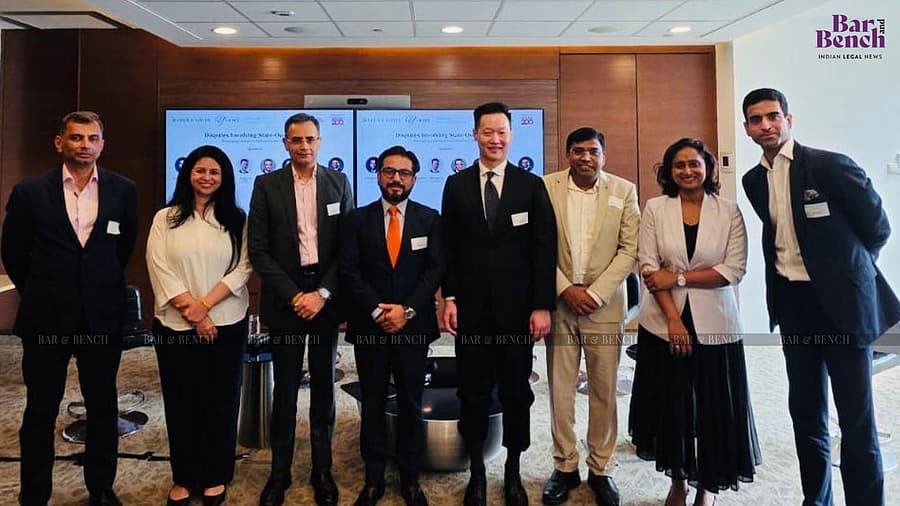
These significant observations by JSA Sidharth Sethi on rogue investors arbitration manipulation were delivered during a panel discussion titled 'Disputes Involving State-Owned Entities: Emerging Issues in International Arbitration.' The session was a key event during Singapore Convention Week 2026, co-organized by Young IAMC Hyderabad and Drew & Napier.
The discussion featured a distinguished panel, including Sethi himself, alongside Purnima Kambalay, Senior Partner at Fox Mandal & Associates, Raj Panchmatia, Partner at Khaitan & Co, and a representative from DXC Technology. The proceedings commenced with an opening address by A J Jawad, CEO and Registrar of IAMC, and were expertly moderated by Montek Mayal, Partner and Practice Head for Asia and the Middle East at Osborne Partners.
Implications for State-Owned Entities
Sethi's insights highlight a critical vulnerability for state-owned entities in international arbitration, suggesting they operate on an uneven playing field where private actors may exploit systemic weaknesses. His focus on fraud corruption arbitration India, and the broader issue of manipulation, underscores the necessity for legal professionals advising SOEs to adopt a highly strategic and proactive approach to dispute resolution and risk management.
Understanding that states can also be the wronged party, suffering from investor defaults and project failures, is crucial for developing robust defense mechanisms. The discussion during Singapore Convention Week 2026 serves as a vital reminder that the integrity of the arbitral process, particularly in high-stakes disputes involving public funds and national interests, remains a paramount concern for all stakeholders.
Practical Implications
Legal professionals advising state-owned entities in international arbitration should be acutely aware of the potential for private investor manipulation and the underlying issues of fraud and corruption, informing their strategic approach to dispute resolution and risk management.
Source
How does this affect you?
Get an AI analysis of this article grounded in your jurisdictions, practice areas, and any policy documents you've uploaded to Wansom.
Finish Reading the Full Story and the Expert Analysis.
Wansom is AI and can make mistakes.