
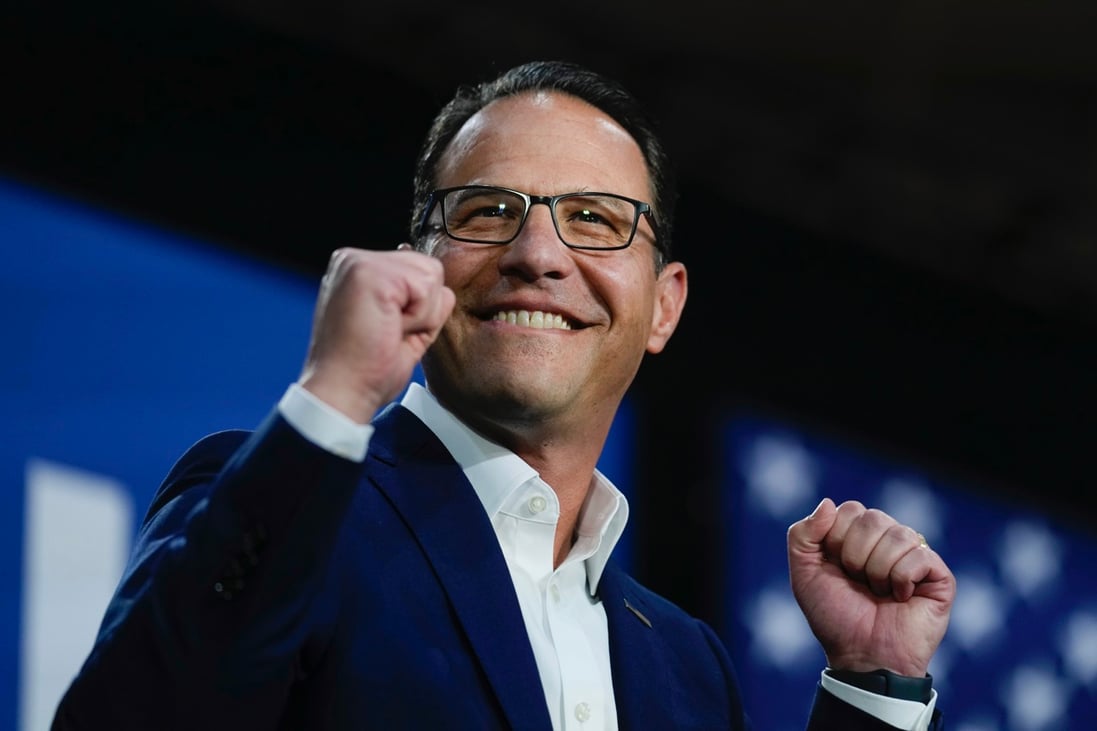
Third Circuit Hears Shapiro USDA Food Bank Funds Appeal
Summary
- Pennsylvania Governor Josh Shapiro appealed a federal court's dismissal of his lawsuit against the USDA regarding $13 million in revoked food assistance funds.
- The initial lawsuit, filed in June 2025, challenged the abrupt cancellation of the Local Food Purchase Assistance (LFPA) program, which aimed to support 189 farms and 14 food banks.
- A federal judge dismissed the case in December 2025, ruling it was a contractual dispute under the Tucker Act, not an administrative action under the Administrative Procedure Act.
- Shapiro's attorney argued in the Third Circuit that the LFPA was a cooperative agreement, not a contract, and therefore subject to APA jurisdiction.
- The appeal centers on whether the agreement's nature dictates jurisdiction in the Court of Federal Claims or a federal district court.
What Happened
This case highlights the critical jurisdictional distinction between challenging government program terminations as contractual disputes under the Tucker Act versus administrative actions under the APA, impacting the proper forum for litigation against federal agencies.
Pennsylvania Governor Josh Shapiro and Pennsylvania Agriculture Secretary Russell Redding initiated legal action against the United States Department of Agriculture (USDA) in June 2025. Their lawsuit contested the abrupt termination of a $13 million Local Food Purchase Assistance (LFPA) program agreement, which was designed to bolster food security across the state. This program aimed to facilitate the procurement of fresh, nutritious food directly from Pennsylvania farmers, subsequently distributing it to local food banks and pantries.
According to state officials, the canceled agreement would have provided crucial support to 189 in-state farms and 14 in-state food banks. The sudden withdrawal of these promised funds had severe repercussions, reportedly cutting up to 15% from the purchasing budgets of food banks and resulting in the loss of more than 4.4 million meals for food-insecure residents. Governor Shapiro argued that the termination violated both the Administrative Procedure Act (APA) and due process law, seeking the program's reinstatement as a remedy. However, a federal judge in Harrisburg, Pennsylvania, dismissed the complaint in December 2025, citing a lack of subject matter jurisdiction. The court determined the agreement was contractual in nature, thereby placing the dispute under the purview of the Court of Federal Claims via the Tucker Act, prompting Shapiro's immediate appeal.
Jurisdictional Crossroads
The appeal, heard in the Third Circuit, centered on a critical jurisdictional question: whether the LFPA agreement should be classified as a contract, falling under the Tucker Act and the Court of Federal Claims, or as a cooperative agreement, subject to the Administrative Procedure Act jurisdiction. Representing Governor Shapiro, attorney Jacob B. Boyer contended that the lower court's designation was erroneous, asserting the arrangement was a cooperative agreement and thus properly challenged under the APA.
During the proceedings, U.S. Circuit Judge Thomas M. Hardiman questioned Boyer's argument, particularly regarding the absence of a direct monetary claim. Boyer clarified that if the state prevailed, no immediate sum would be due, as no money was owed at the time of termination. He explained that vacating the termination would necessitate the Pennsylvania Department of Agriculture submitting a new plan to the USDA for approval, potentially involving further negotiations. When Senior U.S. Circuit Judge Theodore A. McKee inquired if Shapiro sought specific performance, Boyer maintained that specific performance for a non-contractual agreement falls within APA jurisdiction, emphasizing that the primary goal was to vacate the termination decision.
Defining the Agreement
The core of the appeal hinges on the precise legal classification of the Local Food Purchase Assistance (LFPA) program agreement: whether it constitutes a contract or a cooperative agreement. This distinction is paramount because it dictates the appropriate legal avenue for challenging its termination. Boyer emphasized that the program's full designation, the 'Local Food Purchase Assistance Cooperative Agreement Program,' explicitly uses the term 'cooperative agreement,' a detail he argued should carry weight in the court's analysis. While acknowledging that a program's name alone is not definitive, Boyer asserted that it serves as a significant indicator when considered alongside the agreement's specific terms. He maintained that the internal provisions of the document itself corroborate the nature of the arrangement as a cooperative agreement, thereby placing it under the purview of the Administrative Procedure Act.
This case highlights the critical jurisdictional distinction between challenging government program terminations as contractual disputes under the Tucker Act versus administrative actions under the APA, impacting the proper forum for litigation against federal agencies. The outcome will have significant implications for how states and other entities can challenge federal funding decisions, particularly when the nature of the funding mechanism—be it a cooperative agreement or a traditional contract—is ambiguous. Lawyers advising clients on federal funding agreements must carefully assess whether such agreements constitute contracts or cooperative agreements to determine the appropriate legal avenue for dispute resolution, as the choice of forum can be dispositive.
Practical Implications
This case highlights the critical jurisdictional distinction between challenging government program terminations as contractual disputes under the Tucker Act versus administrative actions under the APA, impacting the proper forum for litigation against federal agencies. Lawyers advising clients on federal funding agreements must carefully assess whether such agreements constitute contracts or cooperative agreements to determine the appropriate legal avenue for dispute resolution.
Source
How does this affect you?
Get an AI analysis of this article grounded in your jurisdictions, practice areas, and any policy documents you've uploaded to Wansom.
Finish Reading the Full Story and the Expert Analysis.
Get the latest legal & regulatory intelligence in United States
Wansom is AI and can make mistakes.