
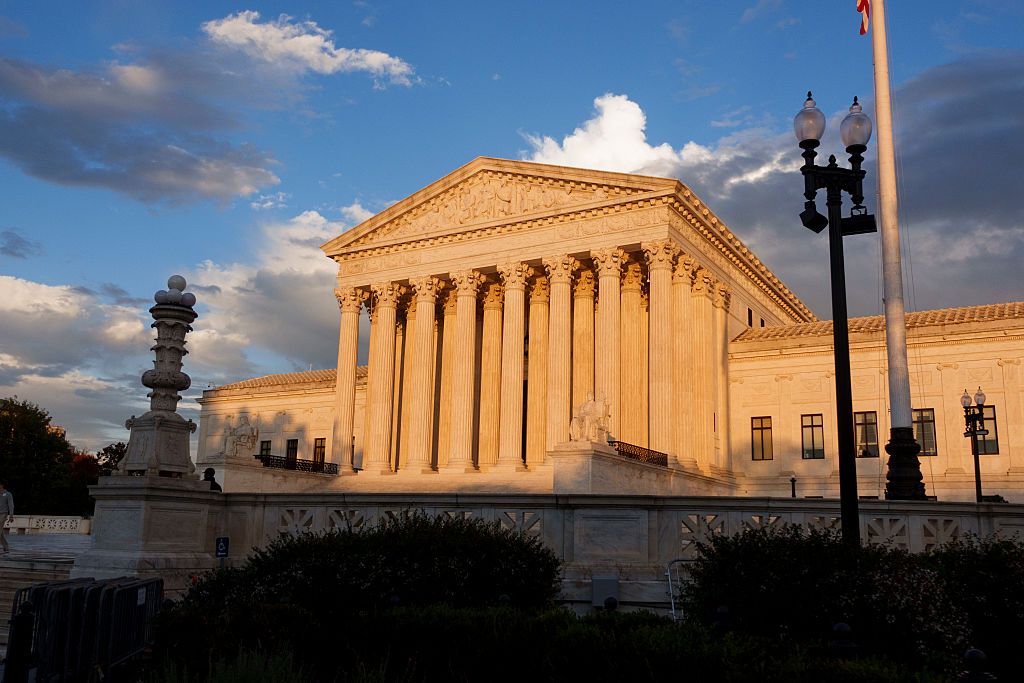
SCOTUS United States v. Talbott: Justices Weigh Transgender Military Ban Appeal
Summary
- The Supreme Court will consider several high-profile petitions for review at its private conference on December 4.
- One key case, United States v. Talbott, involves a D.C. Circuit ruling that prevents the enforcement of the Trump-era ban against transgender servicemembers.
- The government argues the D.C. Circuit's decision is "gravely erroneous" and lacks deference to the military, while challengers assert it is correct and temporary.
- Justices will also review petitions from former President Trump and the federal government challenging an $83.3 million verdict in the E. Jean Carroll lawsuit.
- Decisions on these petitions could establish significant legal precedents regarding military service for transgender individuals and defamation law.
Upcoming Supreme Court Review
A grant of certiorari in United States v. Talbott would open the door for the Court to establish critical precedent regarding the rights of transgender servicemembers and the extent of presidential authority over military personnel policy, particularly concerning the D.C. Circuit transgender ruling.
The Supreme Court is preparing for a significant private conference on Friday, December 4, following a two-and-a-half-week hiatus from such deliberations. During this session, the justices are slated to evaluate numerous high-profile petitions for review, a process that could potentially lead to a demanding spring calendar for the nation's highest court. Among the most prominent cases under consideration, three directly involve the federal government and former President Donald Trump, signaling a potentially impactful docket.
Challenge to Transgender Military Service
One pivotal case awaiting the Supreme Court's decision on certiorari is United States v. Talbott. This petition asks the justices to review a ruling from the U.S. Court of Appeals for the D.C. Circuit, which currently prevents the enforcement of the Trump-era ban against several transgender servicemembers from military duty. The federal government, through U.S. Solicitor General D. John Sauer, has characterized the D.C. Circuit's decision as "gravely erroneous" in its petition for review. Sauer contended that the appellate court's reasoning is inconsistent with established Supreme Court precedents and undermines the necessary deference owed to military judgments.
Conversely, the parties challenging the government's position have urged the Supreme Court to decline review, asserting that the D.C. Circuit's ruling is both "narrow" in scope and temporary in its effect. They further argue that the decision is fundamentally correct, maintaining that the Trump administration's policy banning transgender servicemembers was driven by animosity towards transgender individuals, rather than being based on legitimate "military judgments." The potential for SCOTUS United States v. Talbott to be heard could have profound implications for Supreme Court transgender servicemembers rights and the Trump military ban appeal.
E. Jean Carroll Verdict Appeal
Another significant matter on the December 4 conference agenda involves former President Trump's challenge to an $83.3 million jury verdict. This substantial award was issued against him in a lawsuit initiated by E. Jean Carroll. Both Trump and the federal government have independently filed petitions for review concerning this verdict, seeking the Supreme Court's intervention. The E. Jean Carroll jury award SCOTUS consideration highlights ongoing legal battles stemming from high-profile defamation claims.
Broader Legal Implications
The Supreme Court's decisions on these petitions carry substantial weight for various areas of law. A grant of certiorari in United States v. Talbott would open the door for the Court to establish critical precedent regarding the rights of transgender servicemembers and the extent of presidential authority over military personnel policy, particularly concerning the D.C. Circuit transgender ruling. The arguments presented by both sides underscore a fundamental tension between judicial oversight and executive discretion in military affairs.
Similarly, the Court's engagement with the E. Jean Carroll jury award SCOTUS appeal could influence future defamation litigation, especially concerning public figures and the assessment of damages. The confluence of these cases on the December 4 docket underscores the Court's role in addressing complex legal and societal issues, setting the stage for potentially landmark rulings that will shape legal interpretations for years to come.
Practical Implications
Lawyers should monitor the Supreme Court's December 4 conference for decisions on whether to grant certiorari in United States v. Talbott, as a review could establish significant precedent regarding military service for transgender individuals. The potential review of the E. Jean Carroll verdict also warrants attention for its implications on defamation law and high-profile litigation.
Source
How does this affect you?
Get an AI analysis of this article grounded in your jurisdictions, practice areas, and any policy documents you've uploaded to Wansom.
Finish Reading the Full Story and the Expert Analysis.
Get the latest legal & regulatory intelligence in United States
Wansom is AI and can make mistakes.