
Sénégal: Enquête Parlementaire Retail ATI Paiement de 1.446 Milliard FCFA
Summary
- A Senegalese parliamentary inquiry is investigating potential irregularities in the 48 billion FCFA "Un étudiant, un ordinateur" program, launched in 2017.
- Central to the probe is an alleged 1,446,275,000 FCFA payment to Retail ATI, reportedly not the intended recipient, with an account manager citing instructions from Director Aboubacry Niane.
- The investigation also covers claims of 2,000 undelivered computers, over 800 defective units, and a dispute concerning 20,000 computers.
- On October 8, 2026, the commission questioned four individuals on payments, bank accounts, and supplier relations, though no conclusion of embezzlement has been reached yet.
Parliamentary Inquiry Targets Public Procurement in Senegal
This probe into the paiement 1.446 milliard FCFA and the broader management of the 48 billion FCFA program serves as a critical indicator for legal and compliance professionals.
The Senegalese parliamentary inquiry into the "Un étudiant, un ordinateur" program is intensifying, with a specific focus on a 1,446,275,000 FCFA payment and a dispute involving 20,000 computers. This commission, established to investigate potential irregularities in public contracts related to the 48 billion FCFA initiative launched in 2017, aims to equip Senegalese students with essential digital tools. The probe underscores a heightened scrutiny of government spending and procurement processes within the nation.
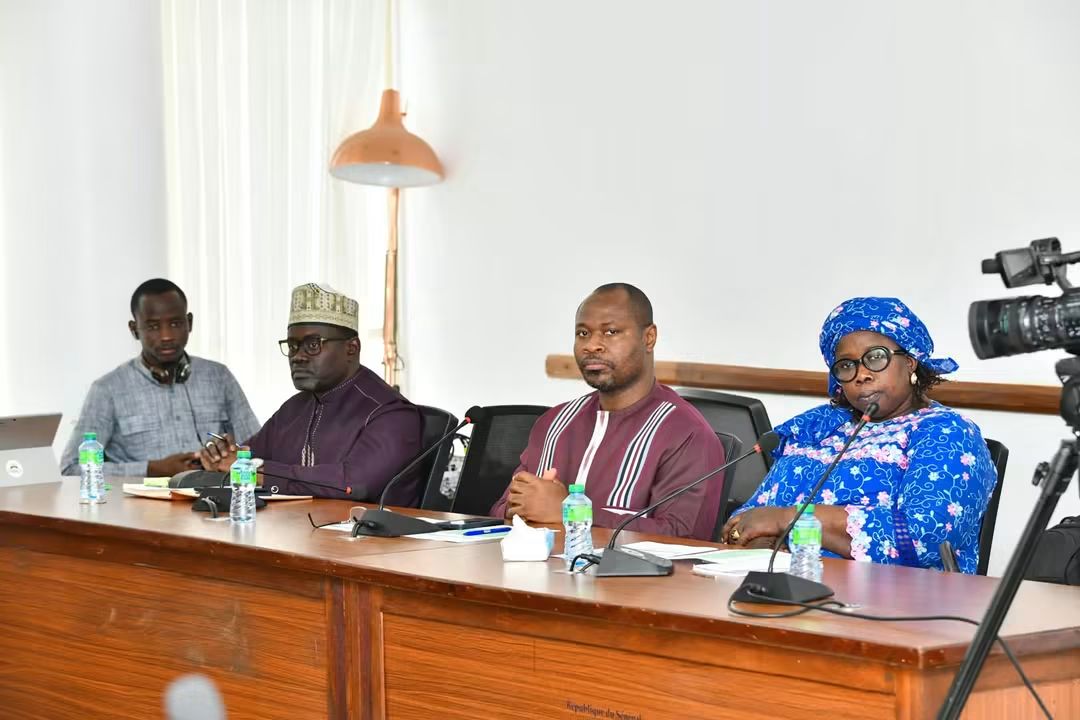
On Thursday, October 8, 2026, the commission, led by Deputy El Hadji Guèye, conducted further hearings. Four new individuals were questioned regarding various aspects of the program, including payment procedures, bank account management, and relationships with suppliers. This phase of the investigation seeks to unravel the complexities surrounding the program's financial transactions and material acquisitions, particularly concerning the alleged payment to Retail ATI.
The broader context of this Sénégal enquête parlementaire Retail ATI paiement highlights systemic concerns within public procurement. The "Un étudiant, un ordinateur" program, initially known as "Sama PC," has drawn attention due to multiple claims of mismanagement and potential fraud. The commission's mandate is to ensure transparency and accountability in the allocation of significant public funds intended for educational advancement.
Scrutiny Over a 1.4 Billion FCFA Payment and Account Management
A central point of contention in the ongoing inquiry revolves around an alleged payment of 1,446,275,000 FCFA. Reports indicate this substantial sum was disbursed to Retail ATI, despite the company reportedly not being the legitimate beneficiary of the funds. This particular transaction has prompted detailed questioning by the commission enquête parlementaire Sénégal, aiming to ascertain the true recipient and the justification for the payment.
Baba Ndiaye, who has served as an account manager since 2019, provided testimony concerning this payment. He stated that he acted under the direct instruction of Director Aboubacry Niane in processing the transaction. Ndiaye also detailed the existence of several bank accounts associated with the program, held at financial institutions including Ecobank, Bank of Africa, and UBA. He clarified that his responsibilities were limited to a specific deposit account, while he believed other accounts fell under the purview of the Director General of Higher Education and the Director of Financing of Higher Education.
Further insights into account management practices came from Cheikh Diakhoumpa, an account manager at the Directorate General of Higher Education from 2010 to 2018. Diakhoumpa explained that the deposit account was funded by the Director of General Administration and Equipment of the ministry. He outlined the standard procedure for supplier payments, which typically occurred after the delivery of computers designated for the Cheikh Hamidou Kane Digital University. Required documentation for such payments included a contract or agreement, an invoice, a delivery note, and a reception report. Diakhoumpa also noted that he was not involved in the contract awarding processes, separating his role from the initial procurement decisions.
Allegations of Undelivered and Defective Equipment
Beyond financial transactions, the parliamentary inquiry is also examining serious allegations concerning the delivery and quality of equipment under the "Un étudiant, un ordinateur" program. Agents previously associated with "Sama PC," the program's former designation, have testified that 2,000 computers listed on a delivery note attributed to Oumou Group were never actually supplied. This raises significant questions about oversight and verification processes within the program's supply chain.
Adding to these concerns, Mamadou Sow reported receiving the aforementioned delivery document in November 2024 and stated he was pressured to sign it. This testimony suggests potential irregularities in the documentation of received goods, indicating a possible breakdown in accountability. Furthermore, the inquiry has uncovered that more than 800 computers, which were reportedly paid for and delivered, were subsequently found to be defective. Such issues with product quality and delivery directly impact the program's objective of providing functional digital tools to students.
The commission also heard from Abdoulaye Thiam, the Director General of Camputer Land, regarding his company's engagement with the administration. Thiam explained that Camputer Land began its collaboration with the ministry in 2015, following a public call for expressions of interest published in the press. A dispute involving 20,000 computers is currently under examination as part of the broader investigation into marchés publics irrégularités within the program.
Implications for Public Procurement and Accountability
The ongoing parliamentary inquiry in Senegal signals heightened scrutiny of public procurement processes and payments, particularly concerning the 'Un étudiant, un ordinateur' program. The commission's current objective is to meticulously examine the specific operation corresponding to the 1,446,275,000 FCFA invoice, identify the intended beneficiary company, and scrutinize the documentation that purportedly justified the payment. While the declarations gathered thus far do not yet conclusively point to embezzlement, the detailed nature of the investigation highlights a commitment to uncovering any potential wrongdoing.
This probe into the paiement 1.446 milliard FCFA and the broader management of the 48 billion FCFA program serves as a critical indicator for legal and compliance professionals. Companies involved in Senegalese public contracts should review their internal controls and payment documentation to mitigate risks associated with potential irregularities or fraud investigations. The focus on instructions given by figures like Aboubacry Niane instruction and the scrutiny of bank accounts underscore the need for robust governance frameworks.
The broader context includes a 2025 rejection by the DCMP (Direction Centrale des Marchés Publics) of a direct agreement for computers for the Cheikh Hamidou Kane Digital University, further illustrating the regulatory environment. The very establishment of this commission, proposed in the National Assembly on August 6, 2026, reflects a legislative drive for greater transparency. The comprehensive nature of these hearings, which have also included individuals like M. Mountaga Dia on October 7, 2026, emphasizes the government's intent to address marchés publics irrégularités and ensure accountability in the use of public funds.
Practical Implications
This ongoing parliamentary inquiry in Senegal signals heightened scrutiny of public procurement processes and payments, particularly concerning the 'Un étudiant, un ordinateur' program. Lawyers and compliance officers advising companies involved in Senegalese public contracts should review their internal controls and payment documentation to mitigate risks associated with potential irregularities or fraud investigations.
Source
How does this affect you?
Get an AI analysis of this article grounded in your jurisdictions, practice areas, and any policy documents you've uploaded to Wansom.
Finish Reading the Full Story and the Expert Analysis.
Get the latest legal & regulatory intelligence in Senegal
Wansom is AI and can make mistakes.