
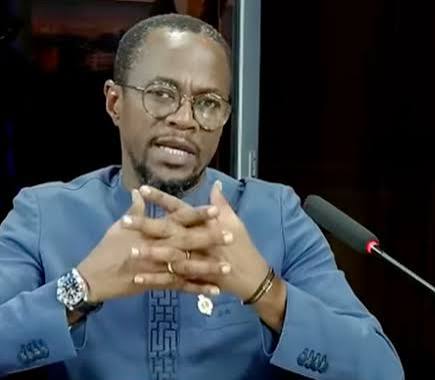
Senegal: Deputy Mbow Challenges Legality of Resolution Against Presidential Decree
In Senegal, Member of Parliament Abdou Mbow is challenging the legality of a parliamentary resolution proposed by the majority, which aims to counter a presidential decree, arguing that the proper legal recourse would be to refer the matter to the Constitutional Council or the Supreme Court, not through a resolution, as reported recently by Senego.
This development highlights a significant constitutional and procedural dispute within the Senegalese legislative framework, questioning the scope of parliamentary power to challenge executive actions and the appropriate judicial avenues for such challenges. It underscores the delicate balance of the separation of powers and the distinct roles of legislative and judicial institutions in reviewing executive acts. The outcome of this specific challenge is not yet reported, but its progression will be closely watched by legal observers.
The legal context for this dispute primarily involves Article 83 of the National Assembly's internal regulations, which Mbow cited as the basis for his challenge. The core of his argument rests on the principle that a parliamentary resolution, as a legislative act, cannot unilaterally nullify an executive presidential decree, suggesting that such a challenge falls within the purview of higher judicial bodies like the Constitutional Council or the Supreme Court. This implicates the hierarchy of legal norms and the established mechanisms for judicial review of executive decisions in Senegal.
Key parties involved include Abdou Mbow, the challenging Member of Parliament; the parliamentary majority, specifically Pastef-Les Patriotes, which is proposing the resolution; the National Assembly, where this debate is unfolding; and by extension, the President, whose decree is the subject of the resolution. The Constitutional Council and the Supreme Court are also central to Mbow's argument as the appropriate judicial bodies for such a review.
Attorneys and legal professionals in Senegal should closely monitor the procedural developments in the National Assembly regarding this challenge to the presidential decree, particularly how the legal arguments concerning Article 83 and the respective roles of the Constitutional Council and Supreme Court are addressed. Businesses should be aware of potential legislative-executive tensions that could impact regulatory stability, especially concerning the implementation of executive decrees. Understanding the precise boundaries of legislative and judicial oversight of executive actions is crucial for navigating the country's legal landscape.
How does this affect you?
Get an AI analysis of this article grounded in your jurisdictions, practice areas, and any policy documents you've uploaded to Wansom.
Finish Reading the Full Story and the Expert Analysis.
Get the latest legal & regulatory intelligence in Senegal
Wansom is AI and can make mistakes.