
SC: Section 34 Arbitration Delay Condonation Needs Separate Application
Summary
- The Supreme Court ruled that a Section 34 application challenging an arbitral award, if filed late, must include a condonation of delay application.
- Courts must decide limitation issues, including requests for Section 14 Limitation Act exclusion, as preliminary matters before addressing the merits of a Section 34 challenge.
- Section 14 of the Limitation Act allows for the exclusion of time spent diligently pursuing a case in a court lacking jurisdiction.
- This directive arose from an appeal involving Jaipur Metro Rail Corporation and Continental Engineering Corporation Limited.
- The ruling emphasizes the need for strict procedural compliance to avoid dismissal of arbitral award challenges on technical grounds.
Supreme Court Mandate on Arbitration Challenges
Only if the court grants the exclusion and determines the Section 34 application to be within the revised limitation period will the substantive grounds for challenging the arbitral award be considered.
The Supreme Court of India recently clarified crucial procedural requirements for challenging arbitral awards under Section 34 of the Arbitration and Conciliation Act, 1996. The apex court unequivocally stated that any application seeking to set aside an arbitral award filed beyond the statutory limitation period must be accompanied by a separate application for condonation of delay. This directive underscores the strict adherence required for the arbitral award challenge limitation period.
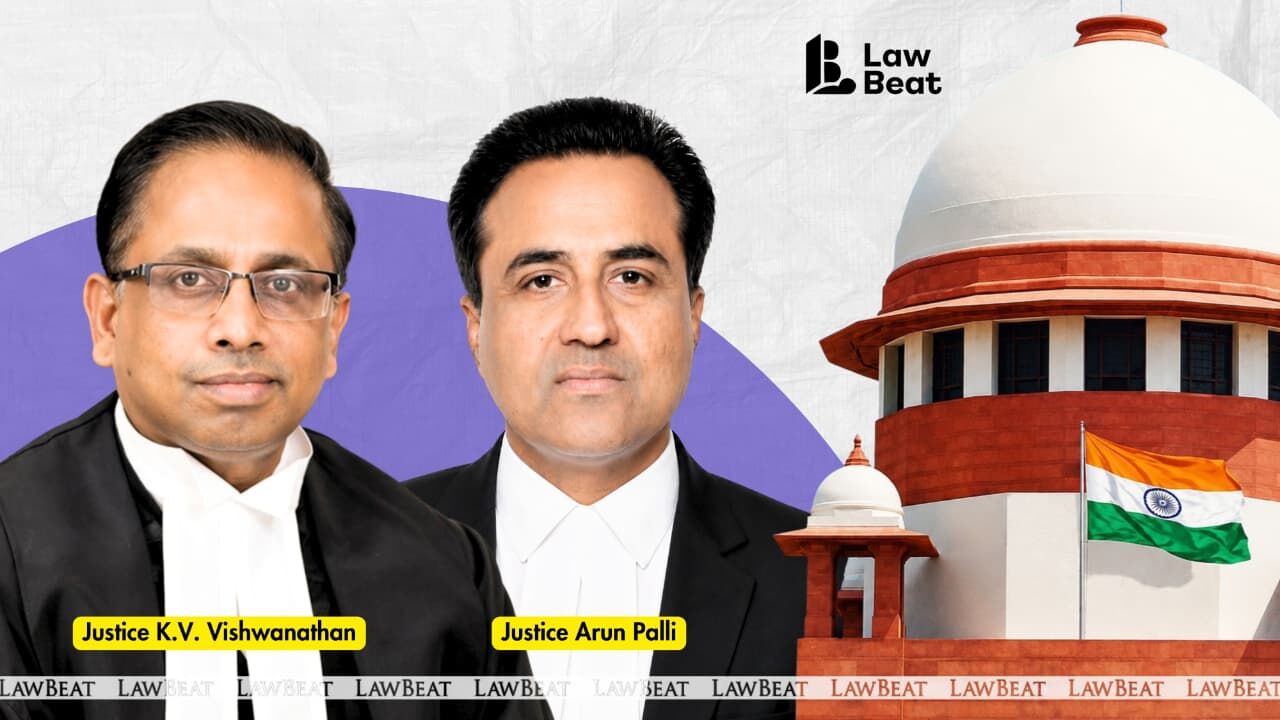
A bench comprising Justices K.V. Vishwanathan and Arun Palli emphasized that when a Section 34 application is submitted after the prescribed timeframe, the court's primary duty is to first address the question of limitation. This determination must precede any examination of the merits of the challenge to the arbitral award itself. Furthermore, the Court mandated that any request for exclusion of time under Section 14 of the Limitation Act, 1963, must also be treated as a preliminary issue, requiring a dedicated application and an opportunity for the opposing party to present their objections. This ruling ensures that the procedural integrity of the arbitral process is maintained from the outset.
Understanding Limitation and Exclusion
The Supreme Court's pronouncement highlights two critical aspects of limitation in the context of challenging arbitral awards. Firstly, the requirement for a condonation of delay application India is paramount when the initial filing period for a Section 34 Arbitration and Conciliation Act challenge has expired. This mechanism allows courts to consider extending the limitation period under specific circumstances.
Secondly, the Court elaborated on the application of Section 14 of the Limitation Act, which permits the exclusion of time spent by a party diligently and in good faith pursuing a legal matter before a court that ultimately lacks jurisdiction or is unable to entertain the case due to similar defects. The Justices clarified that such a request for Section 14 Limitation Act exclusion must be formally presented and adjudicated upon as a preliminary issue, providing both parties a fair hearing. Only if the court grants the exclusion and determines the Section 34 application to be within the revised limitation period will the substantive grounds for challenging the arbitral award be considered. This procedural safeguard prevents parties from bypassing strict timelines without proper justification.
The Jaipur Metro Precedent
This significant clarification from the Supreme Court arose from an appeal filed by the Jaipur Metro Rail Corporation. The corporation challenged an order issued on August 21, 2025, by a division bench of the Rajasthan High Court, stemming from a dispute with Continental Engineering Corporation Limited. The original arbitral award, decided by a 2:1 majority, was rendered on December 20, 2017.
Continental Engineering initially filed its Section 34 application to set aside the award on March 16, 2018, before the Rajasthan State Commercial Court, Jaipur. However, Jaipur Metro Rail Corporation arbitration objections regarding the nature of the arbitration—specifically, that it constituted an international commercial arbitration—led to the commercial court returning the application on November 22, 2018, under Order VII Rule 10 of the Code of Civil Procedure, 1908, identifying the Rajasthan High Court as the correct forum. Continental Engineering subsequently filed the application with the High Court registry on December 10, 2018, and again on February 14, 2019. It later submitted an application under Section 14 of the Limitation Act on February 2, 2022, seeking to exclude the time spent before the commercial court. The single judge of the High Court, on March 2, 2022, found the Section 34 application as filed before the High Court to be not maintainable and also barred by limitation due to the absence of a condonation of delay application.
Ensuring Procedural Compliance
The Supreme Court's ruling serves as a critical reminder for legal practitioners involved in challenging arbitral awards under Section 34 of the Arbitration and Conciliation Act. It firmly establishes that any issues pertaining to limitation, including requests for condonation of delay or Section 14 Limitation Act exclusion, are not mere technicalities but fundamental preliminary issues that must be resolved before the merits of the challenge can be heard. This approach is designed to streamline the judicial process and prevent unnecessary litigation on substantive matters when procedural hurdles remain.
By mandating that courts decide limitation and Section 14 exclusion before examining a Section 34 Arbitration Act challenge, the Supreme Court reinforces the principle that parties must proactively address any potential delays. Lawyers must ensure that a delayed plea is accompanied by a condonation of delay application, or a specific application for exclusion of time, to avoid the dismissal of their challenge on procedural grounds. This directive ensures clarity and efficiency in the resolution of disputes arising from arbitral awards.
Practical Implications
Lawyers challenging arbitral awards under Section 34 of the Arbitration Act must proactively file a separate application for condonation of delay if the statutory period has lapsed, or for exclusion of time under Section 14 of the Limitation Act. The Supreme Court has mandated that these limitation issues must be decided as preliminary matters before the merits of the Section 34 challenge are considered, requiring careful procedural compliance to avoid dismissal on technical grounds.
Source
How does this affect you?
Get an AI analysis of this article grounded in your jurisdictions, practice areas, and any policy documents you've uploaded to Wansom.
Finish Reading the Full Story and the Expert Analysis.
Wansom is AI and can make mistakes.