
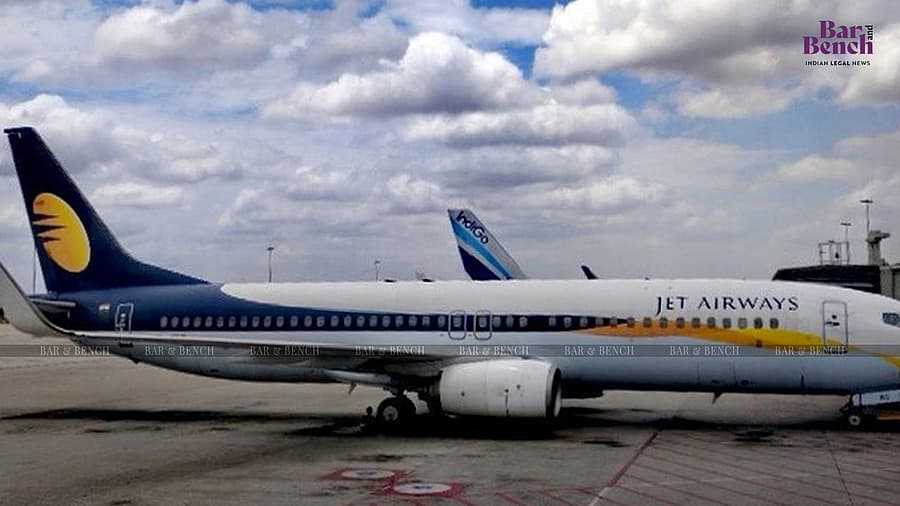
Supreme Court: SBI v Manoj Kumar Das PF Gratuity Affirmed for Jet Airways
Summary
- The Supreme Court declined to interfere with an NCLAT ruling that granted relief to former Jet Airways employees for their provident fund and gratuity dues.
- The decision, in the case of SBI v Manoj Kumar Das, means the NCLAT's judgment favoring the employees in the airline's liquidation remains undisturbed.
- The Supreme Court explicitly left open broader legal questions regarding whether unpaid PF and gratuity can be excluded from a liquidation estate if no separate fund was maintained.
- The court stated that while the appeals raised arguable points of law, it chose not to intervene based on the specific facts of this particular case.
- Jet Airways stopped operations in April 2019 and was ordered into liquidation by the Supreme Court in November 2024 after a resolution plan failed.
Supreme Court Upholds Employee Dues in Jet Airways Liquidation
The Supreme Court, while acknowledging that the appeals raised arguable questions of law, opted not to interfere with the NCLAT's judgment based on the specific facts and circumstances of the case.
India's Supreme Court recently declined to intervene in a National Company Law Appellate Tribunal (NCLAT) decision that provided relief to former Jet Airways employees concerning their provident fund (PF) and gratuity entitlements. The ruling, stemming from the case of SBI v Manoj Kumar Das, effectively allows the NCLAT's judgment, which favored the workers, to stand amidst the airline's ongoing liquidation proceedings.
The apex court's bench, comprising Chief Justice of India Surya Kant and Justices Joymalya Bagchi and V Mohana, reviewed the appeals but ultimately chose not to overturn the NCLAT's findings. This means that the NCLAT's June 30 judgment, which had dismissed appeals filed by State Bank of India (SBI) and other entities, remains undisturbed. The NCLAT's original decision had granted significant relief to the former employees by prioritizing their terminal benefits.
Jet Airways, which ceased its operations in April 2019, was formally ordered into liquidation by the Supreme Court in November 2024. This followed the failure of the Jalan-Fritsch consortium to successfully implement its proposed resolution plan for the beleaguered airline. The current Supreme Court decision marks a crucial development for the workers seeking their long-pending dues.
Broader Legal Questions Remain Unanswered
Despite affirming the NCLAT's ruling in this specific instance, the Supreme Court explicitly left open several fundamental legal questions for future consideration. A key issue highlighted by the bench is whether unpaid provident fund and gratuity dues can be excluded from a company's liquidation estate, particularly when no separate fund was maintained for these employee benefits. This question carries significant implications for how employee claims are treated in insolvency proceedings across India.
The Supreme Court acknowledged that the appeals presented arguable points of law that would ordinarily warrant a detailed judicial determination. However, the bench clarified that its decision not to interfere was based strictly on the unique facts and circumstances presented in the SBI v Manoj Kumar Das case. This approach suggests a cautious stance, resolving the immediate dispute for Jet Airways workers while reserving judgment on the broader legal principles involved.
By leaving these complex legal questions open, the Supreme Court signaled that its current decision should not be interpreted as a definitive pronouncement on the general treatment of provident fund and gratuity dues in all liquidation scenarios. Future cases will likely provide the necessary context for the court to address the intricate interplay between employee benefits and the liquidation estate, especially regarding the requirement of a separately maintained fund.
Implications for Employee Benefits in Indian Insolvency
The Supreme Court's decision, while fact-specific, provides a degree of certainty for the former Jet Airways workers regarding their provident fund and gratuity dues. By declining to interfere with the NCLAT's judgment, the highest court has allowed the relief granted to these employees to stand, reinforcing the importance of protecting workers' terminal benefits during corporate insolvency. This outcome is particularly significant given the long-standing nature of the Jet Airways liquidation employee dues.
This ruling underscores the NCLAT's position on prioritizing certain employee claims, even as the Supreme Court has chosen to defer a definitive pronouncement on the broader legal framework. The NCLAT Jet Airways PF gratuity ruling, now effectively upheld, sets a precedent for how similar claims might be handled in other insolvency cases, at least until the Supreme Court provides further clarity on the 'separate fund' issue.
For the wider landscape of Indian insolvency, this judgment highlights the ongoing tension between creditor claims and employee protections. While the Supreme Court has not yet issued a sweeping declaration on Indian insolvency provident fund exclusion, its non-interference in this case offers a temporary win for employee benefits in liquidation. The eventual resolution of the 'larger questions' will shape the future of Supreme Court employee benefits liquidation India.
Practical Implications
This ruling confirms the NCLAT's position on prioritizing provident fund and gratuity dues for employees in liquidation, setting a precedent for similar claims in Indian insolvency proceedings. Practitioners should advise clients on the potential for these employee benefits to be treated outside the liquidation estate based on this outcome, even as the Supreme Court has left broader legal questions open for future cases.
Source
How does this affect you?
Get an AI analysis of this article grounded in your jurisdictions, practice areas, and any policy documents you've uploaded to Wansom.
Finish Reading the Full Story and the Expert Analysis.
Wansom is AI and can make mistakes.