
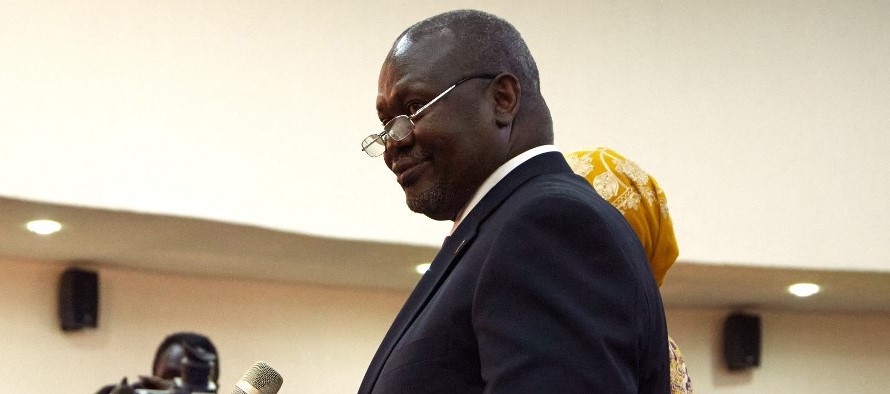
Riek Machar Trial: Denies Nasir Incident Allegations, White Army Command
Summary
- Riek Machar, during his 126th trial session, denied ordering Maj. Gen. David Majur Dak to surrender during the March 2025 Nasir incident.
- Machar asserted he actively sought Majur Dak's safe evacuation and dismissed allegations against him as politically motivated.
- He also denied commanding the White Army and stated that Regina Joseph Kaba, acting SPLA-IO chairperson, does not command the group either.
- Machar refuted claims of holding 170-176 Nasir incident survivors hostage, stating he facilitated their evacuation to Juba.
- His defense included citing remarks by former Vice President Benjamin Bol Mel, who called for clearing armed groups from Nasir and an investigation into the incident.
Defense Presented in Riek Machar Trial
The Riek Machar trial Nasir incident highlights the intricate challenges of establishing command responsibility and proving intent in conflict-related legal proceedings within South Sudan.
During the 126th session of his ongoing trial, suspended First Vice President Riek Machar vehemently denied allegations that he had instructed the late Maj. Gen. David Majur Dak to surrender amidst the fighting that erupted in Nasir in March 2025. Machar asserted that, contrary to these claims, his efforts were focused on ensuring Majur Dak's safe evacuation from the conflict zone after hostilities commenced on March 3, 2025. He characterized the accusation as politically motivated, particularly from individuals who were aware of his attempts to secure the general's peaceful departure.
Machar further rejected the assertion that he commands the White Army, an armed youth group. He clarified that neither he nor Regina Joseph Kaba, whom he identified as the acting chairperson of the SPLA-IO, exercises control over this group. Prosecutors have accused the White Army of engaging in combat alongside SPLA-IO forces during the March 2025 assault on the Nasir military garrison, a claim Machar directly challenged by disavowing any command over the group.
Command Structure and Hostage Claims
The suspended First Vice President emphasized that there are no "parallel governments" or "two states," reinforcing his position that he does not lead the White Army. He reiterated that Regina Joseph Kaba, despite her role as acting SPLA-IO chairperson, is not the commander of the armed youth group. This identification of Kaba as acting chairperson occurs amid an internal leadership dispute within the opposition movement, where Oyet Nathaniel Pierino has also claimed authority in Machar's absence.
Addressing another significant accusation related to the Nasir incident, Machar denied holding between 170 and 176 survivors hostage alongside local youths. He stated that these individuals were, in fact, evacuated from the area to Juba following his direct intervention. Machar noted that Gen. Paul Nang, who was the Chief of Defence Forces until July 2025, had also echoed the allegation concerning the hostages, which Machar firmly refuted with his account of facilitating their safe passage.
Evidentiary Support from Bol Mel's Statements
As part of his defense, Machar presented remarks attributed to former Vice President Benjamin Bol Mel, made during the burial of Maj. Gen. David Majur Dak on March 19, 2025. Machar quoted Bol Mel as having called for the clearing of armed groups and armed civilians from the corridors around Nasir, irrespective of their affiliation with either the SPLA-IO or government security forces. This statement, Machar suggested, supported his narrative regarding the complex situation on the ground.
Furthermore, Machar cited Bol Mel's appeal to the Chief of Defence Forces and other senior military officers to facilitate the immediate return of government troops to Nasir. Crucially, Bol Mel reportedly proposed an investigation into the Nasir incident to establish accountability for all parties involved. According to Machar, Bol Mel suggested that this investigation should commence with political parties and their representatives within the Presidency, with the Ministry of Justice overseeing the process. These cited remarks serve as a key component of Machar's defense strategy, aiming to contextualize the events and allegations surrounding the Nasir incident.
Broader Implications for South Sudan Court Proceedings
The Riek Machar trial Nasir incident highlights the intricate challenges of establishing command responsibility and proving intent in conflict-related legal proceedings within South Sudan. The evidentiary complexities are evident in Machar's detailed denials and his reliance on third-party statements, such as those from Benjamin Bol Mel, to counter prosecution claims. This case underscores the difficulty in disentangling political narratives from the factual basis required for legal accountability.
The proceedings reveal the interplay between high-level political disputes, such as the leadership struggle within the SPLA-IO involving Regina Joseph Kaba, and the legal defense strategies employed in court. Establishing who commanded the SPLA-IO White Army, for instance, becomes a critical point of contention, demonstrating the hurdles in attributing actions to specific command structures in a fluid conflict environment. The South Sudan court proceedings, therefore, navigate not only legal statutes but also the deeply entrenched political dynamics of the nation.
Practical Implications
This report on Riek Machar's trial highlights the intricate challenges of establishing command responsibility and proving intent in conflict-related legal proceedings within South Sudan. Lawyers involved in similar cases or advising clients on accountability mechanisms should note the evidentiary complexities and the interplay between political narratives and legal defense strategies.
Source
How does this affect you?
Get an AI analysis of this article grounded in your jurisdictions, practice areas, and any policy documents you've uploaded to Wansom.
Wansom is AI and can make mistakes.