
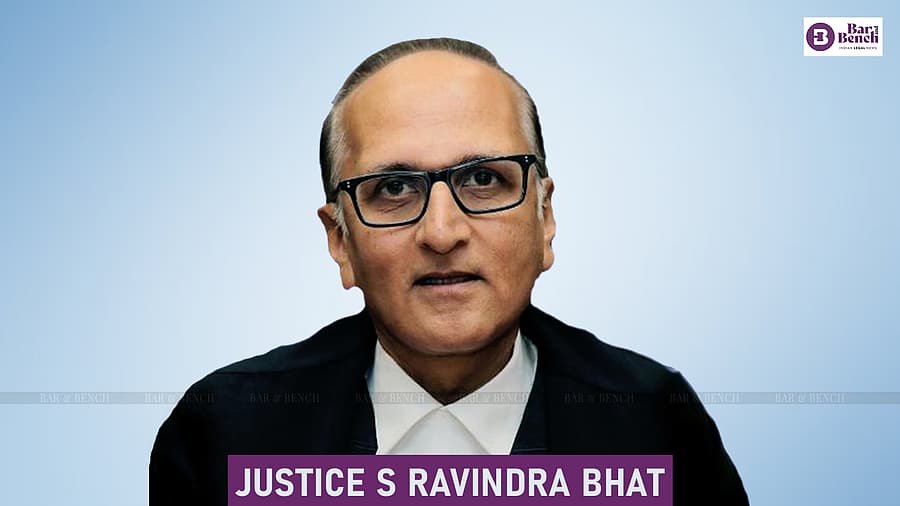
Ravindra Bhat: Arbitration May Hinder Law's Growth in India
Summary
- Former Supreme Court Justice S Ravindra Bhat, who now serves as a member of Arbitration Chambers and a distinguished professor, warned that over-reliance on arbitration could hinder the development of law.
- He noted that legal principles traditionally evolve through robust judicial inquiry, which is limited in arbitral award reviews.
- Justice Bhat made these remarks at the Dubai Arbitration Week 2026, during a panel organized by the Indian Institute of Arbitration and Mediation.
- He clarified that he was not advocating radical change but urged reflection on how courts should respond to new legal questions, especially those related to technology and damages.
The Core Concern
He posited that an over-reliance on arbitration, while efficient for dispute resolution, could inadvertently lead to a stagnation in the evolution of legal principles.
Former Supreme Court Justice S Ravindra Bhat, who now serves as a member of Arbitration Chambers and a distinguished professor, recently issued a significant caution regarding the future trajectory of legal development in India. Speaking at the Dubai Arbitration Week 2026, Justice Bhat articulated his concern that an excessive reliance on arbitration for dispute resolution might ultimately impede the natural evolution of legal principles. This perspective from Justice S Ravindra Bhat on arbitration's impact on the growth of law comes at a time when Indian judicial bodies are increasingly adopting a hands-off approach concerning arbitral awards.
His remarks were delivered during a panel discussion titled “Four Courts, One Award: Judicial Perspectives, Cross-Border Advocacy & the Great Common Law Debate.” This event was a collaborative effort, organized by the Indian Institute of Arbitration and Mediation alongside Balfaqeeh Advocates & Legal Consultants and Providence Law Asia. The panel itself featured other notable legal figures, including Abu Dhabi Commercial Court judge Ahmed Bakry, Providence Law Asia Managing Director Abraham Vergis SC, and JSA Partner Sidharth Sethi, with DSK Legal Partner Dinesh Pardasani serving as the moderator for the discussion.
Judicial Review and Legal Evolution
Justice Bhat underscored the historical importance of judicial inquiry in shaping and advancing legal doctrines. He explained that the very fabric of legal principles has traditionally been woven through thorough examination and deliberation within the court system. However, the current trend of courts in India exhibiting reduced intervention in arbitral awards presents a unique challenge to this established process. This limited judicial review of arbitral awards, according to Justice Bhat's arbitration views, prompts a fundamental inquiry into how novel legal concepts will emerge and solidify in the absence of extensive judicial scrutiny.
The former Justice highlighted that when the resolution of nearly all disputes is channeled through arbitration, a mechanism designed for efficiency and finality with minimal external oversight, the traditional avenues for legal innovation become constrained. He questioned the mechanism through which new legal doctrines, particularly those arising from complex and evolving societal issues, would be developed and refined if judicial oversight is consistently curtailed. This perspective emphasizes the critical role of the judiciary in not just resolving disputes but also in contributing to the broader legal development in India.
Implications for Future Legal Principles
Justice Bhat articulated a stark warning: if every dispute is directed towards arbitration, there is a distinct possibility that the expansion of legal understanding could become stagnant. He posited that an over-reliance on arbitration, while efficient for dispute resolution, could inadvertently lead to a stagnation in the evolution of legal principles. This concern is particularly pertinent given the rapid advancements in technology and the emergence of intricate legal questions, such as those pertaining to damages in novel contexts.
While emphasizing that his observations were not a call for drastic systemic overhaul, Justice Bhat stressed the necessity for thoughtful consideration regarding the judiciary's role in responding to these contemporary challenges. He reiterated that the process of judicial scrutiny has historically been instrumental in fostering the development of legal principles. Therefore, the question remains how new doctrines, especially those related to technological innovation and complex damage assessments, will be forged and integrated into the legal framework without the benefit of robust judicial engagement. The arbitration impact on legal development in India, particularly in these emerging areas, requires careful ongoing assessment.
Practical Implications
This article serves as a cautionary note for legal practitioners, highlighting the ongoing debate about whether an over-reliance on arbitration could hinder the development of new legal principles and precedents, especially in emerging areas. Lawyers should be mindful of this long-term implication when advising on dispute resolution mechanisms and considering the evolution of legal doctrines.
Source
How does this affect you?
Get an AI analysis of this article grounded in your jurisdictions, practice areas, and any policy documents you've uploaded to Wansom.
Finish Reading the Full Story and the Expert Analysis.
Get the latest legal & regulatory intelligence in India
Wansom is AI and can make mistakes.