
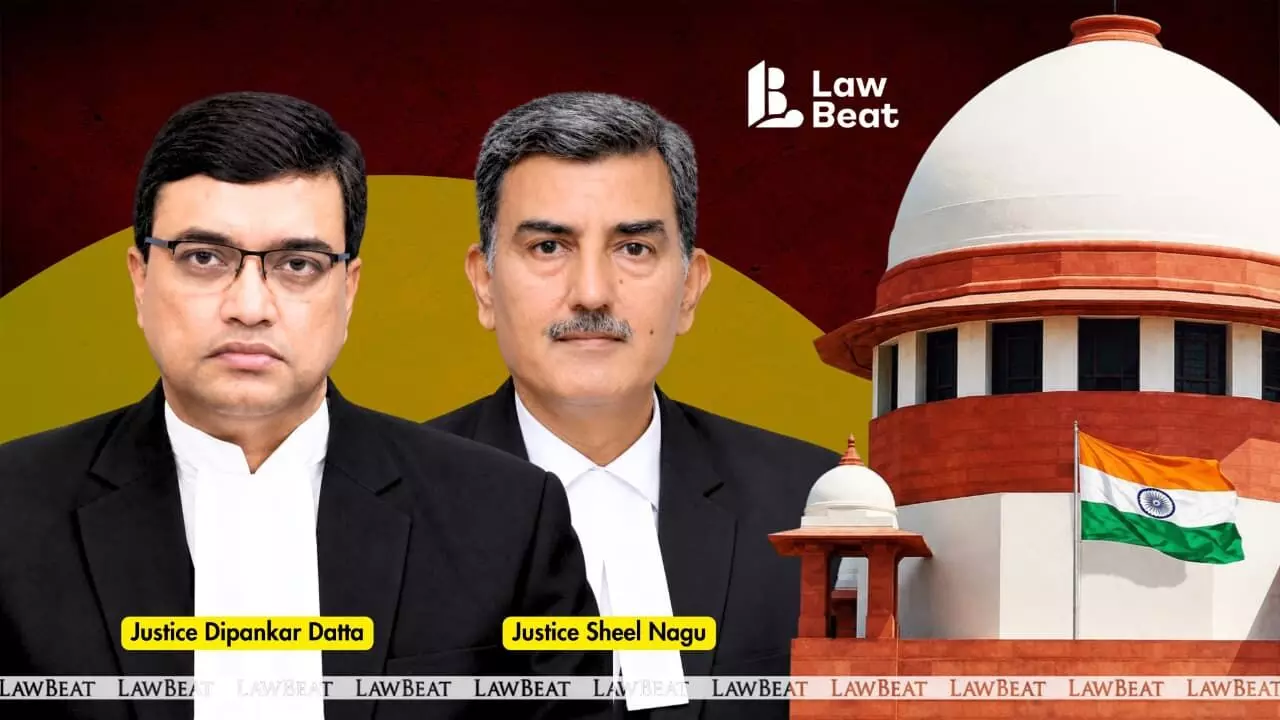
Supreme Court: Meerut Land Acquisition Compensation Release Limited to 8.33%
Summary
- The Supreme Court directed the Meerut Development Authority to deposit the entire enhanced land acquisition compensation.
- Only 8.33% of the enhanced compensation is permitted for release to landowners, subject to the appeals' outcome.
- The Allahabad High Court has been instructed to decide the pending land acquisition appeals within six months.
- The ruling emphasizes balancing the interests of acquiring authorities and landowners while securing the decretal amount during appeals.
- Acquisition proceedings for the Shatabdi Nagar Housing Scheme in Meerut originated in 1987, with compensation enhanced in March 2024.
What Happened
The Supreme Court emphasized that appellate courts, when staying the execution of an award from a reference court, must carefully balance the interests of both the acquiring authority and the landowners.
The Supreme Court of India recently issued a significant directive concerning land acquisition compensation release in Meerut, addressing a series of appeals filed by the Meerut Development Authority. The Court mandated that the Authority deposit the entire enhanced compensation amount awarded to landowners in the High Court registry. However, it permitted the release of only 8.33% of this sum to the affected landowners, while instructing the Allahabad High Court to resolve the underlying appeals within a six-month timeframe.
These proceedings stem from land acquisition efforts initiated in 1987 for the Shatabdi Nagar Housing Scheme. Initially, on February 22, 1990, the Special Land Acquisition Officer in Meerut determined compensation at Rs 20 and Rs 27 per square yard. Dissatisfied with these figures, landowners sought references, leading to a substantial increase on March 30, 2024, when the Presiding Officer of the Land Acquisition, Rehabilitation and Resettlement Authority, Meerut, enhanced the compensation to Rs 690 and Rs 720 per square yard for the respective villages, with individual landowners receiving varying amounts. The Meerut Development Authority subsequently challenged this enhanced award before the Allahabad High Court, filing first appeals under Section 54 of the Land Acquisition Act, 1894.
During the pendency of these appeals, the Allahabad High Court had issued an interim order staying the award's implementation. This order stipulated that the Authority deposit 50% of the enhanced compensation in cash and provide security for the remaining 50%, further allowing the landowners to withdraw the entire cash-deposited amount, with the balance contingent on the appeals' final outcome. The Supreme Court's recent ruling directly modified this interim arrangement, establishing a new framework for the release of funds.
Legal Context
In its ruling, the Supreme Court emphasized that appellate courts, when staying the execution of an award from a reference court, must carefully balance the interests of both the acquiring authority and the landowners. A primary objective, according to the Bench of Justices Dipankar Datta and Sheel Nagu, is to ensure that the decretal amount remains adequately secured throughout the appellate process. The Court clarified that while the entire enhanced compensation can be directed for deposit, the release of a portion to claimants should be regulated, always subject to the ultimate decision in the appeals.
This guidance was informed by a previous, similar matter where a coordinate bench, in an order dated April 24, 2026, adopted an approach of releasing only Rs 50 lakh out of approximately Rs 6 crore in enhanced compensation, which represented about 8.33% of the total. This precedent influenced the 8.33% figure applied in the Meerut case. The Supreme Court specified that the release and receipt of this 8.33% amount would be without prejudice to the rights and contentions of the parties in the ongoing appeals. Crucially, if the first appeals succeed, the respective landowners would be obligated to return the amounts released to them to the Meerut Development Authority. The remaining portion of the deposited funds is to be invested in separate interest-bearing fixed deposit accounts with a nationalized bank, on an auto-renewal basis, awaiting further orders from the High Court.
Why It Matters
The Supreme Court's decision offers crucial guidance for appellate courts across India handling land acquisition appeals, particularly concerning the release of enhanced compensation during the pendency of such cases. By directing the deposit of the full enhanced compensation while permitting only a partial release, the Court has established a framework that seeks to protect the financial interests of acquiring authorities like the Meerut Development Authority, ensuring the decretal amount is secured, while also providing some immediate relief to landowners.
This ruling underscores the judiciary's role in balancing interests acquiring authority landowners in complex land acquisition disputes. Furthermore, the Supreme Court expressed concern over the protracted delays in hearing the first appeals, noting that the original acquisition proceedings dated back to 1987. The explicit directive for the Allahabad High Court to decide these appeals within six months highlights the judiciary's commitment to expediting the resolution of long-standing land disputes, which is a significant aspect of enhanced compensation release India.
Practical Implications
Lawyers representing acquiring authorities or landowners in India should note the Supreme Court's guidance on balancing interests when staying execution of enhanced compensation awards in land acquisition appeals. This ruling provides a framework for arguing the appropriate percentage of compensation to be released to landowners during the pendency of appeals, emphasizing the need to secure the decretal amount while allowing partial release.
Source
Source: Original reporting via Live Law
How does this affect you?
Get an AI analysis of this article grounded in your jurisdictions, practice areas, and any policy documents you've uploaded to Wansom.
Finish Reading the Full Story and the Expert Analysis.
Get the latest legal & regulatory intelligence in India
Wansom is AI and can make mistakes.