
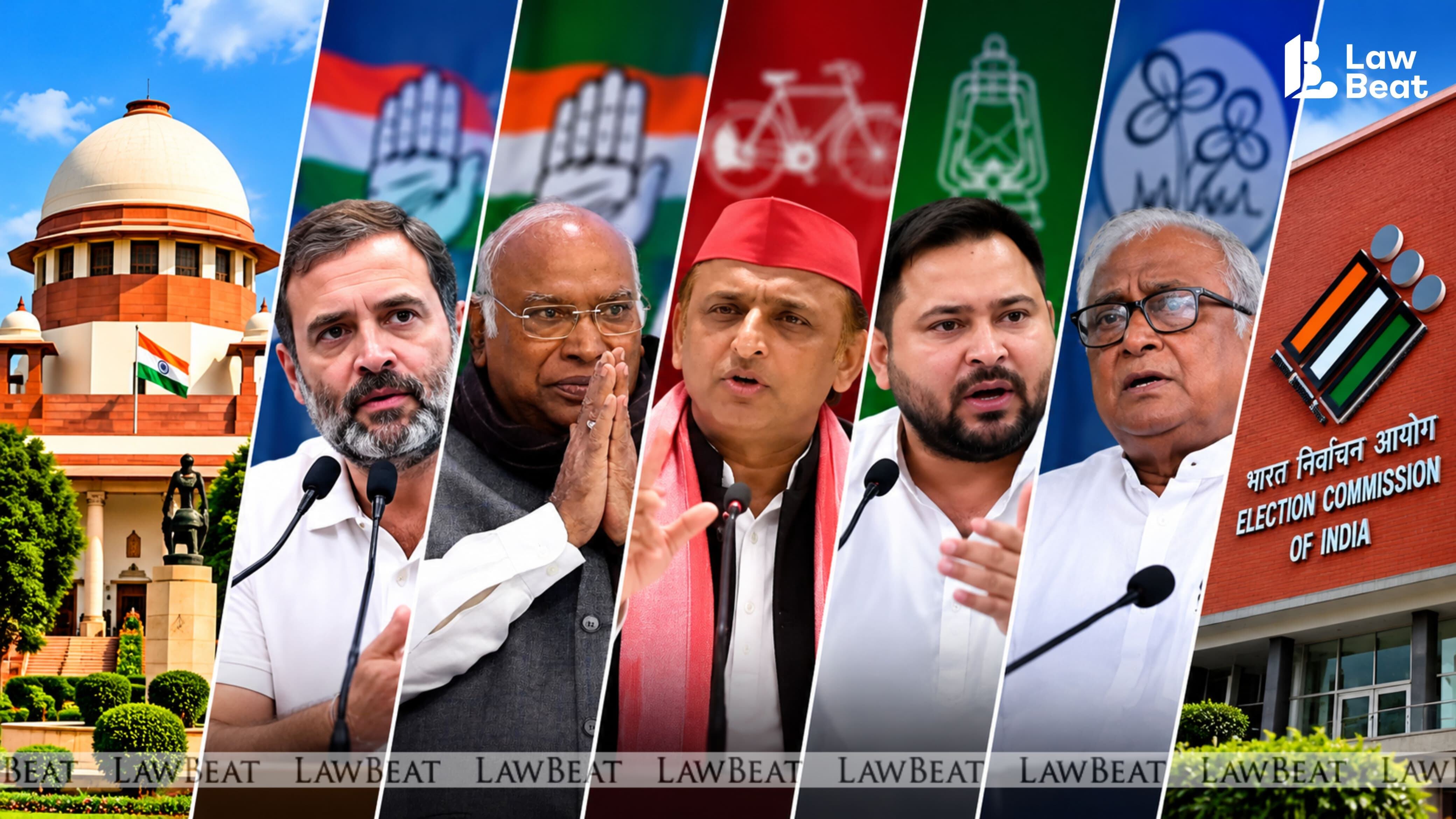
Supreme Court Registry: 14 Defects Found in Rahul Gandhi Petition
Summary
- Rahul Gandhi and other opposition leaders filed a writ petition against the Election Commission of India on October 12, 2026, alleging irregularities in the Special Intensive Revision (SIR) process.
- The Supreme Court Registry flagged 14 procedural defects in the petition, including missing authorization documents, an illegible identity card for Mallikarjun Kharge, and a Rs 220 court fee shortfall.
- The registry also questioned the documents submitted and the naming of individual Election Commissioners as respondents.
- The petition's filing coincided with an INDIA bloc 'Chalo Dilli' march led by Gandhi, protesting the Election Commission's functioning.
- Chief Justice of India Surya Kant had previously declined a meeting with opposition leaders to discuss electoral irregularities, citing that the issues were sub judice and a meeting would violate the principle of Separation of Powers.
Petition Filed Amidst Political Action
The Supreme Court Registry identified a total of 14 procedural defects in the Rahul Gandhi Supreme Court petition.
On October 12, 2026, a writ petition was lodged with the Supreme Court of India by Rahul Gandhi, the Leader of Opposition in the Lok Sabha, alongside several other prominent opposition figures. This legal challenge, titled "Rahul Gandhi vs Election Commission of India," targets the Election Commission of India, alleging significant irregularities within its Special Intensive Revision (SIR) process for electoral rolls. The petition was submitted through Advocate-on-Record S Prasanna, just before the Court's filing counter closed for the day.
Among the co-petitioners are Congress president Mallikarjun Kharge, Trinamool Congress MP Saugata Roy, Samajwadi Party chief Akhilesh Yadav, and Rashtriya Janata Dal leader Tejashwi Prasad Yadav. The filing coincided with a planned "Chalo Dilli" march by the INDIA bloc, which Rahul Gandhi led from Connaught Place to the Supreme Court, protesting the Election Commission's operations. Ahead of the submission, the Supreme Court had granted permission for a delegation of 10 to 15 Congress leaders to access the filing counter within the court premises, with reports indicating their intent to challenge Chief Election Commissioner Gyanesh Kumar and alleged vote theft.
Supreme Court Registry Flags Procedural Defects
Immediately following its submission, the Supreme Court Registry identified a total of 14 procedural defects in the Rahul Gandhi Supreme Court petition. These Supreme Court registry objections highlight various shortcomings in the documentation and adherence to filing protocols. Key issues included missing authorization documents, which are crucial for validating the petition's legitimacy, and an illegible identity card submitted for Congress president Mallikarjun Kharge, making his identification unclear.
Further defects noted by the registry involved a court fee shortfall Supreme Court of Rs 220, indicating an insufficient payment for the filing. General observations of missing documents and incomplete papers were also made. The registry additionally raised questions regarding the overall set of documents provided with the writ petition India procedural defects, and specifically questioned the decision to name individual Election Commissioners as respondents in the case. The precise contents of the SIR process irregularities petition, including the specific grounds, prayers, and relief sought, have not yet been made public, and a date for the matter to be listed before a Bench remains unknown.
CJI Declines Meeting Amidst Separation of Powers Concerns
The filing of the petition and the accompanying political demonstration occurred after Chief Justice of India Surya Kant declined a request to meet with Opposition Members of Parliament to discuss the issues. On October 11, the CJI had refused an appointment with Rahul Gandhi, Mallikarjun Kharge, and other opposition leaders who sought to discuss their allegations concerning electoral irregularities.
The opposition leaders had requested a meeting on October 12, 2026, between 4 PM and 5 PM, to present a memorandum addressing several concerns. These included issues related to the Chief Election Commissioner and the Election Commission of India, the arbitrary arrest of students, the closure of metro stations, and the cancellation of trains. In a letter, Chief Justice Kant explained his refusal, stating that the issues mentioned were already sub judice before the Supreme Court, and convening a meeting to discuss pending cases would fundamentally contravene the principle of Separation of Powers, a core aspect of the basic structure of the constitution.
Practical Implications
This development serves as a practical reminder for lawyers filing writ petitions in the Supreme Court of India to meticulously adhere to procedural requirements, including proper documentation, authorization, and court fee payments, to avoid registry objections and potential delays, even in high-profile or politically sensitive cases.
Source
How does this affect you?
Get an AI analysis of this article grounded in your jurisdictions, practice areas, and any policy documents you've uploaded to Wansom.
Finish Reading the Full Story and the Expert Analysis.
Get the latest legal & regulatory intelligence in India
Wansom is AI and can make mistakes.