
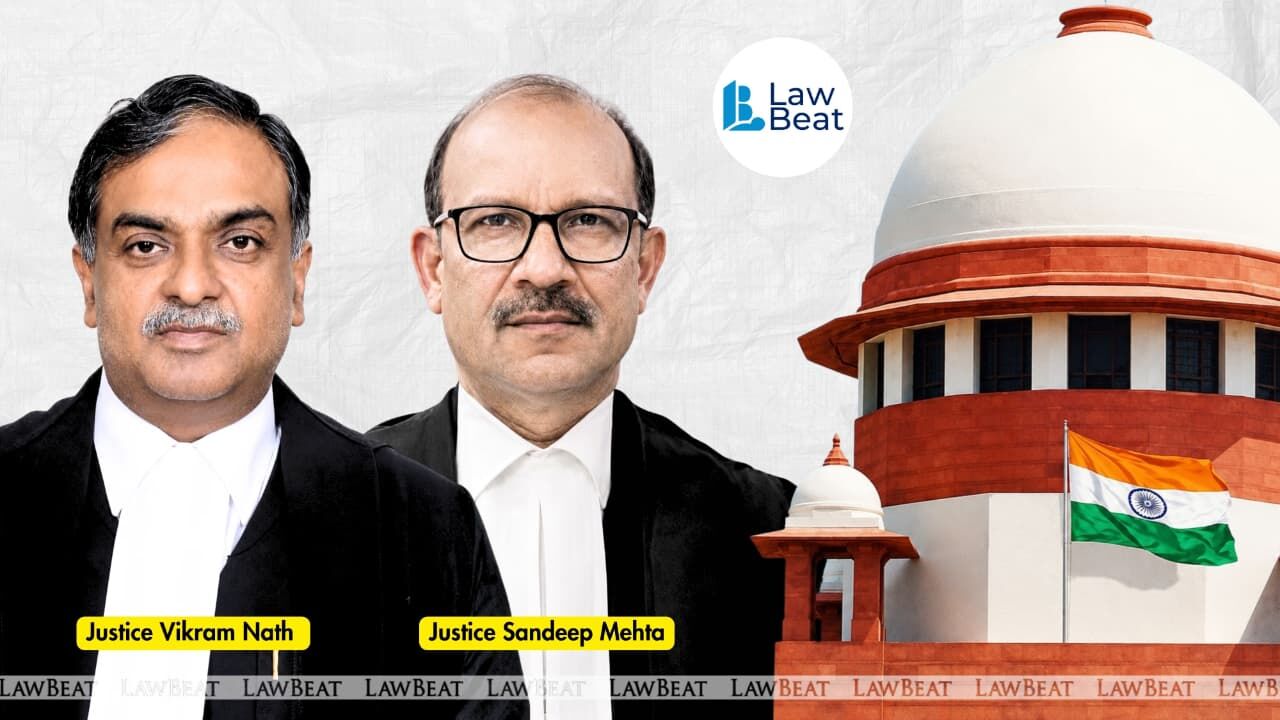
India Supreme Court: Public Law Remedy for Wage Deprivation Orders Compensation, Interest
Summary
- The India Supreme Court ruled that prolonged wage deprivation can merit monetary compensation as a public-law remedy.
- Justices Vikram Nath and Sandeep Mehta ordered Bihar and Jharkhand to pay 6% interest on delayed wages, 12% on EPF dues, and ₹1 lakh to daily-wage workers.
- The case stemmed from liabilities following the 2000 Bihar reorganisation, affecting five state-owned corporations.
- The Court emphasized that provident fund dues are statutory social security benefits, not ordinary monetary claims, and delayed payment incurs mandatory interest.
- This decision underscores the fundamental right to dignified wages and provides a precedent for seeking quantified compensation for its unconstitutional deprivation.
Landmark Ruling on Wage Deprivation
The Supreme Court has affirmed that prolonged and unconstitutional deprivation of the fundamental right to dignified wages can warrant quantified monetary compensation as a public-law remedy, exercisable through its constitutional jurisdiction.
The India Supreme Court recently delivered a significant judgment, establishing that extended periods of wage deprivation can justify the award of monetary compensation as a public-law remedy. This crucial pronouncement applies specifically in circumstances where there has been a prolonged and unconstitutional denial of the fundamental right to dignified wages. The Court's constitutional jurisdiction empowers it to grant such quantified monetary relief.
A bench comprising Justices Vikram Nath and Sandeep Mehta issued directives to the States of Bihar and Jharkhand. These states are now mandated to compensate employees and workers whose salaries, wages, provident fund contributions, and other financial entitlements remained unpaid for considerable durations. The ruling specifically ordered the payment of 6% interest on delayed wages and a higher 12% interest on outstanding Employees' Provident Fund (EPF) dues. Furthermore, daily-wage workers affected by these delays are to receive an additional ₹1 lakh in compensation.
Genesis of the Dispute
The legal challenge that led to this landmark decision originated from an appeal filed by the Bihar State Ardh Sarkari Arajpati Karmchari Maha Sangh and other entities. The core of the dispute lay in the long-standing issue of unpaid dues following the reorganisation of the State of Bihar, which occurred under the Bihar Reorganisation Act of 2000. This legislative act, which also led to the creation of Jharkhand, created complex questions regarding the allocation and settlement of liabilities, outstanding payments, and service-related claims for employees and workmen associated with various state-owned inter-state corporations.
The Supreme Court acknowledged the protracted and intricate history of this controversy, noting that its roots in the statutory reorganisation had necessitated numerous rounds of judicial intervention and administrative review. The affected employees and workmen were associated with five specific state-owned inter-state corporations: Bihar State Construction Corporation Ltd. (currently under liquidation), Bihar State Industrial Development Corporation Ltd., Bihar State Electronic Development Corporation Ltd., Bihar State Forest Development Corporation Ltd., and Bihar State Panchayati Raj Financial Corporation Ltd. The Court ultimately accepted a comprehensive report submitted by a committee led by Justice Dinesh Maheshwari, a former Supreme Court judge. It underscored that while the status of daily-wage workers does not grant them identical rights to regular employees, it certainly does not permit the disregard of their rendered services or the denial of lawfully accrued entitlements.
Mandate for Timely Provident Fund Payments
Addressing the specific issue of delayed provident fund dues, the Court meticulously considered the provisions of the Employees' Provident Funds and Miscellaneous Provisions Act, 1952. It unequivocally held that the entitlement to interest on such delayed payments is paramount, given the statutory nature of provident funds as a vital social security measure. The Court emphasized that the amount credited to an employee's provident fund account represents a statutory benefit accumulated during employment, designed to provide financial security upon the cessation of service. Consequently, this sum cannot be treated as a mere ordinary monetary claim that can be withheld without incurring the legal consequences prescribed by law.
The ruling clarified that the obligation to pay interest on delayed provident fund amounts arises automatically by operation of law. This liability, the Court stressed, cannot be circumvented simply because the principal dues were eventually settled. Interest, in its fundamental legal understanding, serves as compensation for the deprivation of the use of money to which an individual is legitimately entitled. Therefore, the Court explicitly directed the payment of 12% interest on delayed provident fund dues, aligning with the mandates of the 1952 Act. This reinforces the principle that monetary compensation for delayed wages India, particularly for provident funds, is a non-negotiable aspect of employee rights.
Broader Implications for Employee Rights
This ruling by the India Supreme Court marks a significant development in protecting employee rights, particularly against state entities. By recognizing quantified monetary compensation as a public-law remedy for prolonged wage deprivation, the Court has provided a powerful tool for addressing historical injustices. The decision reinforces that the right to dignified wages is a fundamental right in India, and its unconstitutional denial will not be tolerated. This precedent, stemming from the Justice Vikram Nath Sandeep Mehta ruling, sets a clear expectation for employers, especially those in the public sector, regarding their obligations to employees.
The judgment underscores that employers, including state corporations like those in Bihar and Jharkhand, must ensure the timely disbursement of all employee dues, including wages and provident funds. Failure to do so can lead to substantial liabilities, encompassing not only the principal amounts but also significant interest and additional compensation. This ruling serves as a strong deterrent against delayed dues and provides a robust legal framework for employees to seek redress for wage deprivation, moving beyond mere recovery of principal to include comprehensive monetary compensation.
Practical Implications
Lawyers representing employees facing prolonged wage or provident fund deprivation can now leverage this Supreme Court precedent to seek quantified monetary compensation as a public-law remedy, beyond just the principal amount. Employers, particularly state-owned entities, must ensure timely payment of all employee dues, including provident funds, to avoid significant interest liabilities and constitutional challenges based on the right to dignified wages.
Source
How does this affect you?
Get an AI analysis of this article grounded in your jurisdictions, practice areas, and any policy documents you've uploaded to Wansom.
Finish Reading the Full Story and the Expert Analysis.
Get the latest legal & regulatory intelligence in India
Wansom is AI and can make mistakes.