
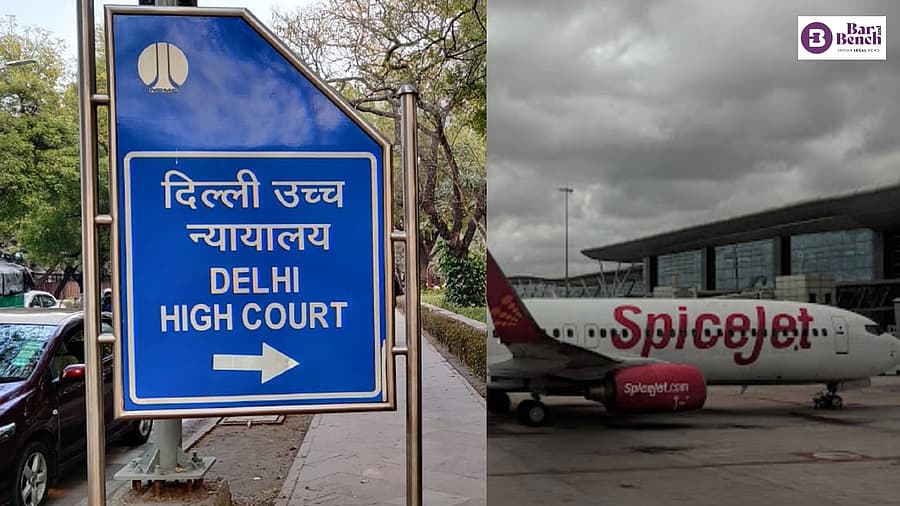
Delhi High Court: Denies SpiceJet ₹144 Crore Deposit Extension
Summary
- The Delhi High Court rejected SpiceJet's plea for an extension to deposit ₹144 crores in an arbitration dispute.
- Justice Vinod Kumar refused to accept MD Ajay Singh's Gurgaon property as security for the payment.
- SpiceJet failed to deposit an initial ₹50 crores with the court's Registrar General as per a previous undertaking.
- The court indicated it would have been more lenient on the second installment's deadline if the initial ₹50 crore deposit had been made.
- The total ₹144 crore payment is related to a long-running arbitration dispute with Kalanithi Maran and KAL Airways.
What Happened
The court's observation highlighted that the non-deposit of the initial amount, contrary to the undertaking, left no room for entertaining the request to accept the Gurgaon property as security or to grant an extension.
The Delhi High Court recently denied an application from SpiceJet seeking an extension for a significant financial deposit, a decision that underscores the judiciary's firm stance on compliance with prior orders. The airline had requested more time to fulfill its obligation to deposit ₹144 crores, a sum mandated by the court in connection with an ongoing arbitration dispute. This long-running legal battle involves Kalanithi Maran and KAL Airways, with the court's directive aiming to secure the payment owed.
Justice Vinod Kumar, presiding over the matter, not only rejected the plea for an extension but also declined to accept a property in Gurgaon, belonging to SpiceJet's managing director Ajay Singh, as security. The court's refusal stemmed directly from SpiceJet's failure to adhere to an earlier undertaking. Specifically, the airline had not deposited an initial sum of ₹50 crores with the Registrar General of the Court, as was previously ordered.
The Court's Reasoning
The core of the Delhi High Court's decision, delivered by Justice Vinod Kumar, revolved around SpiceJet's non-compliance with its own solemn undertaking. The court had, on July 13, ordered SpiceJet and Ajay Singh to deposit a total of ₹144 crores. This order included a specific commitment from SpiceJet to deposit ₹50 crores with the registry within 45 days, with the remaining ₹94 crores to follow within 90 days. The airline's failure to meet the first part of this commitment proved to be a critical factor.
Justice Kumar explicitly stated that had SpiceJet fulfilled its undertaking to deposit the initial ₹50 crores, the court would have been inclined to consider a more lenient approach regarding the timeline for the subsequent ₹94 crore payment. The court's observation highlighted that the non-deposit of the initial amount, contrary to the undertaking, left no room for entertaining the request to accept the Gurgaon property as security or to grant an extension. This firm stance illustrates the judicial expectation that parties will honor their commitments made before the court.
Why It Matters
This ruling by the Delhi High Court carries significant implications for parties involved in legal disputes, particularly concerning financial obligations and court-mandated undertakings. The court's rejection of the SpiceJet ₹144 crore deposit extension request serves as a clear precedent that failure to comply with even partial undertakings can severely prejudice subsequent pleas for leniency. The court's refusal to accept alternative security, such as Ajay Singh's Gurgaon property, further emphasizes that adherence to the letter of a court order is paramount.
The case underscores the critical importance for legal practitioners and their clients to meticulously fulfill all conditions and undertakings set forth by the judiciary. The court's statement that it "would have taken a lenient decision" on the second installment's time limit, had the initial ₹50 crore deposit been made, powerfully demonstrates the consequences of a SpiceJet deposit undertaking failure. This outcome in the KAL Airways dispute payment matter reinforces the principle that judicial discretion for extensions or alternative arrangements is often contingent upon a demonstrated good faith effort to comply with prior directives.
Practical Implications
Lawyers and compliance officers should note the Delhi High Court's strict stance on adherence to court-given undertakings, particularly regarding financial deposits. Failure to comply with an undertaking, even for a partial amount, can lead to the court rejecting subsequent pleas for leniency or extensions, impacting the client's ability to secure favorable terms.
Source
How does this affect you?
Get an AI analysis of this article grounded in your jurisdictions, practice areas, and any policy documents you've uploaded to Wansom.
Finish Reading the Full Story and the Expert Analysis.
Get the latest legal & regulatory intelligence in India
Wansom is AI and can make mistakes.