
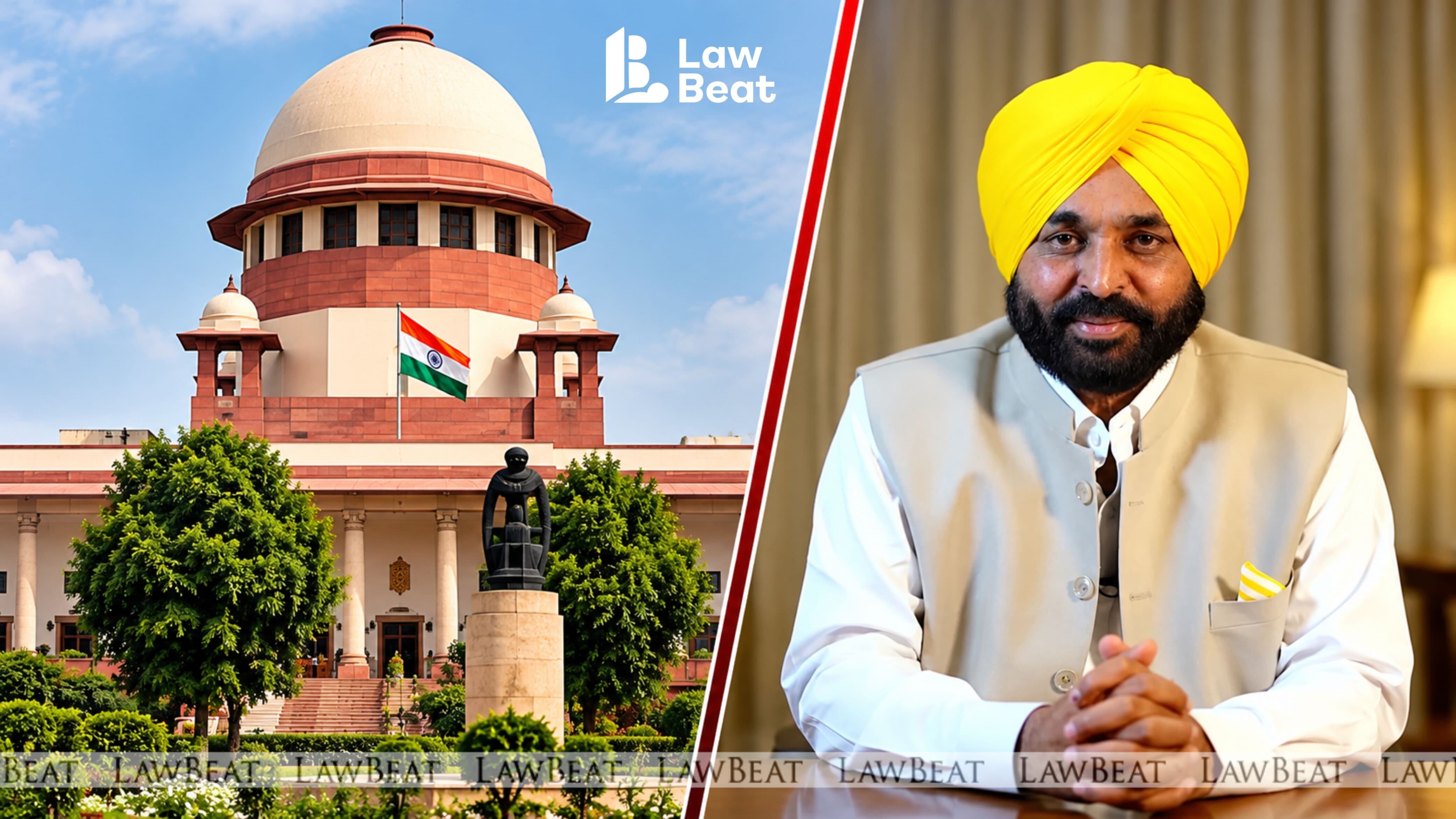
Supreme Court: Punjab Challenges CBI Probe in State of Punjab v. Nikhil Saraf
Summary
- The Punjab Government has challenged a Punjab and Haryana High Court order mandating a CBI probe into corruption allegations.
- These allegations are linked to the office of Chief Minister Bhagwant Mann.
- The Supreme Court, with Justices Dipankar Datta and Sheel Nagu, will hear the state's plea on Monday, October 12.
- The state argues the High Court lacked sufficient justification to transfer the investigation to a central agency.
- Senior Advocate Vikas Singh represented the Punjab Government before the Supreme Court.
Background of the Dispute
The Supreme Court's eventual ruling in State of Punjab v. Nikhil Saraf will therefore carry significant implications for the jurisdictional boundaries of High Courts.
The Supreme Court is set to review a significant challenge brought by the Punjab Government against a directive issued by the Punjab and Haryana High Court. This legal action, formally titled State of Punjab v. Nikhil Saraf, was initiated by the state on October 6. The High Court's contentious order mandated the Central Bureau of Investigation (CBI) to register a criminal case and conduct an investigation into corruption allegations.
These allegations are specifically connected to the office of the current Punjab Chief Minister, Bhagwant Mann. On Thursday, the apex court agreed to list the Punjab government's petition for a hearing on Monday, October 12. The bench presiding over the matter comprises Justices Dipankar Datta and Sheel Nagu. Senior Advocate Vikas Singh, representing the Punjab Government, initially requested additional time when the case appeared as Item No. 16 on the day's cause list.
Subsequently, Singh urged the bench to consider the matter on Friday, emphasizing that no precipitous action had yet occurred in the case. However, Justice Datta declined this request, explaining that the bench had not yet had the opportunity to review the case file, which had reached them late.
The State's Legal Contention
The Punjab Government's appeal to the Supreme Court centers on its objection to the Punjab and Haryana High Court's decision to involve the Central Bureau of Investigation in the corruption probe. The state explicitly questions the High Court's authority to entrust the investigation to a central agency like the CBI. A key argument presented by the Punjab Government is that the High Court lacked sufficient justification for transferring the matter to an independent central agency.
In its plea, the Punjab Government seeks relief from the Supreme Court, aiming to overturn the High Court's directive for a CBI investigation. The state is challenging both the legality and the propriety of the High Court's order. The core of their argument is that such a transfer of investigative authority to a central body requires a robust and clear rationale, which they contend was absent in this instance.
Significance of the Challenge
The ongoing legal battle holds considerable weight, particularly given that the corruption allegations are directly linked to the office of the incumbent Chief Minister, Bhagwant Mann. This connection renders the Punjab and Haryana High Court's instruction for a central agency investigation especially consequential for the state administration. The Supreme Court's eventual ruling in State of Punjab v. Nikhil Saraf will therefore carry significant implications for the jurisdictional boundaries of High Courts.
The outcome will help define the circumstances under which High Courts can legitimately direct central investigative bodies, such as the CBI, to intervene in matters involving state government officials. The Punjab government's challenge to the CBI probe order concerning allegations linked to CM Bhagwant Mann's office underscores a broader debate about the balance of power and oversight between state and central investigative mechanisms.
Practical Implications
Lawyers advising state governments or public officials facing corruption allegations should monitor this case for clarity on the jurisdictional limits of High Courts to mandate central agency investigations like the CBI, and the Supreme Court's interpretation of judicial intervention in such matters. The outcome will set a precedent for the balance of power between state and central investigative bodies.
Source
How does this affect you?
Get an AI analysis of this article grounded in your jurisdictions, practice areas, and any policy documents you've uploaded to Wansom.
Finish Reading the Full Story and the Expert Analysis.
Get the latest legal & regulatory intelligence in India
Wansom is AI and can make mistakes.