
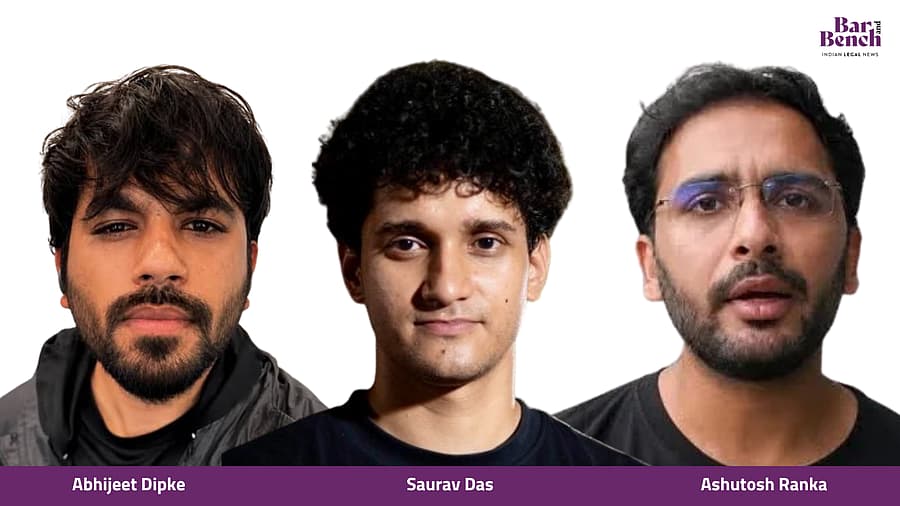
SEM Court: Abhijeet Dipke, Saurav Das, Ashutosh Ranka Release Ordered
Summary
- Cockroach Janta Party activists Abhijeet Dipke, Saurav Das, and Ashutosh Ranka were released from police detention on Sunday morning.
- A Special Executive Magistrate court issued the order for their release.
- Delhi Police had detained the three on October 10 after their flight from Mumbai landed in Delhi.
- They were traveling to participate in a planned protest at Jantar Mantar, demanding the resignation of Chief Election Commissioner Gyanesh Kumar.
- Police personnel entered their aircraft to take them into custody, as permission for the demonstration had been denied.
What Happened
This case serves as a crucial reminder of the Special Executive Magistrate's authority in ordering releases, illustrating a procedural pathway for challenging immediate detentions, particularly those initiated by police without an immediate judicial warrant.
Cockroach Janta Party (CJP) activists Abhijeet Dipke, Saurav Das, and Ashutosh Ranka secured their release from police custody on Sunday morning, following an order issued by a Special Executive Magistrate (SEM) court. The three individuals, who had been detained by Delhi Police, were formally presented before the SEM earlier that day, leading to the directive for their immediate release.
The detention of Dipke, Das, and Ranka by Delhi Police occurred on October 10. Their apprehension took place shortly after their flight from Mumbai touched down in Delhi. The purpose of their journey to the capital was to participate in a planned demonstration at Jantar Mantar, where they intended to demand the resignation of Chief Election Commissioner Gyanesh Kumar.
Prior to their arrival, Delhi Police had explicitly denied permission for the proposed protest, subsequently escalating security measures across the national capital to prevent any demonstrators from reaching the designated site. In a notable move, police personnel boarded the activists' aircraft and took the three leaders into custody before they had even disembarked from the plane.
Legal Context
The actions taken by Delhi Police, including the denial of protest permission and the subsequent detention of individuals traveling to participate, fall within the broader framework of maintaining public order in India. Police authorities frequently invoke powers to prevent assemblies or demonstrations deemed to pose a risk to public peace, often leading to preventive detentions of activists or organizers.
In such scenarios, the role of a Special Executive Magistrate becomes particularly pertinent. An SEM is an executive officer vested with certain judicial powers, including the authority to review detentions made by the police without an immediate judicial warrant. Individuals detained under such circumstances are typically required to be produced before an SEM, who then assesses the legality and necessity of their continued custody.
The SEM's order for the Abhijeet Dipke, Saurav Das, Ashutosh Ranka release underscores this critical procedural safeguard. It highlights that even when police initiate detentions to preemptively manage public gatherings, there is an executive-judicial oversight mechanism designed to ensure that such detentions are not arbitrary and adhere to established legal protocols.
Why It Matters
The swift release of the CJP activists by a Special Executive Magistrate offers a significant illustration of the checks and balances inherent in India's legal and administrative system, particularly concerning protest rights and police powers. This outcome demonstrates that even in situations where law enforcement takes proactive measures to prevent demonstrations, avenues exist for individuals to challenge their detention.
This incident is crucial for understanding the dynamics of protest detention in India. It reinforces the principle that police actions, even those aimed at maintaining public order, are subject to review by designated authorities. The ability of an SEM to issue a detention order for the Abhijeet Dipke, Saurav Das, Ashutosh Ranka release provides a vital layer of protection against potential overreach by law enforcement.
This case serves as a crucial reminder of the Special Executive Magistrate's authority in ordering releases, illustrating a procedural pathway for challenging immediate detentions, particularly those initiated by police without an immediate judicial warrant. For legal professionals, it offers valuable insight into the mechanisms available for advising clients on protest rights and navigating situations involving preventive detentions, emphasizing the importance of understanding these executive-judicial review processes.
Practical Implications
Lawyers advising clients on protest rights or facing immediate detentions should note the role of the Special Executive Magistrate in ordering releases, highlighting the procedural avenues available for challenging detentions, even those initiated by police without immediate judicial warrant.
Source
How does this affect you?
Get an AI analysis of this article grounded in your jurisdictions, practice areas, and any policy documents you've uploaded to Wansom.
Finish Reading the Full Story and the Expert Analysis.
Get the latest legal & regulatory intelligence in India
Wansom is AI and can make mistakes.