
NALSAR Study: Indian Arbitrator Appointments Show Gender Disparity
Summary
- A NALSAR University of Law study revealed that men received 70% of arbitrator appointments by the Supreme Court, Delhi High Court, and Bombay High Court.
- Out of 2,283 appointments with gender data, 1,598 went to men (70.03%) and 685 to women (29.97%).
- The gender disparity was consistent across all three courts, with men receiving 79.17% at the Supreme Court, 71.30% at the Bombay High Court, and 68.88% at the Delhi High Court.
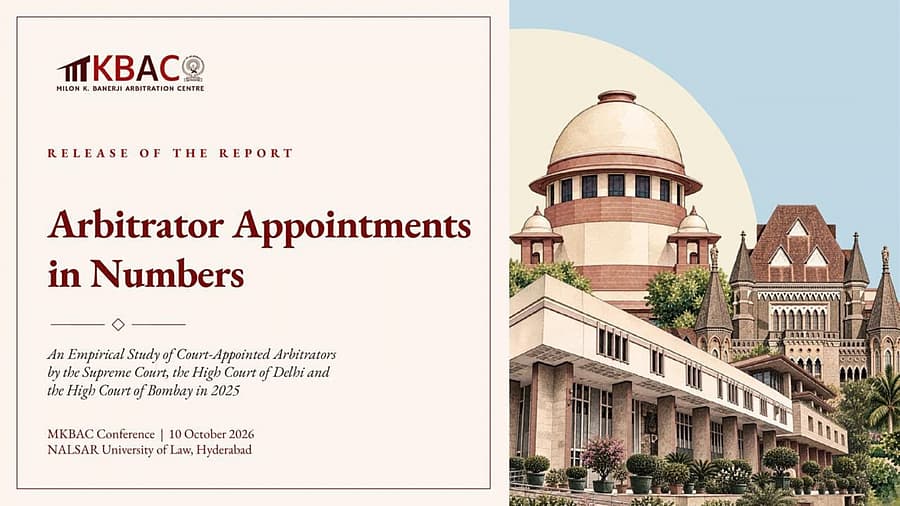
- The "Arbitrator Appointments in Numbers" report was compiled by the Milon K Banerji Centre for Arbitration Law at NALSAR, analyzing 3,688 cases registered in 2025 with data collected until June 30, 2026.
- The study also noted a concentration of appointments among advocates (73.21%) and retired judges (23.73%) in the arbitrator pool.
What the NALSAR Study Revealed
For legal practitioners and compliance officers, understanding this data is crucial.
A recent comprehensive analysis conducted by NALSAR University of Law has brought to light a significant gender disparity in Indian arbitrator appointments made by the nation's highest courts. The study, which meticulously examined recorded appointments from the Supreme Court, the Delhi High Court, and the Bombay High Court, found that men received a dominant 70% of these positions. This finding underscores a notable imbalance within the arbitration landscape.
Out of a total of 2,283 appointments for which gender information was available, the research indicated that 1,598, or 70.03%, were allocated to male arbitrators. In stark contrast, female arbitrators secured only 685 appointments, representing 29.97% of the total. This substantial gap was not an isolated anomaly but a consistent trend observed across all three judicial bodies under scrutiny, highlighting a systemic issue in arbitrator appointments India gender bias.
The detailed breakdown by court further illustrates this pervasive pattern. At the Supreme Court, men accounted for an even higher proportion, receiving 79.17% of the recorded appointments. The Bombay High Court showed a similar trend, with male arbitrators securing 71.30% of positions. Even at the Delhi High Court, where the disparity was slightly less pronounced compared to the Supreme Court, men still received 68.88% of the appointments, reinforcing the widespread nature of the gender imbalance.
Methodology and Context of the Research
The insights into arbitrator gender disparity in India originate from a report titled "Arbitrator Appointments in Numbers." This significant document was prepared by the Milon K Banerji Centre for Arbitration Law, an integral part of NALSAR University of Law, Hyderabad. The Centre boasts a distinguished leadership team, including former Supreme Court Justice Rohinton Fali Nariman as its Chair, Senior Advocate Ritin Rai as Co-Chair, and Advocate Dr. Amit George serving as the Director of Research. Senior Advocate Gourab Banerji acts as the Donor and Patron. The Centre was inaugurated on February 15, 2025.
The research encompassed a broad dataset, analyzing 3,688 cases that were registered in 2025 across the Supreme Court, Delhi High Court, and Bombay High Court. Data collection for this extensive study concluded on June 30, 2026, providing a snapshot of arbitrator appointments over a specific period. This rigorous methodology aimed to provide a quantitative understanding of the appointment trends.
Beyond the gender statistics, the researchers also noted other significant characteristics of the arbitrator pool. They observed not only a substantial gender imbalance but also a pronounced concentration of appointments among specific professional groups. Specifically, where professional backgrounds were recorded, advocates received the vast majority of appointments at 73.21%, followed by retired judges at 23.73%. A smaller segment, 3.10%, comprised other professionals, indicating a narrow pool from which arbitrators are typically selected.
Why This Disparity Matters
The findings of the NALSAR study on gender disparity in Indian arbitrator appointments carry significant implications for the legal profession and the broader dispute resolution ecosystem. The consistent underrepresentation of women in arbitrator appointments across the Supreme Court, Delhi, and Bombay High Courts suggests a systemic issue that warrants attention. This documented gender imbalance in arbitration India could impact perceptions of fairness, diversity, and inclusivity within the country's alternative dispute resolution mechanisms.
For legal practitioners and compliance officers, understanding this data is crucial. When advising clients on arbitration strategies, proposing arbitrator panels, or evaluating potential arbitrators, awareness of the documented biases becomes a strategic asset. This insight can inform discussions about panel composition, potentially leading to arguments for greater diversity or highlighting the existing patterns of arbitrator appointments India gender bias. Such knowledge empowers legal professionals to navigate the arbitration landscape more effectively and advocate for more equitable practices.
Ultimately, the report from the Milon K Banerji Centre for Arbitration Law provides empirical evidence of a challenge within the Indian arbitration framework. Addressing this disparity is not merely about achieving numerical equality but also about fostering a more representative and robust system of justice. The data serves as a critical starting point for stakeholders to consider how to promote a more diverse and inclusive pool of arbitrators, ensuring that the composition of dispute resolution bodies better reflects the diversity of the society they serve.
Practical Implications
Lawyers and compliance officers should be aware of the documented gender disparity in arbitrator appointments by India's top courts, as revealed by the NALSAR study. This insight can inform strategic decisions when proposing or evaluating arbitrator panels, potentially influencing arguments for diversity or highlighting systemic biases in dispute resolution processes.
Source
How does this affect you?
Get an AI analysis of this article grounded in your jurisdictions, practice areas, and any policy documents you've uploaded to Wansom.
Finish Reading the Full Story and the Expert Analysis.
Get the latest legal & regulatory intelligence in India
Wansom is AI and can make mistakes.