
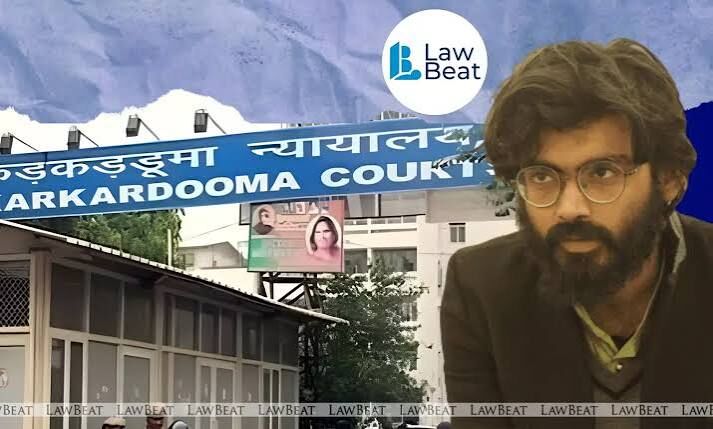
Delhi Court: Sharjeel Imam Interim Bail Cancelled Over Media Contact
Summary
- A Delhi Sessions Court cancelled Sharjeel Imam’s interim bail for breaching a condition against media contact.
- Imam was found to be present in a room where a journalist was interviewing his brother, violating his bail terms.
- Additional Sessions Judge Sameer Bajpai ordered Imam to surrender to jail authorities by Saturday evening.
- Imam's interim bail, granted on September 22, was for seven days to attend his cousin's wedding.
- The case is linked to the 2020 northeast Delhi riots, where Imam faces charges under the Unlawful Activities (Prevention) Act.
Court Revokes Sharjeel Imam's Interim Bail in Delhi Riots Case
This case underscores the critical importance for legal practitioners to meticulously advise clients on the strict interpretation and adherence to bail conditions, especially concerning media engagement.
A Delhi Sessions Court has nullified the interim bail previously granted to activist Sharjeel Imam, citing a clear violation of the conditions set for his temporary release. The court determined that Imam had contravened a specific stipulation that prohibited him from engaging with media personnel. This decision, delivered by Additional Sessions Judge (ASJ) Sameer Bajpai, mandates Imam's immediate surrender to jail authorities by Saturday evening. His legal counsel has confirmed that Imam is already en route to Delhi to comply with the court's directive.
The breach in question arose from Imam's presence in a room where a journalist was conducting an interview with his brother. The prosecution brought forth an application seeking the cancellation of the interim bail, arguing that Imam's mere presence constituted a violation of the court's explicit order. This development underscores the stringent adherence expected to judicial directives, particularly in high-profile cases involving charges under the Unlawful Activities (Prevention) Act (UAPA).
Strict Adherence to Bail Conditions Leads to Revocation
Sharjeel Imam had initially secured a seven-day interim bail on September 22, allowing him to attend his cousin's wedding between October 4 and 10. This temporary liberty was contingent upon several strict conditions, including a ban on using social media and, crucially, a prohibition against any interaction with media persons. The prosecution contended that Imam had violated these terms by being physically present during his brother's interview with a media representative.
In response, the defense argued that Imam had not personally given an interview or engaged with any journalist, asserting that the interview was conducted solely with his brother, who was not subject to the bail conditions. Furthermore, the defense claimed that the video evidence presented was merely a compilation of disparate clips, suggesting Imam was not present during the actual interview segment. However, the court meticulously reviewed footage uploaded on YouTube and the social media platform X, concluding that Imam was indeed seated in the same room where the journalist was interviewing his brother. The court dismissed the defense's "compilation" argument, finding that the clips were recorded in the same location and at approximately the same time, thereby confirming a direct breach of the September 22 bail order. The police, in their application for cancellation, characterized the alleged violation as "wilful and deliberate," arguing that Imam had misused the freedom granted by the court.
Broader Context of UAPA Charges and Delhi Riots
This recent decision is set against the backdrop of the severe charges Imam faces in connection with the 2020 northeast Delhi riots. He was arrested on January 28, 2020, and subsequently booked under the Unlawful Activities (Prevention) Act, alongside various provisions of the Indian Penal Code. The prosecution alleges that Imam played a pivotal role as an intellectual architect behind the conspiracy that led to the communal violence in February 2020, which tragically resulted in 53 fatalities and left hundreds injured.
The revocation of Imam's interim bail highlights the rigorous scrutiny applied to individuals accused in cases of national security and public order. It also follows previous attempts by Imam and co-accused Umar Khalid to secure regular bail, which were rejected by ASJ Bajpai on July 5. These rejections were made in reference to a Supreme Court order from January 5, which outlined specific conditions for the reconsideration of their bail applications. Imam and Khalid had previously sought to leverage a May 18 Supreme Court judgment that granted bail to Syed Iftikhar Andrabi in a narco-terror case, but their arguments were ultimately unsuccessful. This case underscores the critical importance for legal practitioners to meticulously advise clients on the strict interpretation and adherence to bail conditions, especially concerning media engagement.
Practical Implications
This case underscores the critical importance for legal practitioners to meticulously advise clients on the strict interpretation and adherence to bail conditions, especially concerning media engagement. Even indirect presence during media interactions can lead to bail revocation, emphasizing the need for clear communication and caution to avoid severe consequences.
Source
How does this affect you?
Get an AI analysis of this article grounded in your jurisdictions, practice areas, and any policy documents you've uploaded to Wansom.
Finish Reading the Full Story and the Expert Analysis.
Get the latest legal & regulatory intelligence in India
Wansom is AI and can make mistakes.