
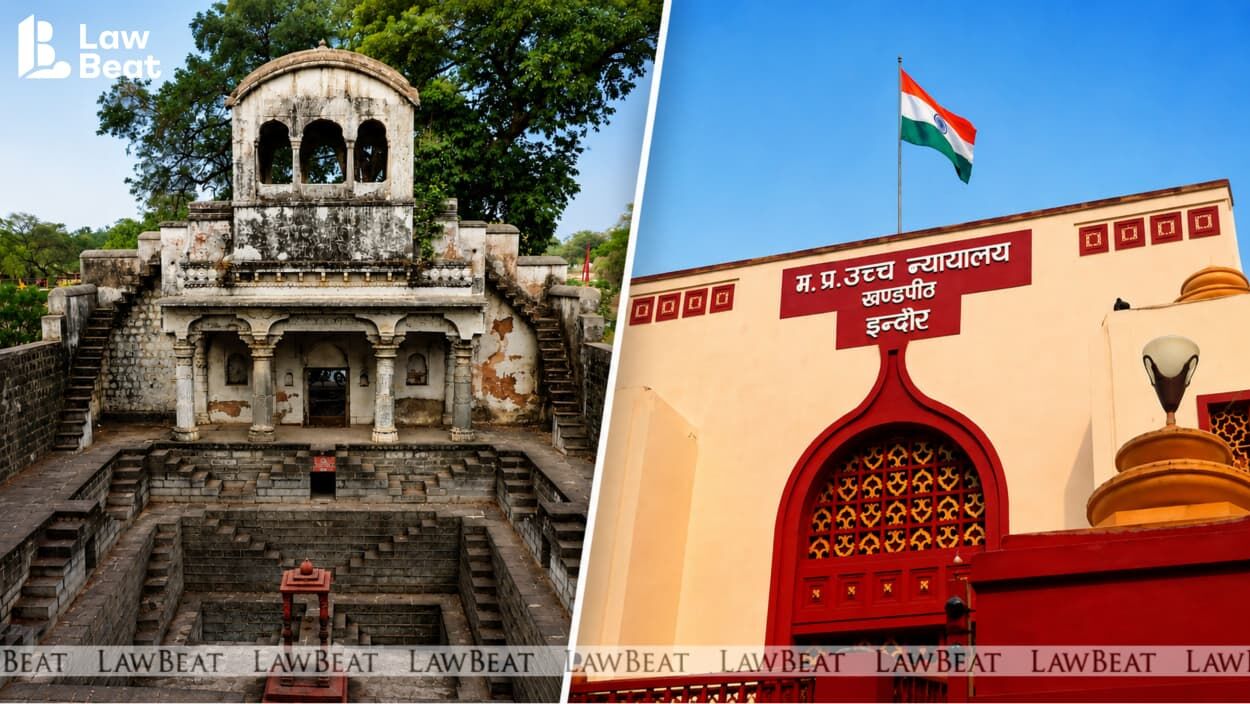
MP High Court: Shree Ram Mandir Khachrod Deity Absolute Owner, Priest Valid
Summary
- The Madhya Pradesh High Court has resolved a 72-year-old dispute concerning the Shree Ram Mandir in Khachrod, Ujjain district.
- The court declared the deity of Shriram as the absolute owner of the temple and its properties.
- State management of the temple through the Religious Trusts and Endowments Department was affirmed.
- Ratandas' appointment as the temple's priest was upheld as valid.
- The High Court set aside a 1968 trial court judgment that had dismissed Ratandas' original suit.
Court Resolves Decades-Old Dispute
The Madhya Pradesh High Court at Indore has brought a definitive close to a protracted 72-year-old legal battle concerning the Shree Ram Mandir in Khachrod, Ujjain district.
The Madhya Pradesh High Court at Indore has brought a definitive close to a protracted 72-year-old legal battle concerning the Shree Ram Mandir in Khachrod, Ujjain district. In a judgment delivered by Justice Vinay Saraf on August 25, 2026, the court partly allowed an appeal, affirming the deity's status as the absolute owner of the temple and its associated properties. This landmark decision also recognized the State's role in managing the religious endowment and upheld the validity of Ratandas' appointment as the temple's priest.
This ruling stems from First Appeal No. 59 of 1968, an appeal filed by Ratandas through his legal representatives, challenging a 1968 trial court dismissal of his original suit. The core of the dispute revolved around the rightful management of the temple and Ratandas' entitlement to continue his priestly duties. The High Court's comprehensive review ultimately overturned the lower court's decision, clarifying the complex interplay of ownership, administration, and religious rights within the temple's context.
Tracing the Temple's Historical Conflict
The origins of the conflict over the Shree Ram Mandir Khachrod trace back through generations. According to claims made by the plaintiff, the temple was founded by Baba Mayaramdas, with the Mahant and priestly roles traditionally following the customs of the Ramanand sect. Historical records examined by the High Court indicated that Mahant Gopaldas served as an undisputed Mahant, possessing established Shebait rights. Following his demise, his disciple, Murlidas, assumed the position.
However, Murlidas' tenure was marked by disagreements with members of the local Maheshwari community. These disputes eventually led Murlidas to seek intervention from the Auqaf Department, requesting that the temple be placed under its supervision. The court found that the State had indeed been managing the temple since 1930, initially through the Auqaf Department, which later merged into the Revenue Department. Furthermore, the Maheshwari community had significantly contributed to the temple's infrastructure, gifting constructed rooms, a community hall, and other structures to the deity, adding another layer to the complex Khachrod temple property dispute.
Judicial Scrutiny and Determinations
In its detailed examination, the High Court meticulously reviewed historical documents, oral testimonies, and other evidence pertaining to the temple's administration. A central finding was the unequivocal declaration of the deity as the absolute owner temple India, specifically of Shree Ram Mandir, Ramolla, Khachrod, and all its movable and immovable assets. Concurrently, the court confirmed that the State, operating through its Religious Trusts and Endowments Department, is responsible for the temple's management, with the Auqaf Department having possessed the authority to appoint the priest.
A significant aspect of the case involved Ratandas priest appointment validity. After Murlidas' death, ascetics of the Ramanand sect nominated Ratandas as Mahant following a Bhekh ceremony. The Auqaf Committee subsequently recommended his appointment, and the department officially appointed him as priest in 1948. Although his charge was initially handed over on September 12, 1948, it was later rescinded due to objections from Maheshwari Panchas. The court also dismissed an objection that Ratandas forfeited his priestly rights upon marriage, noting that the temple was not a Math and that evidence showed married individuals could perform Mahant or priestly duties there, thus clarifying Shebait rights dispute India in this specific context.
Upholding Rights and Setting Precedent
The High Court concluded that the trial court had erred in dismissing Ratandas' suit in 1968. Consequently, it set aside that judgment, firmly establishing the deity of Shriram as the absolute owner of the temple and its properties. The ruling further solidified the Madhya Pradesh religious endowment management structure, confirming the State's administrative role through the Religious Trusts and Endowments Department. Crucially, the court explicitly affirmed Ratandas' rightful appointment as Pujari and his entitlement to perform his duties.
Regarding the maintainability of Ratandas' claim, the High Court clarified that he sought recognition of his right to perform priestly and Shebait functions, not ownership of the temple itself. Given that the deity was the owner and the State managed the property, the court determined there was no requirement for Ratandas to seek a separate relief of possession. While confirming Ratandas' rights, the court declined to issue a perpetual injunction against members of the Maheshwari community, indicating a nuanced resolution to the long-standing dispute.
Source
How does this affect you?
Get an AI analysis of this article grounded in your jurisdictions, practice areas, and any policy documents you've uploaded to Wansom.
Finish Reading the Full Story and the Expert Analysis.
Wansom is AI and can make mistakes.