
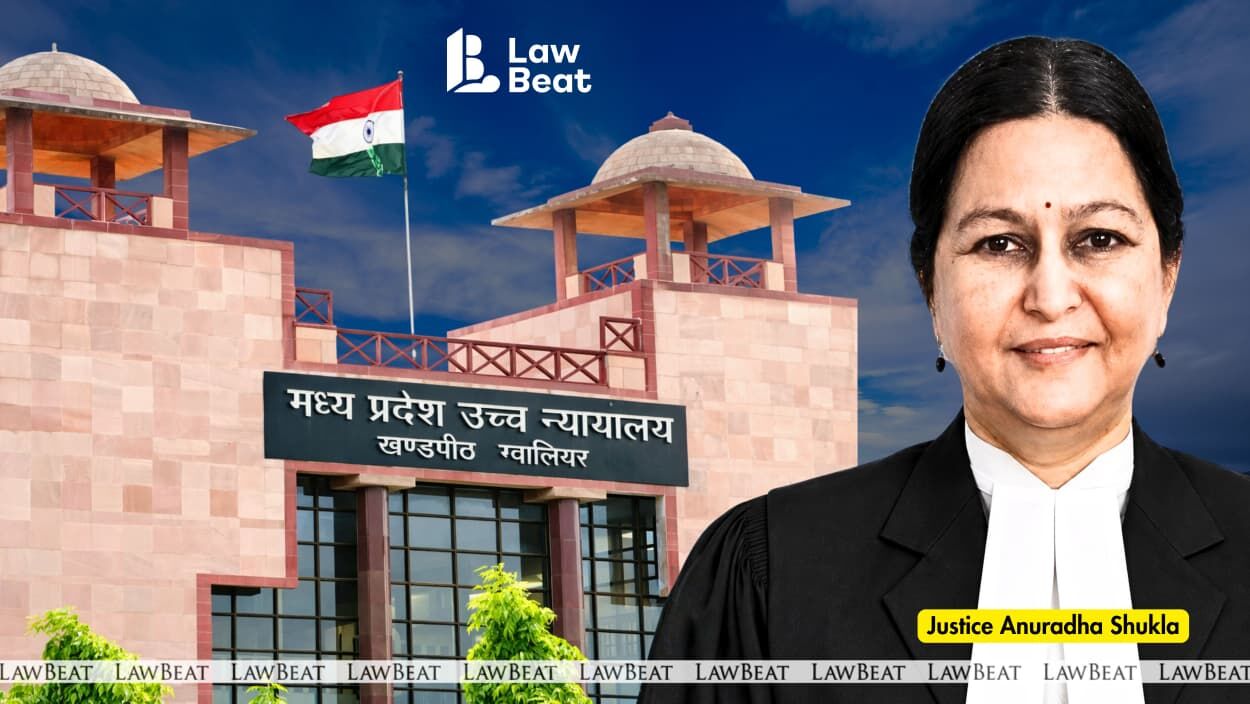
MP High Court: Quashes Delay Condonation Order, Cites Gender Bias
Summary
- The Madhya Pradesh High Court at Gwalior set aside an appellate court's refusal to condone an 18-day delay in an appeal.
- The High Court found the lower court erred by rejecting an illness-based delay plea without allowing evidence and by making gender-biased assumptions.
- Justice Anuradha Shukla labeled the lower court's reasoning, which doubted a woman's role in family litigation, as 'typically misogynistic' and 'inherently gender-biased'.
- The case, Imrat Singh and Others v. Chimna and Others, was remanded for reconsideration of the Section 5 Limitation Act application, with an opportunity for parties to present evidence.
- The ruling emphasizes that courts must not rely on surmises or gender stereotypes when deciding procedural matters like delay condonation.
Procedural Background and Initial Dismissal
The High Court unequivocally condemned this rationale as 'typically misogynistic,' emphasizing that such assumptions undermine the capabilities of female family members.
A civil dispute concerning ancestral property, initiated by the legal heirs of Jugri and Gorelal's female descendants seeking a share, was originally dismissed on its merits by the Second Civil Judge Class-II, Ganj Basoda, in Vidisha district, on October 12, 2011. The trial court found that the ancestral nature of the property had not been adequately proven by the plaintiffs.
Subsequently, the plaintiffs lodged an appeal before the Additional District Judge, Ganj Basoda. This appeal, however, was filed 18 days beyond the prescribed limitation period. To address this procedural lapse, an application for condonation of delay was submitted under Section 5 of the Limitation Act, India. The appellants contended that Mohar Bai, who was overseeing the litigation, had been significantly unwell between November 25 and December 12, 2011, which caused the delay. Respondents Sanjeev and Pancham contested this application through counter affidavits.
On December 17, 2014, the appellate court dismissed the appeal as time-barred, without delving into the substantive merits of the case. This decision hinged on two primary grounds: a lack of documentary evidence to substantiate Mohar Bai's illness and the court's skepticism regarding the reliance of older male family members on a younger woman, Mohar Bai, who was 35 years old, for managing the litigation.
Madhya Pradesh High Court's Intervention
The Madhya Pradesh High Court at Gwalior, in the case of Imrat Singh and Others v. Chimna and Others, critically reviewed the appellate court's decision. Justice Anuradha Shukla, presiding over the matter on October 1, 2026, identified two fundamental errors in the lower court's reasoning that led to the rejection of the `delay condonation` application. The first issue highlighted was a significant `procedural lapse delay application`: the appellate court had faulted the appellants for not providing documentation of Mohar Bai's illness, yet it had never requested or allowed them an opportunity to present evidence to support their claims. The High Court emphasized that providing such an opportunity was a prerequisite before concluding that the grounds for delay were unproven.
The second, and more sharply criticized, ground for rejection involved the appellate court's assertion that `elderly men depend younger woman court` for litigation management was an unacceptable premise. The lower court had refused to believe that the older, male appellants could depend on Mohar Bai, a younger female family member, to file the appeal. The High Court unequivocally condemned this rationale as 'typically misogynistic,' emphasizing that such assumptions undermine the capabilities of female family members. It found this `misogynistic reasoning family litigation` to be an 'inherently gender-biased' assertion, based solely on 'surmises and assumptions' rather than any factual basis on record.
Consequently, the High Court allowed the second appeal, setting aside the appellate court's refusal to condone the 18-day delay. The matter was remanded back to the First Appellate Court with specific directives. The lower court is now mandated to reconsider the `Section 5 Limitation Act India` application, providing all parties an opportunity to lead evidence if they choose. Should the delay be condoned after this reconsideration, the appellate court must then proceed to hear the appeal on its merits.
Upholding Justice and Challenging Bias
This ruling by the `MP High Court gender bias delay condonation` serves as a crucial precedent, reinforcing the principle that procedural applications, especially those under `Section 5 Limitation Act India`, cannot be dismissed without affording parties a fair chance to present their evidence. The High Court's strong condemnation of the lower court's 'inherently gender-biased' and 'typically misogynistic' reasoning sends a clear message against judicial prejudice in family litigation and other legal contexts.
The judgment underscores the judiciary's responsibility to avoid making assumptions based on gender stereotypes, particularly concerning who can effectively manage legal proceedings within a family. By rejecting the notion that `elderly men depend younger woman court` is an invalid premise for litigation management, the `Madhya Pradesh High Court Gwalior` has affirmed the equal capability of all individuals, regardless of age or gender, to participate in and oversee legal matters. This decision is vital for promoting fairness and equity in judicial processes, ensuring that justice is not impeded by unfounded biases or procedural shortcuts.
Practical Implications
Lawyers should note that courts cannot reject applications for condonation of delay based on gender-biased assumptions about who can manage litigation, particularly regarding the reliance of older male family members on younger female members. This ruling reinforces the need for lower courts to allow evidence for illness-based delay pleas and to avoid 'misogynistic' reasoning, providing a strong precedent against such judicial bias in procedural matters.
Source
How does this affect you?
Get an AI analysis of this article grounded in your jurisdictions, practice areas, and any policy documents you've uploaded to Wansom.
Finish Reading the Full Story and the Expert Analysis.
Get the latest legal & regulatory intelligence in India
Wansom is AI and can make mistakes.