
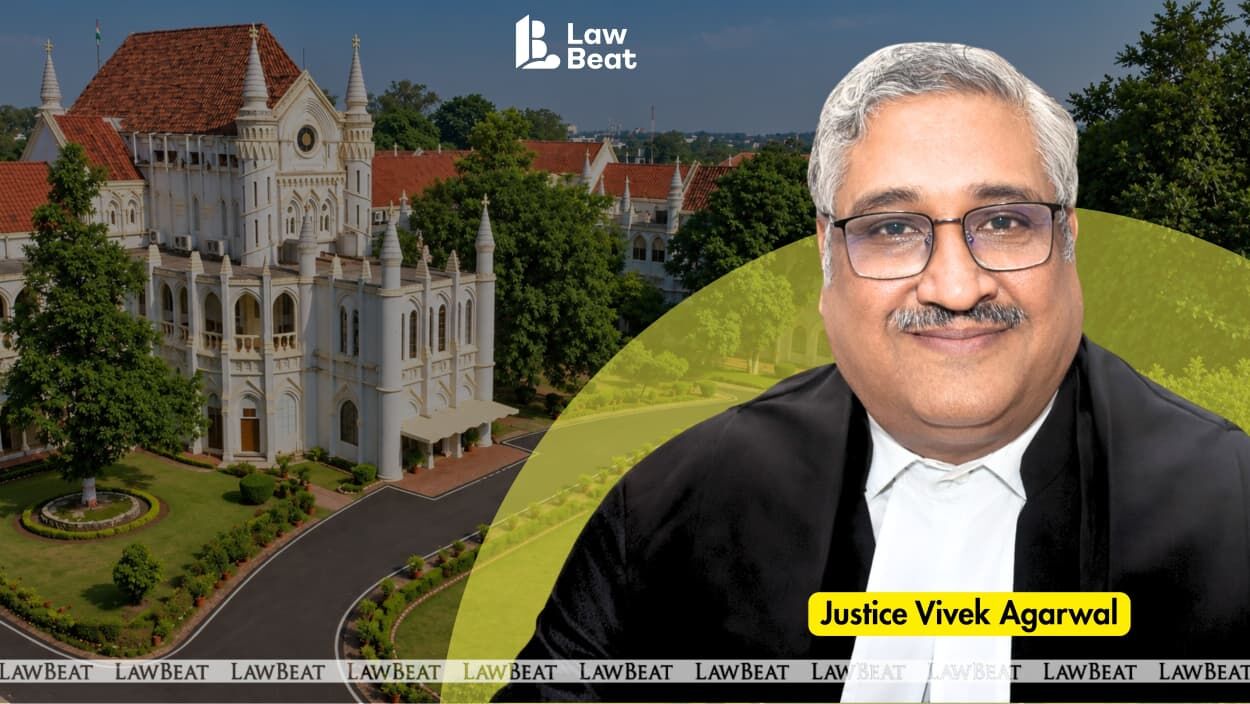
MP High Court: Dismisses Challenge to Selection After Participation
Summary
- The MP High Court dismissed a 2016 petition challenging an Assistant Librarian appointment at Dr. Hari Singh Gour Central University.
- The court ruled that candidates who participate in a selection process without protest cannot challenge it after failing.
- Judicial review of expert selection committee decisions is limited, requiring proof of gross irregularity or mala fide.
- The petitioner's claims regarding the appointee's qualifications and experience were factually refuted by the court.
- The ruling cited Supreme Court precedents Madras Institute of Development Studies and M.V. Thimmaiah.
High Court Upholds Librarian Appointment, Limits Judicial Scrutiny
The High Court, citing the Supreme Court's ruling in Madras Institute of Development Studies v. Dr. K. Sivasubramaniyan (2015), firmly held that a candidate who participates in a selection process without raising any protest during its course cannot subsequently challenge the outcome after being unsuccessful.
The Madhya Pradesh High Court, sitting at Jabalpur, recently dismissed a writ petition dating back to 2016, which challenged the 2012 appointment of an Assistant Librarian at Dr. Hari Singh Gour Central University in Sagar. Justice Vivek Agarwal issued the order on September 28, 2026, affirming that judicial bodies are not empowered to function as appellate authorities over the decisions made by expert selection committees. This ruling underscores a critical legal boundary, asserting that such decisions can only be overturned if demonstrably tainted by gross irregularity or mala fide intent.
The petition was brought by Dr. Krishna Kumar Kesharwani, who had also been a candidate for the Assistant Librarian position. He contested the Registrar's directive from December 13, 2012, which confirmed Dr. Anurag Shrivastava's appointment to the role within the university's Pt. Jawahar Lal Nehru Library. The position carried a Pay Band-3 salary ranging from Rs 15,600 to 39,100. Dr. Kesharwani's challenge, initiated several years after the appointment, sought to invalidate the selection process and outcome.
Petitioner's Claims and Factual Rebuttals
Dr. Kesharwani presented several objections against Dr. Shrivastava's appointment. Primarily, he argued that Dr. Shrivastava's Ph.D. certificate was issued in 2013, after the application deadline of January 2012. He further contended that Dr. Shrivastava lacked the desirable PGDCA qualification in Library Science, a credential Dr. Kesharwani himself possessed, and also claimed a deficiency in the required supervisory library experience. Dr. Kesharwani asserted his own equal qualifications, suggesting he should have been the preferred candidate. He also questioned the method of recruitment, proposing that the post should have been filled through promotion rather than direct recruitment.
However, the court systematically addressed and rejected each of these claims. Regarding the Ph.D. qualification, the court found the objection factually incorrect, noting that Dr. Shrivastava had been notified of his Ph.D. completion on April 28, 2011, well in advance of the January 10, 2012, application closing date. A comparison of academic marks revealed that Dr. Kesharwani had secured lower scores than Dr. Shrivastava in Class 12, graduation, B.Lib, and M.Lib examinations. On the matter of experience, Dr. Shrivastava had served as a Librarian at Kendriya Vidyalaya, New Delhi, and Madhopur for a combined two years and seven months. Conversely, Dr. Kesharwani's admitted experience as a Cataloguer was deemed not to count towards supervisory library experience, and his tenure as officiating Assistant Librarian prior to the advertisement closing was less than one year. The court also clarified that desirable qualifications do not override essential ones. The argument for promotion was dismissed as the university confirmed that promotion required eight years of experience, and University Grants Commission (UGC) norms permitted direct recruitment for the position.
Judicial Review and the Principle of Non-Protest
A cornerstone of the court's decision rested on established legal precedents concerning challenges to selection processes. The High Court, citing the Supreme Court's ruling in Madras Institute of Development Studies v. Dr. K. Sivasubramaniyan (2015), firmly held that a candidate who participates in a selection process without raising any protest during its course cannot subsequently challenge the outcome after being unsuccessful. This principle, often referred to as "participation without protest," significantly limits the ability of disgruntled candidates to seek judicial intervention post-selection.
Furthermore, the court reiterated the limited scope of judicial review over expert selection committee decisions, a principle reinforced by M.V. Thimmaiah v. Union Public Service Commission (2008). The High Court emphasized that it is not within its purview to re-evaluate the comparative merits of candidates once an expert committee has already done so. Judicial intervention is warranted only when there is clear evidence of gross irregularity or mala fide conduct vitiating the selection. As Dr. Kesharwani failed to demonstrate any such gross irregularity or mala fide intent in the selection of Dr. Shrivastava, his petition was ultimately dismissed, reinforcing the judiciary's deference to the expertise of selection bodies in the absence of clear procedural or substantive misconduct.
Practical Implications
Lawyers advising candidates or institutions on recruitment processes must note this ruling reinforces that participation without protest generally bars later challenges, and courts maintain a limited scope of judicial review over expert selection committee decisions, requiring proof of gross irregularity or mala fide.
Source
How does this affect you?
Get an AI analysis of this article grounded in your jurisdictions, practice areas, and any policy documents you've uploaded to Wansom.
Finish Reading the Full Story and the Expert Analysis.
Get the latest legal & regulatory intelligence in India
Wansom is AI and can make mistakes.