
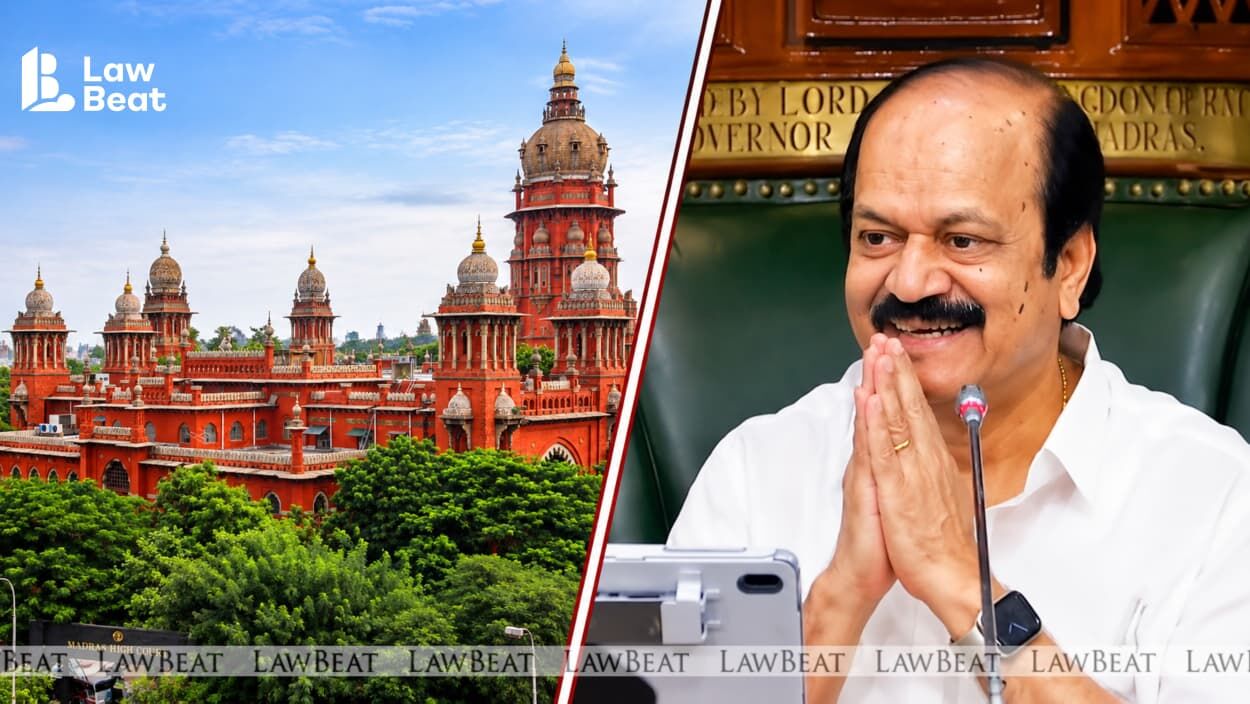
Madras High Court: TN Speaker MLA Resignations Accepted, Disqualification Mandated
Summary
- The Madras High Court upheld Speaker JCD Prabhakar's decision to accept the resignations of six AIADMK MLAs.
- The Court found the resignations to be genuine and voluntary, dismissing challenges to their acceptance.
- Crucially, the ruling clarified that accepting these resignations does not terminate pending disqualification proceedings under the Tenth Schedule.
- Speaker Prabhakar has been directed to complete the disqualification proceedings against the legislators within two months.
- The controversy arose after the MLAs voted against their party's whip, resigned, and subsequently joined the TVK.
Court Upholds Speaker's Decision, with a Crucial Caveat
The Court's ruling, while affirming the genuineness of the resignations, critically clarified that such acceptance does not automatically terminate ongoing disqualification proceedings against the legislators under the Tenth Schedule of the Constitution.
The Madras High Court recently affirmed the decision by Tamil Nadu Assembly Speaker JCD Prabhakar to accept the resignations of six AIADMK legislators. A Division Bench, comprising Chief Justice SA Dharmadhikari and Justice G Arul Murugan, concluded that the resignations were indeed genuine, thereby validating the Speaker's assessment. This ruling came in response to a petition challenging the Speaker's actions.
Crucially, while upholding the acceptance of the resignations, the Court issued a significant directive concerning ongoing legal processes. It explicitly stated that the acceptance of these resignations would not bring an end to the pending disqualification proceedings against the legislators. The Speaker has now been mandated to finalize these proceedings within a strict two-month timeframe, ensuring accountability for past actions despite their departure from the assembly.
The Genesis of the Controversy
The dispute originated from allegations that several AIADMK MLAs had acted against their party's directive. Specifically, these legislators were accused of defying the party whip by casting votes in favor of Chief Minister Joseph Vijay's Tamilaga Vettri Kazhagam (TVK) government during a critical confidence motion. Following this contentious vote, the six legislators — Maragatham Kumaravel, P Sathyabhama, Isakki Subbaiah, Jayakumar, MR Vijayabhaskar, and C Vijayabhaskar — tendered their resignations from the Assembly.
These resignations were submitted and accepted by Speaker JCD Prabhakar on May 25, 2026, with a subsequent Gazette notification confirming their departure. Shortly thereafter, the former AIADMK MLAs officially joined the TVK. This rapid sequence of events prompted AIADMK whip Agri Krishnamurthy, alongside National People’s Power Party leader Ravi, to file a petition with the Madras High Court, questioning the legitimacy and voluntariness of the resignations.
Legal Arguments and Constitutional Scrutiny
The petitioners contended that the Speaker's acceptance process was flawed, arguing that a thorough inquiry into the voluntariness of the resignations had not been conducted. They highlighted the swift acceptance of the resignations, coupled with the legislators' immediate defection to a rival party, as grounds for suspicion, suggesting potential horse-trading. Citing Article 190 of the Constitution of India, which requires the Speaker to be satisfied that a resignation is voluntary and genuine, the petitioners argued that the procedure followed amounted to mere formal compliance and that the AIADMK should have been given an opportunity to present its objections.
In defense of his actions, Speaker JCD Prabhakar maintained that he had personally engaged with each legislator and was satisfied that their resignations were voluntary. The Assembly Secretary further clarified the legal position, asserting that a legislator's resignation does not negate the consequences of conduct that could lead to disqualification under the Tenth Schedule of the Constitution. The Speaker emphasized that his role under Article 190(3)(b) was to ascertain the genuineness of the resignation letter itself, not to delve into the political motivations behind it, noting that there were no claims that the letters were not authored by the legislators.
Broader Implications for Legislative Conduct
This ruling by the Madras High Court carries significant implications for the interpretation of legislative resignations and defection laws in India. By distinguishing between the genuineness of a resignation and the ongoing nature of disqualification proceedings, the Court has reinforced that a legislator cannot simply resign to escape accountability for actions that violate anti-defection provisions. The Court's ruling, while affirming the genuineness of the resignations, critically clarified that such acceptance does not automatically terminate ongoing disqualification proceedings against the legislators under the Tenth Schedule of the Constitution.
The directive for Speaker JCD Prabhakar to complete the disqualification proceedings within two months highlights the judiciary's role in ensuring that constitutional mechanisms for maintaining party discipline are fully exercised. This clarification is particularly relevant for lawyers advising political parties or individual legislators, as it delineates the distinct legal pathways and the Speaker's limited inquiry scope into the genuineness of a resignation versus the broader implications of defection. It ensures that the consequences of defying a party whip, as alleged against the AIADMK MLAs, are addressed independently of their decision to leave the assembly.
Practical Implications
Lawyers advising political parties or individual legislators in India should note that a Speaker's acceptance of a resignation, even if deemed genuine, does not automatically terminate ongoing disqualification proceedings under the Tenth Schedule. This ruling clarifies the distinct legal pathways and the Speaker's limited inquiry scope into the genuineness of a resignation versus the broader implications of defection.
Source
How does this affect you?
Get an AI analysis of this article grounded in your jurisdictions, practice areas, and any policy documents you've uploaded to Wansom.
Finish Reading the Full Story and the Expert Analysis.
Get the latest legal & regulatory intelligence in India
Wansom is AI and can make mistakes.