
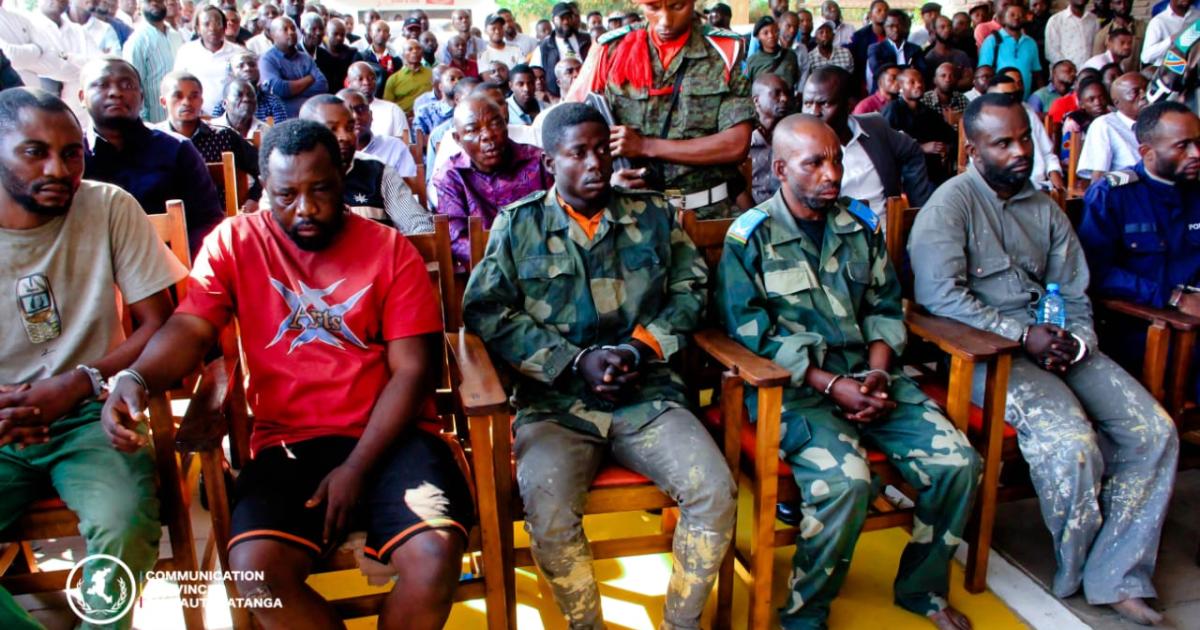
Lubumbashi Military Tribunal: Death Sentences for Police Murder in Kilobelobe Robbery
Summary
- On September 18, 2026, the Garrison Military Tribunal of Lubumbashi issued death sentences.
- The verdict concerned the murder of two police officers during a service station robbery in Kilobelobe.
- The police officers were assigned to guard the service station premises at the time of the incident.
- This ruling highlights the continued application of capital punishment by military courts in the Democratic Republic of Congo.
Verdict from Lubumbashi Military Tribunal
The Lubumbashi military tribunal death sentences reflect the judiciary's stern response to such violent crimes, particularly when they involve the loss of life of those tasked with maintaining public order and security within the Haut-Katanga province.
A significant ruling was handed down by the Garrison Military Tribunal of Lubumbashi on Friday, September 18, 2026, concluding a high-profile case involving a violent robbery and the murder of two law enforcement officers. The court's decision resulted in multiple death sentences, underscoring the severe penalties imposed by military justice in the Democratic Republic of Congo (DRC) for grave offenses, particularly those targeting state agents.
The proceedings centered on the Kilobelobe robbery sentences, specifically addressing an incident where a service station in Kilobelobe was targeted. During the course of this robbery, two police officers, who had been assigned to guard the premises, were tragically killed. The Lubumbashi military tribunal death sentences reflect the judiciary's stern response to such violent crimes, particularly when they involve the loss of life of those tasked with maintaining public order and security within the Haut-Katanga province.
Capital Punishment in DRC Military Justice
This verdict from the justice militaire Lubumbashi highlights the continued application of capital punishment within the DRC's legal system, especially through its military courts. Although there was a de facto moratorium on executions in the country for many years, which was lifted in March 2024, death sentences are still regularly pronounced, particularly in cases heard by military tribunals. The imposition of the peine de mort RDC in this instance reaffirms the military court's authority to levy the ultimate penalty for serious crimes, consistent with its jurisdiction over offenses that often involve military personnel, police, or threats to national security.
The DRC military court capital punishment serves as a stark reminder of the robust and often unyielding nature of military justice. Such tribunals operate under specific codes and procedures, distinct from civilian courts, and are frequently tasked with addressing crimes that carry significant public and security implications. The severity of the sentences in the Haut-Katanga police murder verdict underscores the gravity with which the military judicial system views attacks on law enforcement officers and the disruption of public safety.
Implications for Legal Practice and Human Rights
The pronouncement of death sentences by the Lubumbashi military tribunal carries substantial implications for legal practitioners and human rights observers in the region. It signals that despite international trends towards the abolition of capital punishment, the DRC's military justice system continues to utilize it as a sentencing option for heinous crimes. Lawyers advising clients on criminal defense or human rights matters in the DRC, particularly within the jurisdiction of military courts, must remain acutely aware of this reality.
Monitoring the enforcement and potential appeals of these death sentences will be crucial for understanding the evolving landscape of justice in the DRC. The Kilobelobe robbery sentences, culminating in capital punishment, reinforce the need for legal professionals to possess a deep understanding of the scope and application of military justice, as well as the avenues for recourse available to those facing such severe penalties. This case serves as a critical data point in the ongoing discourse surrounding capital punishment and the role of military tribunals in the country.
Practical Implications
This verdict from a military tribunal in Lubumbashi underscores the continued application of capital punishment in the DRC, particularly for serious crimes involving state agents. Lawyers should monitor the enforcement and potential appeals of such sentences, and understand the scope of military justice jurisdiction when advising clients on criminal defense or human rights matters in the region.
Source
How does this affect you?
Get an AI analysis of this article grounded in your jurisdictions, practice areas, and any policy documents you've uploaded to Wansom.
Finish Reading the Full Story and the Expert Analysis.
Get the latest legal & regulatory intelligence in DR Congo
Wansom is AI and can make mistakes.