
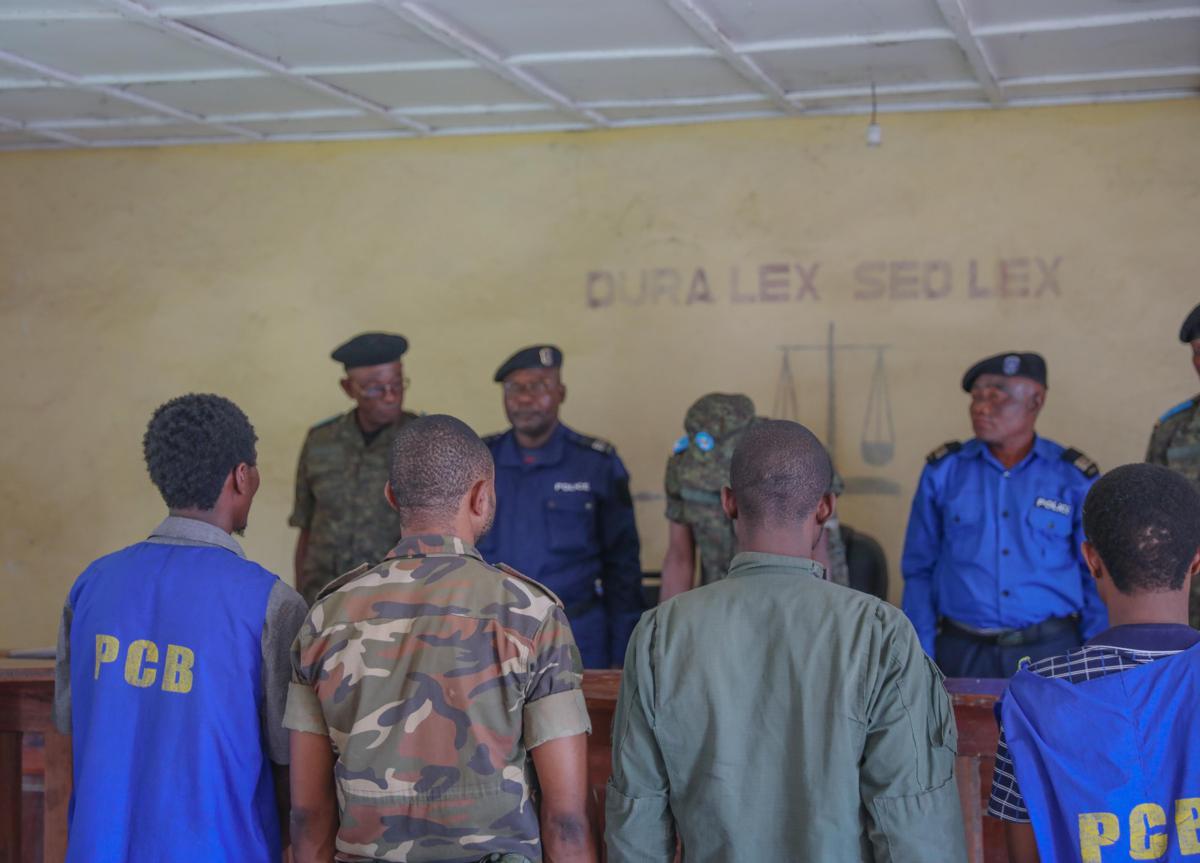
Goma Military Tribunal Prosecutes 71 FARDC Soldiers for Revolt, Murder
In Walikale, North Kivu, Democratic Republic of Congo, the Goma Military Garrison Court was, as of Tuesday, November 3, examining the case of 71 FARDC soldiers from the 3415th Infantry Regiment facing charges including military revolt and murder.
The judicial proceedings, which commenced on October 26, are currently in the jurisdictional instruction phase. The case initially involved 54 soldiers, but it was subsequently expanded to include Captain Mwinyi Justin, an S2 officer of the same regiment, on charges of non-denunciation of an offense. An additional 16 soldiers were later added, bringing the total number of accused to 71. The initial 54 soldiers are specifically accused of military revolt, dissipation of war munitions, violation of instructions, refusal of obedience, and murder, stemming from shooting incidents on October 16 and 20, 2026 (as per the excerpt, though likely a typo for an earlier year) in Ngora, which tragically resulted in the deaths of two soldiers and one civilian. The article also notes a prior conviction of ten soldiers from the same regiment for an unrelated incident involving shooting their company commander.
This high-profile military trial carries significant legal and institutional implications for the Democratic Republic of Congo. It underscores the FARDC's commitment to upholding military discipline and accountability, particularly in regions plagued by conflict and instability like North Kivu. The prosecution of such a large number of soldiers, including an officer for non-denunciation, signals a robust effort to address serious breaches of military conduct and human rights within the armed forces. The outcome of this case will set important precedents regarding the application of military justice, the enforcement of command responsibility, and the broader effort to professionalize the FARDC and ensure adherence to the rule of law.
The legal context for these proceedings is the DRC's military justice system, governed by the Military Penal Code and the Code of Military Procedure. Military courts, such as the Goma Military Garrison Court, possess jurisdiction over offenses committed by military personnel, especially those related to military discipline, national security, and serious crimes. Charges like military revolt, murder, and dissipation of war munitions are grave offenses under military law, carrying severe penalties. The inclusion of Captain Mwinyi Justin for non-denunciation highlights the legal obligation of officers to report offenses, a principle crucial for maintaining order and accountability within military ranks. Key parties include the Goma Military Garrison Court (the adjudicating body), the 71 FARDC soldiers (the accused), Captain Mwinyi Justin (an accused officer), the FARDC (the affected institution), and the victims of the alleged shootings. The outcome of this matter is not yet reported.
Legal professionals, particularly those specializing in military law, criminal defense, or human rights, should closely monitor the developments and eventual outcome of this trial. It offers critical insights into the functioning and effectiveness of the DRC's military justice system and its capacity to address serious crimes committed by service members. For military personnel and their legal advisors, understanding the scope of charges, the procedural stages of military trials, and the implications of expanded investigations (as seen with the increased number of accused) is paramount. This case also serves as a stark reminder of the importance of strict adherence to military regulations, the duty to report offenses, and the potential for severe legal consequences for breaches of military discipline and criminal conduct.
How does this affect you?
Get an AI analysis of this article grounded in your jurisdictions, practice areas, and any policy documents you've uploaded to Wansom.
Wansom is AI and can make mistakes.