
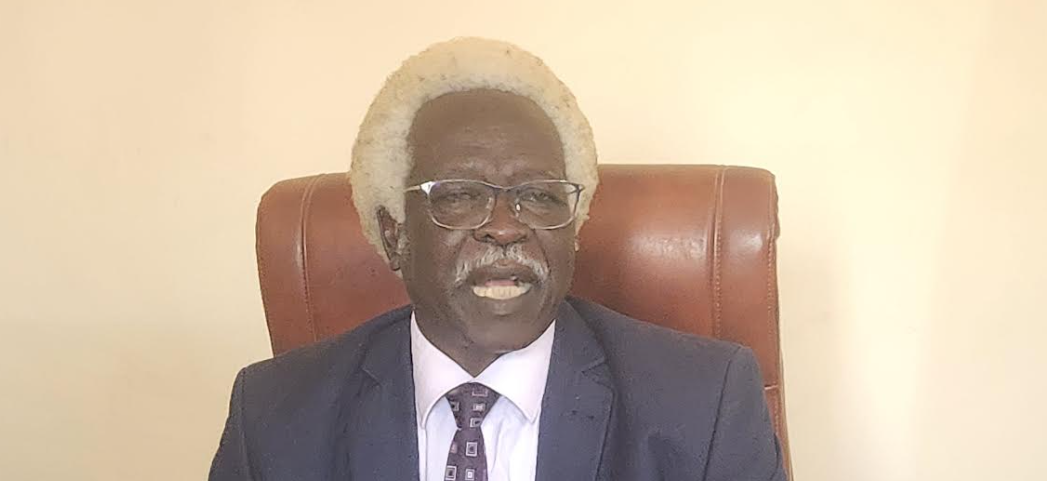
Kornelio Kon Ngu: Inter-Party Dialogue Criticism Labels Talks 'Meaningless'
Summary
- Presidential aspirant Kornelio Kon Ngu has called the inter-party dialogue "meaningless" and demanded its postponement until after elections.
- His criticism stems from South Sudan Constitutional Amendment No. 13, signed by President Salva Kiir, which removed key preconditions for elections.
- Kon Ngu also questioned the National Elections Commission's ability to hold credible elections, citing a lack of voter registration and recent leadership changes.
- The dialogue, initially scheduled for September 17, was postponed to September 24 without an official reason.
- South Sudan's electoral roadmap has seen elections moved from December 2024 to December 2026, with the transitional period expiring in February 2027.
Criticism Mounts Over Inter-Party Dialogue
Kornelio Kon Ngu, a prominent presidential aspirant and leader of the opposition National United Democratic Front (NUDF), has sharply criticized the upcoming inter-party dialogue in South Sudan, labeling it as "meaningless."
Kornelio Kon Ngu, a prominent presidential aspirant and leader of the opposition National United Democratic Front (NUDF), has sharply criticized the upcoming inter-party dialogue in South Sudan, labeling it as "meaningless." Kon Ngu, who also serves as the third deputy speaker of parliament, publicly called for the dialogue's postponement, advocating for it to occur only after national elections have been held and an elected government is in place. His remarks were made during a press conference in Juba on Saturday, where he articulated his faction's support for holding elections but questioned the utility of the dialogue in the current political climate.
The dialogue, originally slated for September 17, was subsequently rescheduled for September 24, with proceedings set to commence at 10 AM at the Revitalised Transitional National Legislative Assembly's main hall in Juba. No official reason was provided by the government for this one-week delay. Kon Ngu argued that the dialogue's initial purpose—to discuss political issues for potential inclusion in constitutional amendments—has been rendered obsolete by recent legislative actions. He further stressed the necessity for any such dialogue to be more inclusive, extending participation to political parties operating outside South Sudan, rather than limiting it to groups already within the country's borders.
Constitutional Amendment Alters Electoral Landscape
A central pillar of Kon Ngu's critique revolves around the recent enactment of South Sudan Constitutional Amendment No. 13, which he contends fundamentally alters the framework for future elections. This significant amendment, passed by parliament on September 1 and assented to by President Salva Kiir the following day, effectively removes key preconditions for holding national elections. Specifically, it eliminates the requirements for the completion of a permanent constitution-making process and a national population and housing census before electoral activities can proceed.
Kon Ngu highlighted that with these constitutional changes already finalized, the original rationale for the inter-party dialogue—to inform constitutional amendments—no longer exists. He questioned the necessity of the dialogue now that its intended resolutions, which would have been incorporated into the constitutional framework, have been preempted by the amendment. This move by President Salva Kiir and the legislative body has, in Kon Ngu's view, stripped the dialogue of its practical significance.
Concerns Over Electoral Preparedness and Leadership
Beyond the constitutional shifts, Kon Ngu also voiced serious doubts regarding the National Elections Commission (NEC) South Sudan's capacity to organize a credible election within the remaining timeframe. He specifically pointed to the fact that voter registration had not yet commenced, a critical step for any legitimate electoral process. The NEC itself acknowledged on September 2 that no voters had been registered and an electoral register was not yet established, though it stated preparations were underway, including training officials and assessing registration centers. Despite these challenges, the commission maintains its commitment to holding elections on December 22.
The integrity of the South Sudan election preparations has been further complicated by recent leadership changes at the NEC. On September 15, President Kiir removed Abednego Akok Kacuol from his position as NEC chairperson, appointing Gabriel Bol Deng Majok, the commission’s former secretary-general, as his successor. No public explanation was provided for Akok Kacuol's dismissal. These developments occur against a backdrop of repeated national election postponements in South Sudan since its independence in 2011. Under the current South Sudan electoral roadmap, the transitional period was extended in 2024, shifting elections from December 2024 to December 2026, with the transitional period now set to expire in February 2027.
Call for Broader Political Consultation
Kornelio Kon Ngu further criticized the process through which Constitutional Amendment No. 13 was adopted, arguing that such pivotal political decisions should involve more extensive consultation among all political parties. He contended that the planned inter-party dialogue's composition was too narrow, asserting that it should encompass all political factions rather than a select few. For Kon Ngu, the lack of broad engagement in decisions affecting the country’s constitutional and electoral arrangements underscores why the current inter-party dialogue holds no meaning.
Practical Implications
Lawyers and compliance officers should note the significant constitutional changes (Amendment No. 13) that alter election preconditions in South Sudan, potentially impacting the legitimacy of the electoral process and future legal challenges. The ongoing political disputes and leadership changes at the NEC signal continued instability in South Sudan's legal and political landscape, requiring close monitoring for clients operating in the region.
Source
How does this affect you?
Get an AI analysis of this article grounded in your jurisdictions, practice areas, and any policy documents you've uploaded to Wansom.
Finish Reading the Full Story and the Expert Analysis.
Get the latest legal & regulatory intelligence in South Sudan
Wansom is AI and can make mistakes.