
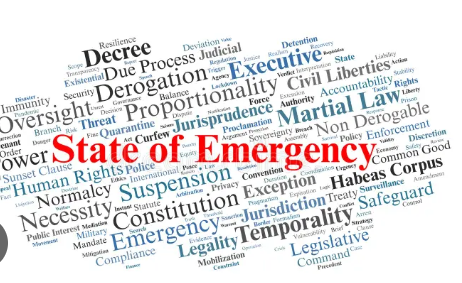
Kiir Lifts State of Emergency in Four South Sudan States
Summary
- President Salva Kiir has lifted the state of emergency in Lakes, Warrap, Western Bahr el Ghazal, and Unity states, effective immediately.
- The emergency, initially declared on July 29, 2026, via Republican Order No. RSS J2707-2026, aimed to restore normal governance and protect rights.
- A policy analyst noted the emergency failed to curb intercommunal violence and insecurity, citing over 100 deaths in Lakes State.
- The lifting is welcomed as it may facilitate political activity and voter engagement ahead of the February 2027 general elections.
- All national and state institutions are directed to resume their ordinary constitutional and legal responsibilities following the presidential order.
What Happened
This move is seen as beneficial for the democratic process, potentially allowing communities to select their preferred leaders through the electoral mechanism.
President Salva Kiir has ended the state of emergency that was in effect across four South Sudanese states. This measure, which had been imposed since July, was terminated with immediate effect. The affected regions are Lakes, Warrap, Western Bahr el Ghazal, and Unity states.
The presidential directive was publicly announced on Thursday evening via the state-owned South Sudan Broadcasting Corporation (SSBC). The original state of emergency had been declared on July 29, 2026, under Republican Order No. RSS J2707-2026.
According to President Kiir, the decision to lift the emergency aims to re-establish standard governance practices, uphold the rule of law, safeguard civilians, and ensure the exercise of constitutional rights within these areas. This move signifies a return to ordinary administrative functions after a period of exceptional measures.
Legal and Institutional Directives
The presidential order explicitly mandates all national and state institutions to resume their regular constitutional and legal duties. This directive underscores a return to pre-emergency operational norms across the government apparatus.
Furthermore, security institutions have been instructed to continue their responsibilities, which include protecting civilians, maintaining public order, and preserving peace, all in strict adherence to existing legal frameworks.
Key officials specifically tasked with the implementation of this order include the Chief of Defence Forces of the South Sudan Peoples Defence Forces (SSPDF), the Inspector General of the National Police Service, the Director General of the National Security Service, and the respective governors of the four states. Any previous directives or measures that conflict with this new presidential order are now revoked.
Effectiveness Under Scrutiny
Despite President Kiir's stated intentions, a prominent policy and political analyst, Boboya James Edimond, who serves as Director, Management Consultancy of the Institute of Social Policy and Research in South Sudan, has questioned the efficacy of the emergency measures. Edimond contended that the state of emergency failed to achieve its primary security objectives.
He highlighted that even with the deployment of security forces and governmental interventions, communities in the designated states continued to grapple with persistent intercommunal violence, revenge killings, and cattle raiding. Edimond explicitly stated that the emergency had not fulfilled its own purpose, deeming it a failure.
Specific examples cited included ongoing revenge killings, intercommunal conflicts, and cattle raiding in Warrap State. In Lakes State, deadly communal violence in Rumbek Centre County reportedly resulted in over 100 fatalities. Moreover, insecurity in Western Bahr el Ghazal State reportedly hindered voter registration efforts, preventing completion in some areas due to ongoing conflict.
Implications for Elections and Future Governance
Despite his critique of the emergency's past performance, Boboya James Edimond welcomed the decision to lift it, particularly as South Sudan approaches its scheduled general elections in February 2027. He suggested that this development could facilitate greater freedom of movement for political parties, community members, and other political actors, enabling them to engage with voters and mobilize support across the affected states.
This move is seen as beneficial for the democratic process, potentially allowing communities to select their preferred leaders through the electoral mechanism. However, Edimond cautioned that merely lifting the emergency and proceeding with elections would not automatically resolve the deep-seated challenges faced by these communities.
He emphasized the necessity of concurrent improvements in public services and economic opportunities. Edimond urged the government to prioritize essential services such as healthcare, education, road construction, access to clean water, electricity, and telecommunications, alongside supporting agriculture and livestock production. He also stressed the critical need for employment opportunities for young people and women, poverty reduction strategies, inclusive decision-making processes, and stronger local governance, in addition to sustained peacebuilding initiatives and reinforcing the rule of law to rebuild trust among various societal groups.
Practical Implications
Lawyers and compliance officers should note the immediate restoration of ordinary constitutional and legal responsibilities for all national and state institutions in Lakes, Warrap, Western Bahr el Ghazal, and Unity states. This means any extraordinary measures or directives previously in force under the state of emergency are now revoked, requiring a review of operational procedures, contractual obligations, and compliance frameworks for clients operating in these regions. Furthermore, the lifting facilitates increased political activity ahead of the December 2026 general elections, which may impact business and social environments.
Source
How does this affect you?
Get an AI analysis of this article grounded in your jurisdictions, practice areas, and any policy documents you've uploaded to Wansom.
Finish Reading the Full Story and the Expert Analysis.
Get the latest legal & regulatory intelligence in South Sudan
Wansom is AI and can make mistakes.