
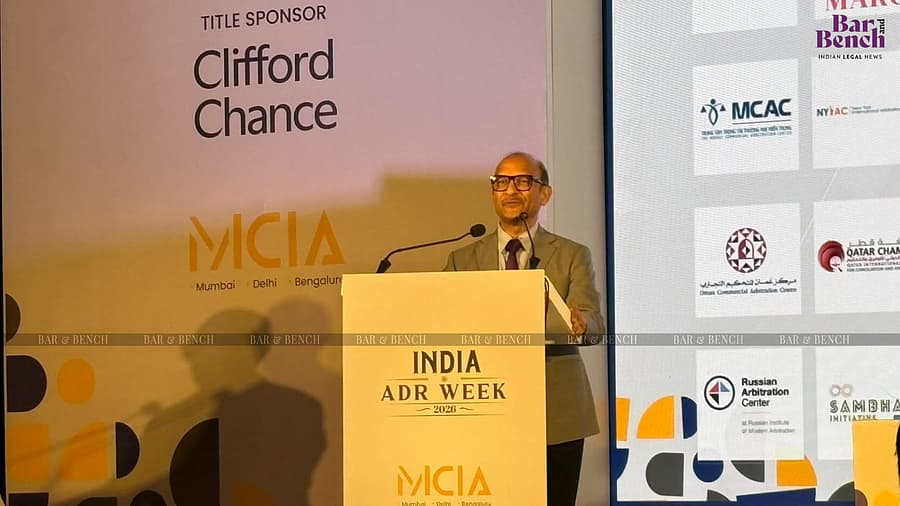
Justice Sandeep Mehta: Urges India ADR Accessibility, Cautions on Cost
Summary
- Supreme Court Justice Sandeep Mehta emphasized that Alternative Dispute Resolution (ADR) must remain accessible and affordable, not a privilege for the wealthy.
- He stated that the success of ADR should not be solely measured by speed or efficiency, but also by its cost and accessibility.
- Justice Mehta warned that if dispute resolution becomes excessively expensive, it defeats ADR's core purpose of removing barriers.
- He clarified that ADR encompasses various mechanisms beyond arbitration, such as mediation, conciliation, negotiation, and Lok Adalats.
- The Justice cautioned against arbitration proceedings mirroring the delays and procedural complexities of traditional litigation, which would undermine their effectiveness.
Key Address on ADR Accessibility
He underscored that if dispute resolution mechanisms become excessively expensive, they risk becoming the very barrier that Alternative Dispute Resolution was designed to overcome.
Supreme Court Justice Sandeep Mehta recently delivered a significant address, emphasizing that Alternative Dispute Resolution (ADR) mechanisms should not become an exclusive privilege for those who can afford highly sophisticated dispute resolution processes. Speaking on Thursday at the Delhi chapter of India ADR Week 2026, an event organized by the Mumbai Centre for International Arbitration (MCIA), Justice Mehta underscored the critical need for Justice Sandeep Mehta ADR accessibility. His remarks highlighted a fundamental concern that the very tools designed to simplify and democratize justice could inadvertently create new barriers if cost becomes prohibitive.
Justice Mehta's intervention stressed that the success of ADR cannot be solely measured by metrics such as speed, efficiency, or the sheer number of institutions established. Instead, he argued for a broader definition of success that prioritizes equitable access. This perspective challenges the conventional focus on operational metrics, urging a deeper consideration of the societal impact and reach of dispute resolution services.
Redefining Success and Cost Barriers
Justice Mehta articulated that the true measure of ADR's success extends beyond mere speed, efficiency, or the proliferation of new institutions. He firmly stated that cost and accessibility are equally paramount considerations. He warned that if the process of resolving disputes becomes excessively expensive, it risks transforming into the very type of barrier that ADR was originally conceived to dismantle, creating an India ADR cost barrier for many.
This perspective aligns with observations of a growing trend, including a move away from arbitration in certain government contracts, suggesting a broader re-evaluation of dispute resolution strategies. The Justice stressed that while the dispute resolution ecosystem should maintain its sophistication, it must not do so at the cost of becoming unnecessarily expensive, thereby limiting its reach and making ADR not a privilege for wealthy India.
Distinguishing Mechanisms and Warning Against Complexity
Further clarifying the landscape of dispute resolution, Justice Mehta explicitly stated that ADR is not synonymous with arbitration. He delineated various distinct mechanisms under the ADR umbrella, including mediation, conciliation, negotiation, and Lok Adalats, each suited to different types of disputes. This distinction is crucial for understanding the diverse tools available for conflict resolution.
A key warning from the Supreme Court Justice Mehta arbitration address concerned the potential for arbitral proceedings to mimic the delays and procedural complexity often associated with conventional litigation. He cautioned that if arbitration begins to duplicate the technicality, protracted timelines, and intricate procedures of court cases, its fundamental purpose as a more streamlined and efficient alternative would be entirely defeated. This "arbitration procedural complexity warning" serves as a critical reminder for practitioners and policymakers alike, urging a return to the core principles of efficiency and simplicity in arbitration.
Broader Implications for Dispute Resolution
Ultimately, Justice Mehta's remarks serve as a powerful reminder that the foundational principle of ADR is to provide accessible and effective justice for all, not to create a specialized service available only to the affluent. He reiterated his core message: Alternative Dispute Resolution should never evolve into a privilege exclusively for those capable of bearing the financial burden of complex dispute resolution.
This perspective calls for a continuous focus on maintaining affordability and simplicity within the ADR framework, ensuring it fulfills its intended role in the broader justice system. His comments suggest a judicial inclination towards ensuring that dispute resolution remains a tool for justice, rather than an exclusive commodity.
Practical Implications
Lawyers advising clients on dispute resolution in India should note the Supreme Court's emphasis on ADR accessibility and cost-effectiveness, which may influence future judicial interpretations of arbitration clauses and the selection of appropriate dispute resolution mechanisms. This perspective encourages exploring simpler, more affordable ADR options to avoid the pitfalls of complex, expensive arbitration.
Source
Source: Original reporting via {source}
How does this affect you?
Get an AI analysis of this article grounded in your jurisdictions, practice areas, and any policy documents you've uploaded to Wansom.
Finish Reading the Full Story and the Expert Analysis.
Wansom is AI and can make mistakes.