
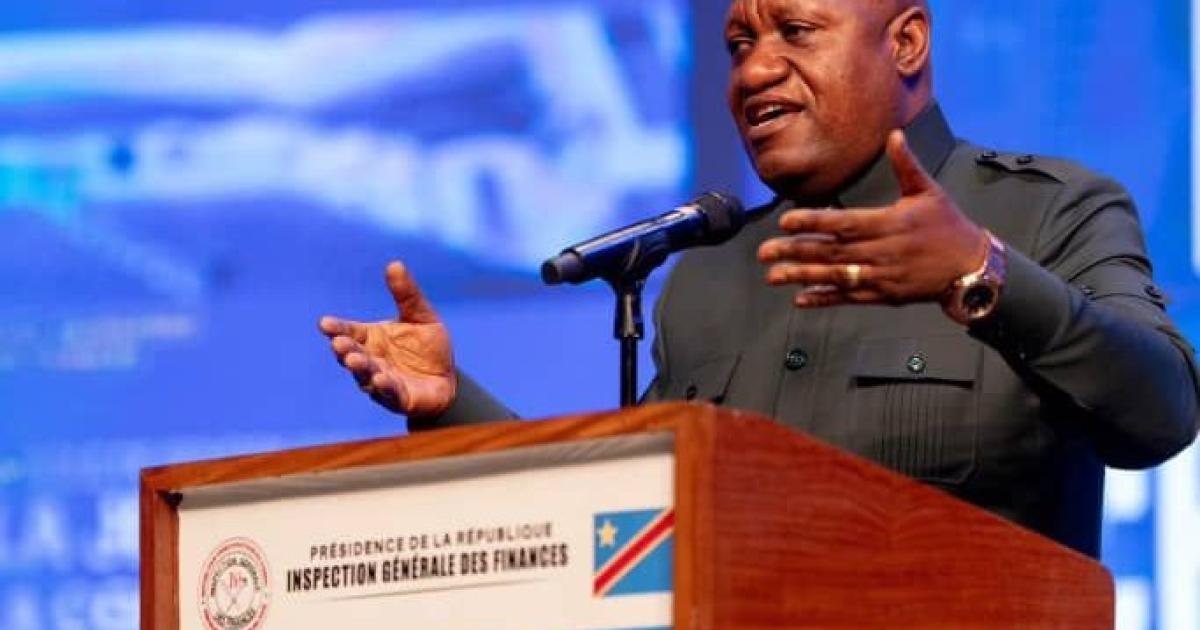
Jules Alingete: Unveils Patrouille Financière RDC Mechanisms
Summary
- Jules Alingete, former Inspector General of Finances, detailed the workings of the "Patrouille financière" in Paris.
- The presentation occurred during the launch of his book, titled "Le contrôle à priori des finances publiques en RDC : la raison d'être de la Patrouille financière."
- The book's title highlights the Patrouille financière's role in pre-expenditure control of public finances in the Democratic Republic of Congo.
- Alingete's insights are crucial for understanding DRC financial oversight mechanisms and compliance with public finance regulations.
Jules Alingete Details Patrouille Financière in Paris
For legal practitioners and compliance officers advising on matters related to RDC public finance, a granular understanding of these pre-expenditure controls is indispensable.
Jules Alingete, who previously served as the Inspector General of Finances, recently provided a comprehensive overview of the operational intricacies of the "Patrouille financière." This significant event took place in Paris on a Friday, coinciding with the official launch of his new book. The publication, titled "Le contrôle à priori des finances publiques en RDC : la raison d'être de la Patrouille financière," directly addresses the foundational principles and practical application of this crucial financial oversight body within the Democratic Republic of Congo. Alingete's presentation, delivered during the book's vernissage, aimed to illuminate the specific "rouages" or mechanisms that govern the Patrouille financière's activities, offering a deeper understanding of its role in the nation's fiscal management.
Understanding the Mandate of Pre-Expenditure Control
The very title of Jules Alingete's book, "Le contrôle à priori des finances publiques en RDC : la raison d'être de la Patrouille financière," serves as a definitive statement regarding the core function and strategic importance of this institution. It unequivocally positions the Patrouille financière as an essential component for "contrôle à priori" — a system of pre-expenditure control — within the broader framework of public finance management in the Democratic Republic of Congo. This implies a proactive and preventative approach to financial governance, where public spending is rigorously scrutinized and approved *before* funds are disbursed. Such a mechanism is designed to identify and mitigate potential irregularities, inefficiencies, or non-compliance issues at the earliest possible stage. For legal practitioners and compliance officers advising on matters related to RDC public finance, a granular understanding of these pre-expenditure controls is indispensable. Alingete's detailed exposition of the Patrouille financière's workings, therefore, offers critical insights into the expectations and requirements for adherence to the nation's financial regulations.
Enhancing DRC Financial Oversight Mechanisms
The insights shared by Jules Alingete regarding the Patrouille financière underscore a concerted effort to strengthen DRC financial oversight mechanisms. By focusing on "contrôle à priori des finances publiques RDC," the system aims to instill greater discipline and transparency in government spending. This proactive approach, as championed by the former Inspector General of Finances, is vital for safeguarding public resources and ensuring their judicious allocation. The detailed operational mechanisms of the Patrouille financière, as articulated during the Paris event, are particularly relevant for all stakeholders involved in public sector transactions or projects within the Democratic Republic of Congo. Understanding how this body functions, from its mandate to its specific procedures, is crucial for mitigating risks associated with government expenditure oversight. Lawyers and compliance officers, in particular, must grasp these intricacies to effectively guide their clients through the regulatory landscape, ensuring full adherence to the principles of sound financial management and pre-expenditure controls.
Significance for Compliance and Risk Mitigation
The detailed exposition of the Patrouille financière's operational framework, as presented by Jules Alingete, holds profound significance for compliance officers and legal professionals operating within or engaging with the Democratic Republic of Congo. The emphasis on "contrôle à priori" means that entities interacting with the RDC government must be prepared for rigorous scrutiny of their financial proposals and expenditures *before* they are executed. This proactive oversight mechanism necessitates a deep understanding of the specific requirements and processes enforced by the Patrouille financière. For lawyers advising clients on contracts, investments, or partnerships involving public funds in the DRC, knowledge of these "rouages" is not merely beneficial but essential for risk mitigation. It allows for proactive structuring of transactions and internal controls to align with the stringent demands of RDC public finance control, thereby reducing the likelihood of delays, disputes, or non-compliance penalties. Alingete's work, therefore, serves as a vital resource for navigating the complex terrain of DRC financial oversight mechanisms.
Practical Implications
Lawyers and compliance officers in the DRC should understand the detailed operational mechanisms of the 'Patrouille financière' to advise clients on compliance with public finance regulations. This insight is crucial for mitigating risks related to government expenditure oversight and pre-expenditure controls.
Source
How does this affect you?
Get an AI analysis of this article grounded in your jurisdictions, practice areas, and any policy documents you've uploaded to Wansom.
Finish Reading the Full Story and the Expert Analysis.
Get the latest legal & regulatory intelligence in DR Congo
Wansom is AI and can make mistakes.