
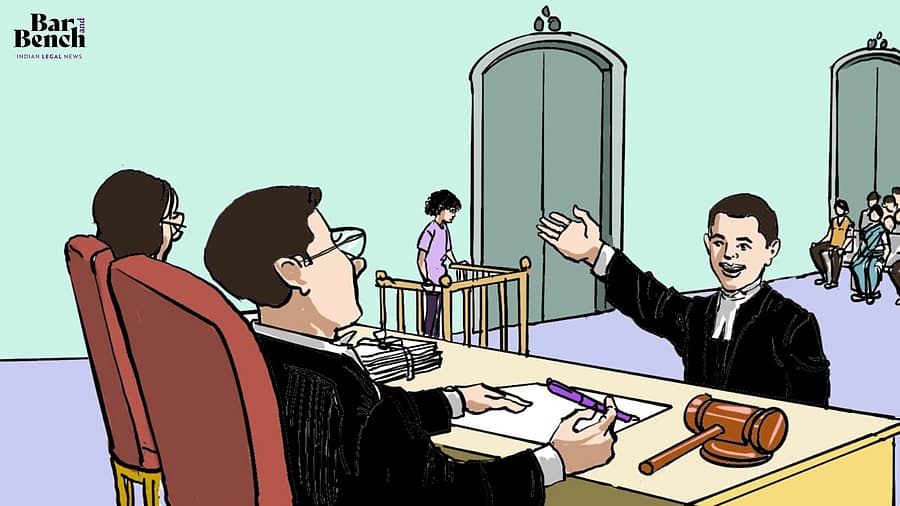
Delhi High Court: Jai Dehadrai Contempt Warning Issued Over Courtroom Conduct
Summary
- Advocate Jai Anant Dehadrai received a contempt warning from Justice Saurabh Banerjee during an anticipatory bail plea hearing at the Delhi High Court.
- The warning was issued after Dehadrai attempted to submit a transcript of allegedly offensive remarks made by Ajeet Bharti.
- Justice Banerjee stated that such content could not be presented to the court and warned of a contempt notice.
- Dehadrai argued the document was a standard transcript of FIR allegations intended to assist the court and denied committing contempt.
- The judge maintained that submitting the document constituted contempt and indicated only a show cause notice would be issued.
Courtroom Confrontation
This incident serves as a practical reminder for legal professionals regarding judicial temperament and the delicate boundaries of advocacy, particularly when presenting potentially offensive material in court.
A tense exchange unfolded recently in the Delhi High Court during the hearing of YouTuber Ajeet Bharti’s anticipatory bail plea. The proceedings saw Advocate Jai Anant Dehadrai, representing Bharti, come under scrutiny from Justice Saurabh Banerjee, who was presiding over the case.
The incident began when Advocate Dehadrai attempted to present a document to the court. This document contained a transcribed record of remarks allegedly made by Bharti in a YouTube video, which were central to the accusations outlined in the First Information Report (FIR).
Justice Banerjee immediately raised an objection to the submission. The judge asserted that the specific language used by Bharti, as contained in the document, was inappropriate for presentation in a court of law, leading to a direct warning of potential contempt proceedings.
Judicial Scrutiny of Submissions
Justice Banerjee made it clear that the court would not accept the verbatim reproduction of the contentious remarks. He sternly cautioned Advocate Dehadrai, stating, "You cannot hand over the words used by him to a court of law. I will issue contempt notice to you." The judge further questioned Dehadrai's judgment, asking, "Phraseology used is not offensive according to you? Please be aware of what you are doing. It contains word which are...You can't hand over those things to the court of law. You should not, as a counsel, hand over this."
This strong admonition highlighted the court's concern over the nature of the material being submitted and underscored the strict expectations for Delhi High Court courtroom conduct. The judge's remarks emphasized that counsel must exercise discretion and uphold decorum, even when presenting evidence related to alleged offenses.
Advocacy vs. Judicial Discretion
In response to the judge's warning, Advocate Jai Anant Dehadrai defended his actions, explaining that the document was merely a transcript of the allegations made in the FIR. He contended that his intention was solely to assist the court with the relevant facts and that presenting such documents was a common practice in legal proceedings. Dehadrai explicitly denied any intention of committing contempt of court.
However, Justice Banerjee remained unconvinced, reiterating that the act of handing over the specific document, despite Dehadrai's explanation, constituted contempt. The judge clarified that while the situation warranted a response, he would only be issuing a show cause notice, rather than an immediate contempt order, stating, "I am only issuing a show cause notice, that’s all." This exchange underscores the delicate balance between a lawyer's duty to present their client's case and the judiciary's authority to regulate courtroom proceedings.
Implications for Legal Practice
This incident serves as a practical reminder for legal professionals regarding judicial temperament and the delicate boundaries of advocacy, particularly when presenting potentially offensive material in court. It highlights the critical importance of understanding judicial discretion and the inherent risks of perceived contempt, even when counsel believes they are merely assisting the court with evidence.
The exchange involving Advocate Jai Anant Dehadrai and Justice Saurabh Banerjee during the Ajeet Bharti anticipatory bail plea hearing underscores that while lawyers have a duty to represent their clients vigorously, this must always be balanced with respect for the court's authority and decorum. The potential for a contempt of court notice in India, even in the form of a show cause, emphasizes the need for careful consideration of all submissions and courtroom conduct.
Practical Implications
This incident serves as a practical reminder for lawyers regarding judicial temperament and the boundaries of advocacy, particularly when presenting potentially offensive material in court. It underscores the importance of understanding judicial discretion and the risks of perceived contempt, even when counsel believes they are merely assisting the court with evidence.
Source
How does this affect you?
Get an AI analysis of this article grounded in your jurisdictions, practice areas, and any policy documents you've uploaded to Wansom.
Finish Reading the Full Story and the Expert Analysis.
Get the latest legal & regulatory intelligence in India
Wansom is AI and can make mistakes.