
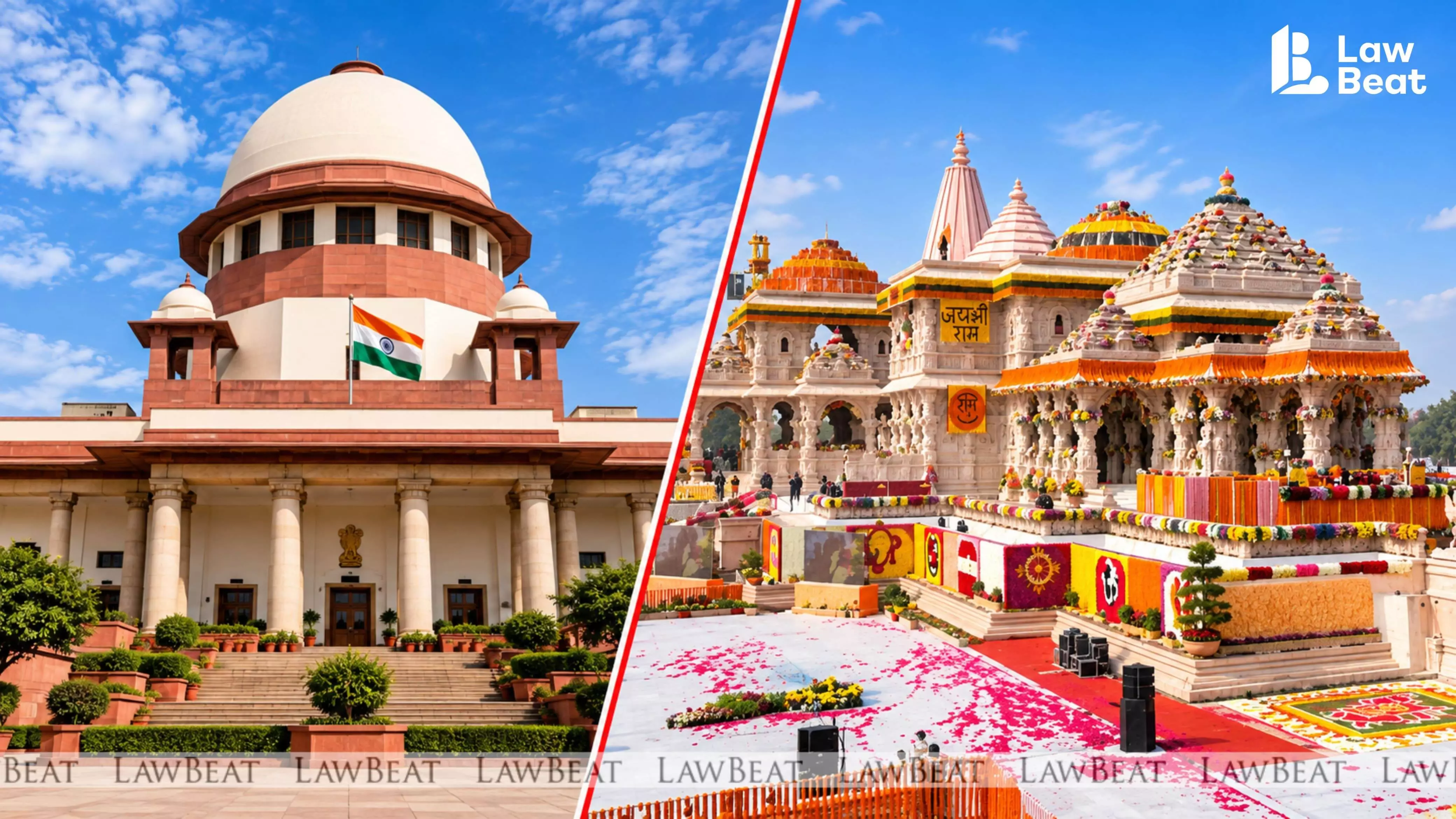
Supreme Court to Hear Ayodhya Ram Temple Land Survey Plea
Summary
- A plea has been filed in the Supreme Court requesting an independent commission to verify if the Ayodhya Ram Temple stands on the exact land adjudicated in the 2019 verdict.
- The petition, from the Shri Ram Janmbhoomi Case Trust, seeks expert verification by survey, revenue, and archaeological specialists.
- It also demands a Comptroller and Auditor General (CAG) audit of temple donations and daily digitization of financial records to ensure transparency.
- The plea is scheduled for a Supreme Court hearing on November 2 before a bench including Chief Justice of India Surya Kant.
- The 2019 Supreme Court judgment, in M Siddiq v Mahant Suresh Das, cleared the way for the temple's construction on 2.77 acres of disputed land.
Supreme Court Receives Verification Plea
The Supreme Court's response to this Ayodhya Ram Temple land survey plea holds significant implications, potentially leading to further litigation or clarification regarding the precise implementation of the 2019 Ayodhya verdict.
The Supreme Court is set to consider a significant plea requesting an independent, court-appointed commission of technical experts to ascertain whether the Ayodhya Ram Temple currently under construction occupies the precise land parcel adjudicated in the landmark 2019 Constitution Bench verdict. This petition, filed by the Shri Ram Janmbhoomi Case Trust, seeks a thorough examination by specialists in survey, revenue, and archaeology to verify the temple's location against the boundaries defined by the Supreme Court's earlier judgment.
Crucially, the petitioner, the Shri Ram Janmbhoomi Case Trust, operates independently from the Shri Ram Janmbhoomi Teerth Kshetra Trust, which is responsible for the temple's construction and management. The plea is scheduled for a hearing on November 2, before a bench comprising Chief Justice of India Surya Kant, Justice Joymalya Bagchi, and Justice V Mohana, as indicated by the Court's published cause list. Should any material discrepancy be identified between the adjudicated land and the temple's current footprint, the petition requests judicial directives to ensure the construction aligns faithfully with the 2019 judgment.
Legal Context and Demarcation Demands
The core of this Ayodhya Ram Temple land survey plea revolves around the implementation of the Supreme Court's unanimous ruling on November 9, 2019, in the case of M Siddiq (D) through LRs v Mahant Suresh Das. This five-judge Constitution Bench decision paved the way for a trust to construct a Ram temple on the 2.77 acres of disputed land in Ayodhya. The current petition aims to ensure the temple's physical location strictly adheres to the precise boundaries and coordinates established by that historic verdict.
The petitioner has specifically requested an independent survey or demarcation of the premises covered by the 2019 judgment. This exercise would meticulously identify the exact boundaries, coordinates, extent, and location of the land to which the original decree pertains. Furthermore, the plea seeks orders for the relevant authorities and the Shri Ram Janmbhoomi Teerth Kshetra Trust to preserve and present all original documents, maps, plans, surveys, and records that detail how the temple premises were initially identified, demarcated, and subsequently developed.
Calls for Financial Transparency and Pilgrim Facilities
Beyond the land verification, the petition also addresses the financial management of the temple, advocating for enhanced transparency and accountability. It specifically calls for an annual audit of the temple's accounts by the Comptroller and Auditor General of India (CAG), with the explicit goal of preventing any potential misappropriation of funds. This demand for a CAG audit of temple donations highlights a broader concern for the financial oversight of large religious trusts.
To further bolster financial transparency, the plea requests that all donations, offerings, and receipts be digitized daily and continuously displayed for public record. Additionally, the petition includes prayers for administrative reliefs concerning the welfare of devotees, specifically seeking directions for the construction of adequate facilities for pilgrims who travel to Ayodhya from various parts of the world. The filing is understood to contain other requests, though their specifics have not yet been publicly disclosed.
Why It Matters
The Supreme Court's response to this Ayodhya Ram Temple land survey plea holds significant implications, potentially leading to further litigation or clarification regarding the precise implementation of the 2019 Ayodhya verdict. A judicial directive for a technical expert commission could set a precedent for how such monumental judgments are physically realized and verified, impacting land use and the integrity of judicial pronouncements. The outcome could either affirm the current construction or necessitate adjustments to align with the original legal mandate.
Moreover, the demand for a CAG audit of temple donations signals increased scrutiny on the financial transparency of major religious trusts. This aspect of the petition could prompt a re-evaluation of accountability standards for organizations managing substantial public contributions. Lawyers and compliance officers will be closely monitoring the Court's proceedings, as the decision could influence future legal challenges and regulatory expectations for large-scale religious and charitable endeavors across the nation.
Practical Implications
Lawyers should monitor the Supreme Court's response to this plea as it could lead to further litigation or clarification regarding the precise implementation of the 2019 Ayodhya verdict, potentially impacting land use and religious trust compliance. Compliance officers should note the demand for a CAG audit of temple donations, indicating increased scrutiny on financial transparency for large trusts.
Source
Source: Original reporting via Live Law
How does this affect you?
Get an AI analysis of this article grounded in your jurisdictions, practice areas, and any policy documents you've uploaded to Wansom.
Finish Reading the Full Story and the Expert Analysis.
Wansom is AI and can make mistakes.