
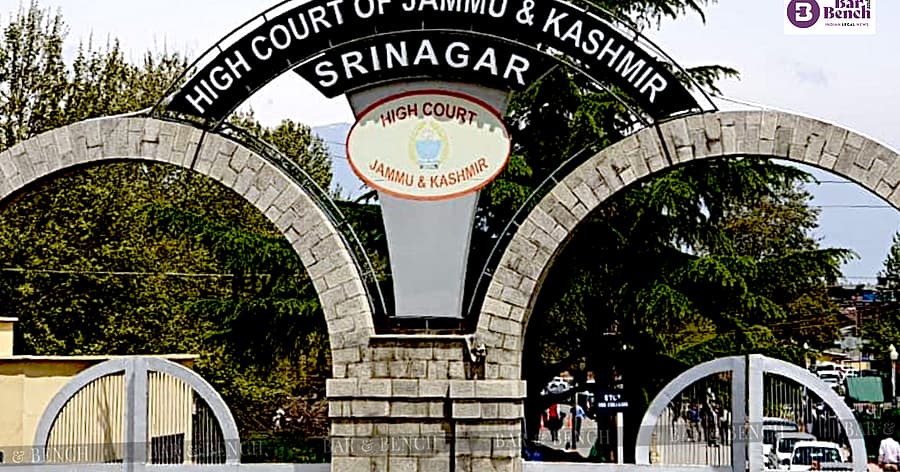
J&K High Court: Bar Association Not State Under Article 12
Summary
- The High Court of Jammu and Kashmir and Ladakh ruled that a Bar Association is not considered "State" under Article 12 of the Constitution of India.
- This means that internal election disputes of a Bar Association cannot be challenged through writ jurisdiction under Article 226.
- Justice Wasim Sadiq Nargal dismissed a petition from Advocate Abdul Basit Bhat challenging modified eligibility criteria for officer bearers of the Shopian District Bar Association.
- The court found that such disputes pertain to the internal affairs of a voluntary association and do not involve public duty or a public-law element.
- Consequently, challenges to internal governance or eligibility conditions within Bar Associations do not warrant interference under Article 226.
What Happened
By unequivocally stating that a Bar Association is not "State" under Article 12 Constitution of India State definition, the ruling effectively closes the door for members to invoke Article 226 writ jurisdiction Bar Association for internal disputes.
The High Court of Jammu and Kashmir and Ladakh recently clarified the scope of its writ jurisdiction, ruling that internal election disputes within a Bar Association do not fall under its purview. This significant observation came from Justice Wasim Sadiq Nargal, who determined that such professional bodies are not considered "State" as defined by Article 12 of the Constitution of India. Consequently, the extraordinary powers granted to High Courts under Article 226 cannot be invoked to resolve their internal governance issues.
The ruling was issued in the case of Advocate Abdul Basit Bhat v District Bar Association Shopian. The petitioner had challenged a decision by the Shopian District Bar Association to modify the eligibility criteria for candidates seeking election to its officer bearer positions. The court ultimately dismissed the writ petition, declaring it non-maintainable. It emphasized that the controversy centered on the internal affairs and electoral governance of a voluntary association, lacking any discernible public duty or public-law element that would warrant judicial interference through writ jurisdiction.
Legal Context
The crux of the Jammu and Kashmir and Ladakh High Court ruling hinges on the interpretation of Article 12 of the Constitution of India, which defines "the State" for the purpose of Part III (Fundamental Rights). This definition is crucial because the writ jurisdiction under Article 226 is primarily exercised against entities that qualify as "State" or those performing public functions. Justice Nargal explicitly held that a bar association or any similar bar body does not meet this definition, thereby insulating its internal operations from public law remedies.
Article 226 empowers High Courts to issue various writs, including mandamus, certiorari, and prohibition, to enforce fundamental rights or for any other purpose. However, the court underscored that this power is not boundless and is typically reserved for instances where a public authority has failed to perform a public duty or has acted in violation of law. Since Bar Association internal election disputes are considered private matters of a voluntary organization, the court found no basis to intervene using its writ jurisdiction, affirming that such challenges do not warrant interference under Article 226.
Why It Matters
This judgment from the Jammu and Kashmir and Ladakh High Court provides crucial clarity regarding the avenues available to lawyers seeking to address grievances within their professional organizations. By unequivocally stating that a Bar Association is not "State" under Article 12 Constitution of India State definition, the ruling effectively closes the door for members to invoke Article 226 writ jurisdiction Bar Association for internal disputes. This means that challenges to eligibility conditions, electoral processes, or other governance matters within these associations must be resolved through their own established internal mechanisms or other appropriate legal channels, rather than through public law remedies.
The decision reinforces the principle that voluntary associations, even those comprising legal professionals, operate largely outside the direct purview of public law intervention for their internal affairs. It highlights that the absence of a public duty or a public-law element in Bar Association internal election disputes renders them unsuitable for resolution via writ petitions. This ruling sets a precedent for how similar disputes involving professional bodies might be handled, emphasizing self-governance and internal resolution over judicial intervention through extraordinary constitutional powers.
Practical Implications
This ruling clarifies that lawyers cannot typically invoke writ jurisdiction under Article 226 for internal disputes of bar associations, as these bodies are not considered 'State' under Article 12. Lawyers facing such disputes must instead rely on the association's internal mechanisms or other legal avenues, as public law remedies are generally unavailable.
Source
How does this affect you?
Get an AI analysis of this article grounded in your jurisdictions, practice areas, and any policy documents you've uploaded to Wansom.
Finish Reading the Full Story and the Expert Analysis.
Wansom is AI and can make mistakes.