
India Supreme Court: Order II Rule 2 Bars Omitted Relief for Specific Performance
Summary
- The Supreme Court ruled that reliefs omitted from an initial civil suit without court leave cannot be claimed in a subsequent suit if they arose from the same cause of action.
- A second suit for specific performance was barred because this relief was not sought in an earlier injunction suit and no court leave was obtained.
- Withdrawing a suit with liberty to file a fresh one under Order XXIII Rule 1 CPC does not permit the introduction of previously omitted reliefs without specific court permission.
- The Court emphasized that plaintiffs bear a heavy burden to provide strict proof of a concluded oral agreement for the sale of immovable property, requiring all fundamental terms to be settled.
- In the specific case, the plaintiff failed to prove a concluded oral contract and relied on an individual without authority to deal with company assets.
Case Background and Supreme Court's Findings
The Court unequivocally held that a plaintiff is obligated to include all available reliefs stemming from a single cause of action within the same civil suit.
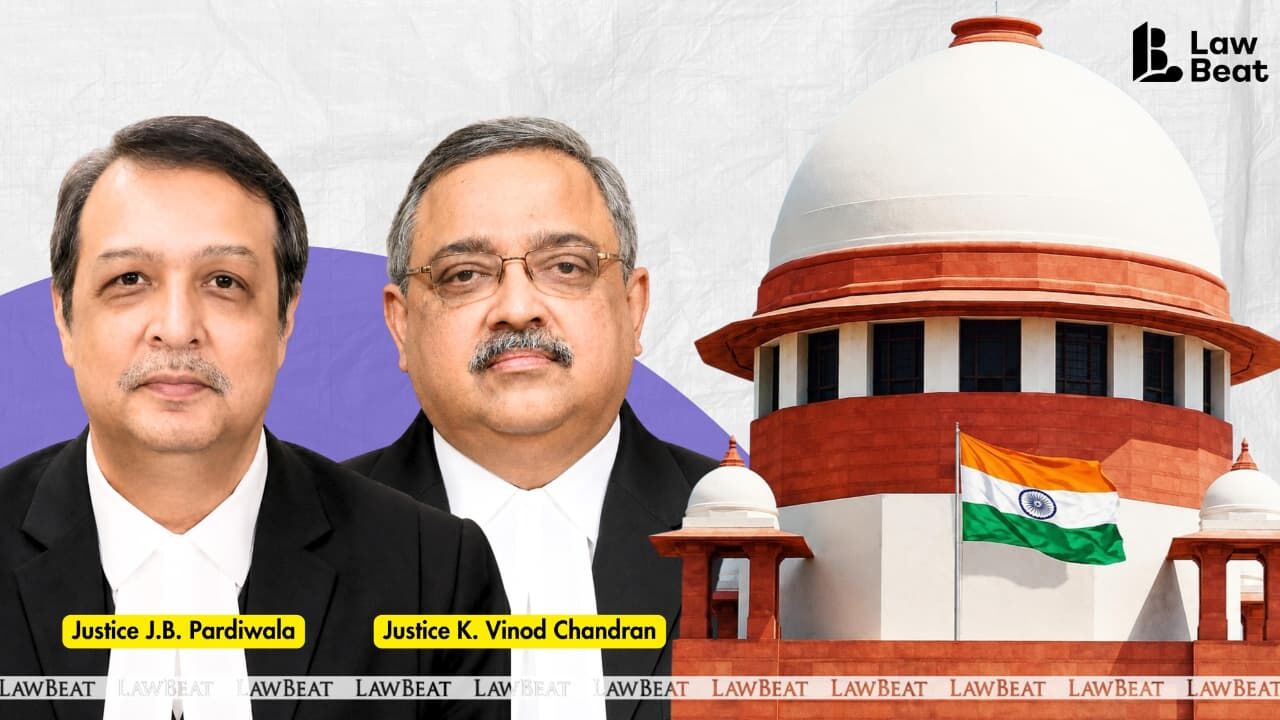
The Supreme Court of India recently delivered a significant judgment in an appeal involving Bombay Garage Ahmedabad Limited and other parties, clarifying crucial aspects of civil procedure and contractual proof. The dispute centered on an alleged oral agreement for the sale of property, leading to a complex legal trajectory that ultimately reached the apex court. This ruling, delivered by a bench comprising Justices J B Pardiwala and K Vinod Chandran, addressed the permissibility of subsequent claims when reliefs were omitted from an earlier suit, alongside the stringent evidentiary requirements for proving oral property transactions.
The plaintiff in the original proceedings had initially instituted a suit seeking only an injunction. This first suit was subsequently withdrawn, with the plaintiff obtaining liberty from the court to file a fresh suit. Following this withdrawal, a new suit was filed, this time seeking specific performance of the alleged oral agreement. The appellant contended that the relief of specific performance was already available when the initial injunction suit was filed, yet the plaintiff neither sought this relief nor obtained the necessary leave to reserve it for a later action.
A critical finding by the Supreme Court in this specific case was the plaintiff's failure to establish the existence of a concluded oral contract for the sale of immovable property. The Court observed significant discrepancies within the pleadings and a notable absence of corroborating evidence to support the claim. Furthermore, the bench scrutinized the role of the sixth defendant, determining that this individual held no official capacity within the first defendant company and could, at best, have acted merely as an intermediary in the proposed land transaction. The Court explicitly stated that any reliance by the plaintiff on the sixth defendant's promises, based solely on a matrimonial relationship with the company's person-in-charge, was undertaken at the plaintiff's own peril, as this relationship did not confer authority to deal with company assets.
The Mandate of Order II Rule 2 CPC
At the heart of the Supreme Court's decision lies a robust affirmation of the principles enshrined in Order II Rule 2 of the Code of Civil Procedure (CPC). The Court unequivocally held that a plaintiff is obligated to include all available reliefs stemming from a single cause of action within the same civil suit. This fundamental rule is designed to prevent the splitting claims civil suits India, ensuring judicial efficiency and preventing vexatious litigation.
The judgment clarifies that if a plaintiff omits a relief that was available at the time of filing the initial suit, and crucially, fails to secure the court's explicit permission to pursue that relief at a later stage, then that specific relief cannot be subsequently claimed in a fresh suit. In the present case, the second suit for specific performance was deemed barred precisely because the plaintiff had neglected to seek this relief in the preceding injunction suit, which arose from the identical cause of action, and had not obtained the requisite leave from the court. This application of India Supreme Court Order II Rule 2 omitted relief underscores the strict interpretation of procedural requirements.
Interaction with Suit Withdrawal and Evidentiary Standards
The Supreme Court further elucidated the interplay between Order II Rule 2 and the provisions for suit withdrawal under Order XXIII Rule 1 CPC. The bench clarified that while Order XXIII Rule 1 allows a plaintiff to withdraw a suit or abandon part of a claim, obtaining liberty to file a fresh suit under this rule does not automatically grant permission to introduce reliefs that were available but omitted from the original suit without specific leave. The Court emphasized that the stringent requirements of Order II Rule 2, concerning the inclusion of the entire claim, remain distinct and are not superseded by the procedure for withdrawing a suit. Therefore, any leave obtained during the withdrawal process cannot rectify a prior failure to include all available reliefs when the original suit was initially instituted.
Beyond procedural aspects, the judgment also reinforced the high evidentiary threshold for proving oral agreements concerning immovable property. While acknowledging the legal validity of such agreements, the Court stressed that the plaintiff carries a heavy burden to demonstrate a concluded contract. This necessitates strict proof that all fundamental terms of the agreement were settled. The bench explicitly stated that mere inferences drawn from inconsistent oral testimonies or evasive conduct by defendants are insufficient to meet this rigorous standard. This aspect of the ruling provides crucial guidance on the proof required for oral agreement immovable property proof India.
Significance for Litigants and Legal Practice
This Supreme Court ruling carries profound implications for both litigants and legal practitioners across India. It serves as a stark reminder of the critical importance of meticulous pleading and comprehensive claim formulation at the outset of any civil action. The principle that specific performance barred omitted relief highlights the necessity for lawyers to carefully assess all potential remedies arising from a single cause of action and ensure their inclusion in the initial suit, or to explicitly seek and obtain court leave to reserve any for future litigation.
The judgment also reinforces the cautious approach courts will take when evaluating claims based on oral agreements, particularly those involving immovable property. The requirement for strict proof of a concluded contract, where all fundamental terms are settled, sets a high bar for plaintiffs. This judicial stance aims to prevent speculative claims and ensure that property transactions, even those based on verbal understandings, are supported by robust and consistent evidence, moving beyond mere inferences or inconsistent narratives.
Practical Implications
Lawyers must meticulously ensure all available reliefs arising from a single cause of action are included in the initial suit, or explicitly obtain court leave to reserve them, to prevent subsequent claims from being barred under Order II Rule 2 CPC. Furthermore, practitioners should note the high evidentiary burden required to prove oral agreements for the sale of immovable property.
Source
How does this affect you?
Get an AI analysis of this article grounded in your jurisdictions, practice areas, and any policy documents you've uploaded to Wansom.
Finish Reading the Full Story and the Expert Analysis.
Get the latest legal & regulatory intelligence in India
Wansom is AI and can make mistakes.