
Darius Khambata: India Global Arbitration Hub Requires Judicial Restraint
Summary
- Senior Advocate Darius Khambata stated on September 5 that Indian courts must resist re-hearing arbitral awards on merits for India to become a global arbitration hub.
- Khambata explained that judicial non-interference means courts should not decide the matter themselves, respecting parties' choice for an arbitral tribunal.
- He recommended that courts explicitly frame arbitral award challenge grounds immediately, rather than re-hearing entire disputes.
- Khambata emphasized that a successful arbitration seat requires both a good judicial ecosystem and a good legislative ecosystem.
- He highlighted Singapore's institutional humility and continuous self-improvement as an essential quality for a leading arbitration jurisdiction.
India's Arbitration Ambition
For India to truly emerge as a global arbitration hub, its courts must actively resist the inclination to re-examine the substantive merits of arbitral disputes.
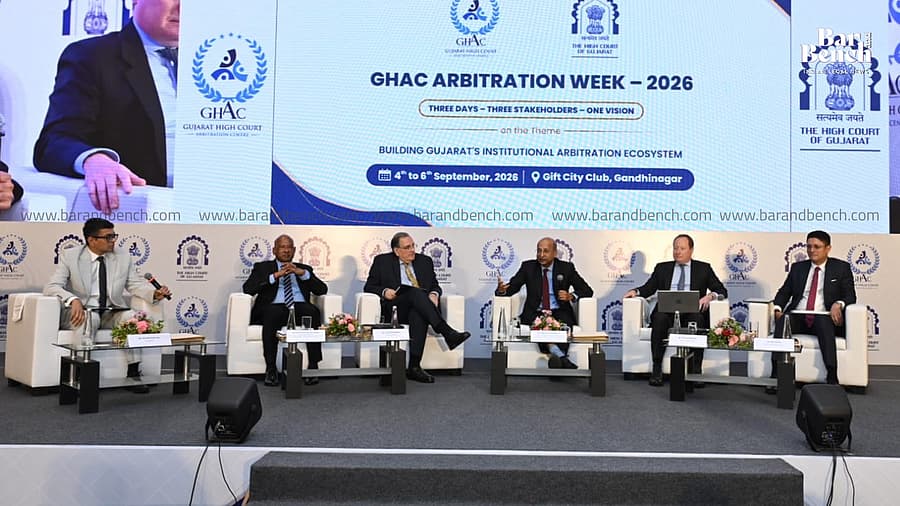
Senior Advocate Darius Khambata recently articulated a pivotal condition for India's aspiration to become a leading global arbitration hub. Speaking on September 5 at the Gujarat High Court Arbitration Centre (GHAC) Arbitration Week, held in GIFT City, Khambata emphasized that Indian courts must resolutely avoid the practice of re-hearing arbitral awards on their substantive merits. His remarks were delivered during a session focused on ‘Rules of Private International Law in International Commercial Arbitration,’ highlighting a crucial aspect of developing a robust international dispute resolution ecosystem.
Khambata's central argument posits that judicial non-interference is paramount for fostering an environment conducive to international commercial arbitration. He stressed that the temptation for courts to delve into the specifics of a dispute, effectively re-adjudicating it, must be resisted. This stance is critical for enhancing the finality and predictability of arbitral outcomes, which are foundational elements for any jurisdiction aiming to attract international arbitration cases and establish itself as a preferred seat.
Upholding Arbitral Finality
Elaborating on the concept of non-interference, Darius Khambata explained that it fundamentally entails courts refraining from deciding the matter themselves. He underscored that the inherent justice of the case in arbitration demands that courts respect the explicit decision of the parties to have their dispute resolved by an arbitral tribunal, rather than by a judge. This principle, according to Khambata, is a cornerstone of the arbitral process, ensuring that the parties' autonomy in choosing their dispute resolution mechanism is honored.
To further solidify this judicial restraint, Khambata urged courts to immediately and explicitly frame the specific grounds upon which an arbitral award might be challenged in India. This approach would prevent the need for courts to re-hear entire disputes on their merits, thereby streamlining the challenge process and reinforcing the finality of arbitral awards. Such a clear delineation of arbitral award challenge grounds in India would provide greater certainty for parties and practitioners alike, aligning with the goal of making India a more attractive destination for international commercial arbitration.
Cultivating a World-Class Ecosystem
Beyond judicial restraint, Darius Khambata outlined broader requirements for establishing a truly successful arbitration seat. He asserted that a robust judicial ecosystem, coupled with an effective legislative framework, is indispensable for achieving this goal. This holistic perspective suggests that the legal and regulatory environment must work in concert to support and facilitate arbitration, rather than impede it through excessive judicial intervention.
Khambata also drew attention to Singapore's exemplary practice of institutional humility, citing it as a rare and essential quality for a thriving arbitration hub. He noted that despite its considerable success, Singapore consistently engages in self-reflection, continuously questioning how improvements can be made, identifying areas of deficiency, and evaluating the effectiveness of its processes. This commitment to ongoing self-assessment and refinement, Khambata suggested, is a vital factor for any jurisdiction aspiring to become a leading global arbitration hub.
Expert Perspectives
The discussion featuring Darius Khambata on September 5 was part of a broader panel that included other distinguished legal professionals. Among the co-panelists were King’s Counsel Thomas Williams, Datuk Professor Sundra Rajoo, who serves as the Founding President of the Asian Institute of Alternative Dispute Resolution (AIADR), and Clifford Chance Partner Nish Shetty. Their collective participation underscored the significance of the topic and the shared international perspective on the critical elements required for developing a world-class arbitration jurisdiction.
Practical Implications
This commentary signals a potential shift towards greater judicial restraint in reviewing arbitral awards in India, which would enhance the finality of arbitration outcomes and influence strategic decisions for lawyers advising on dispute resolution clauses, award enforcement, and challenges in the Indian jurisdiction.
Source
How does this affect you?
Get an AI analysis of this article grounded in your jurisdictions, practice areas, and any policy documents you've uploaded to Wansom.
Finish Reading the Full Story and the Expert Analysis.
Wansom is AI and can make mistakes.