
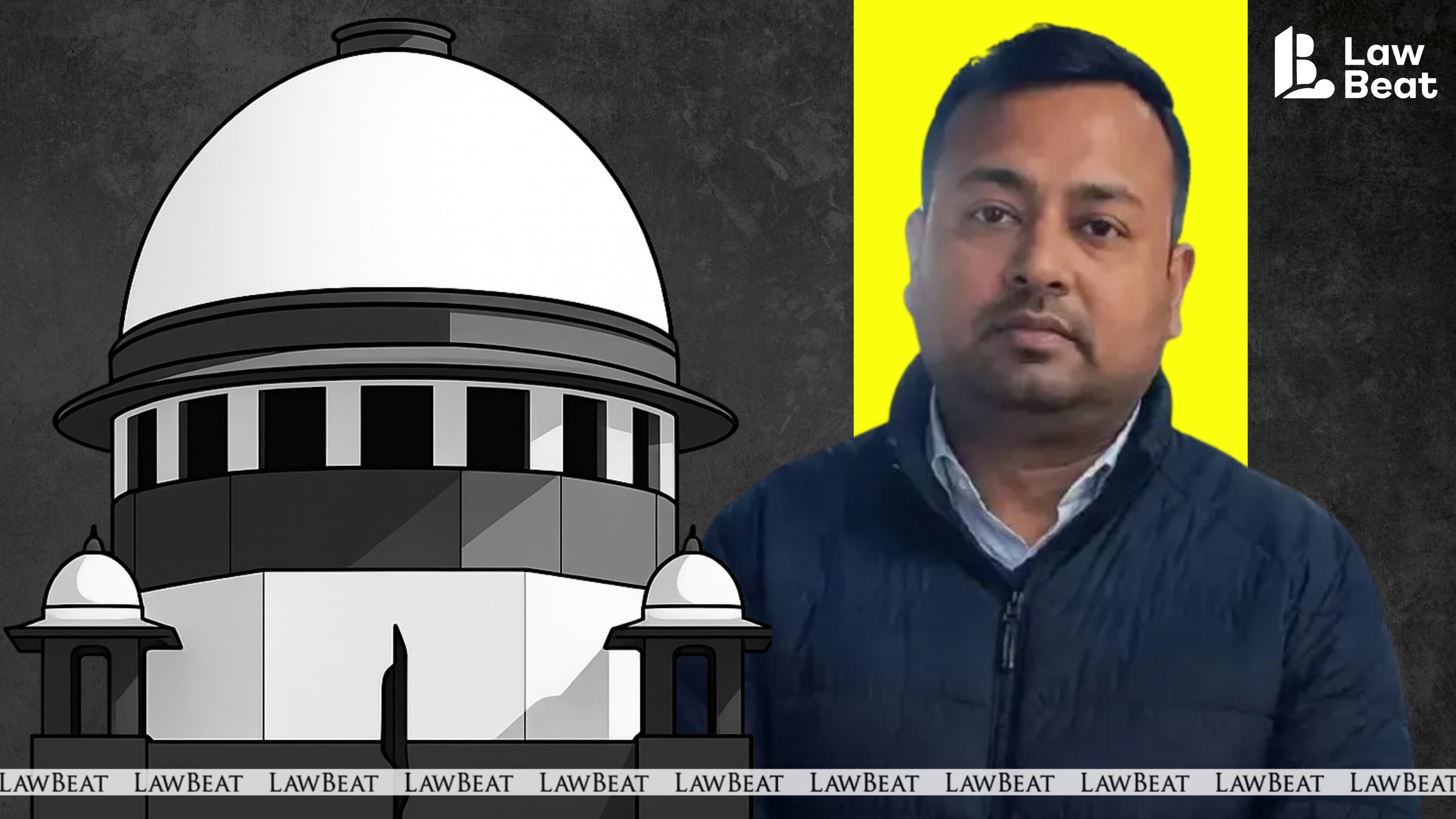
Supreme Court: Sumit Roy Interrogation Sealed Cover Submitted
Summary
- The Supreme Court is reviewing detailed interrogation records of Sumit Roy, PA to Abhishek Banerjee, submitted in a sealed cover.
- Roy is seeking anticipatory bail in the Salboni land-grabbing case, with his protection from arrest extended by the Supreme Court.
- The Chief Justice clarified the sealed cover is used because the information is part of the ongoing investigation, not for other reasons.
- Roy alleges investigators focused on his family and political party rather than the land fraud during questioning.
- The Enforcement Directorate is seeking custodial interrogation, stating the case is "only a tip of the iceberg."
Supreme Court Considers Sealed Interrogation Records in Anticipatory Bail Plea
The Chief Justice clarified that the sealed cover procedure was employed solely because the information constituted an integral part of the ongoing investigation, explicitly stating it was for no other reason.
The Supreme Court of India is currently seized of an anticipatory bail plea filed by Sumit Roy, personal assistant to Trinamool Congress MP Abhishek Banerjee, who is implicated in the Salboni land-grabbing case. During a recent hearing, the West Bengal government presented the detailed interrogation records of Mr. Roy to the Supreme Court in a sealed cover. This submission came as the bench, led by Chief Justice Kant, was considering Mr. Roy's request for an extension of his protection from arrest, which the Court had previously granted.
Solicitor General Tushar Mehta, representing the investigating agency, informed the Court that the detailed interrogation record, now submitted in a sealed cover, addressed a previous query from the bench regarding whether Mr. Roy had been questioned about cash during his interrogations. Mr. Mehta suggested that the Lordships could review the document and take up the matter again in a couple of days. This development occurred after Senior Advocate Gopal Sankaranarayanan, appearing for Mr. Roy, sought a passover, indicating that he might have specific points to raise concerning the sealed cover aspect of the submission.
In response to potential concerns, Chief Justice Kant clarified the rationale behind the sealed cover procedure, stating unequivocally that it was utilized because the information contained within was an integral part of the ongoing investigation and for no other reason. Solicitor General Mehta further asserted that the contents of the sealed cover could not be shared with the accused, a position he maintained despite the counsel's potential objections. The Supreme Court subsequently scheduled the matter for further hearing two days later.
Background of the Salboni Land-Grabbing Case and Prior Proceedings
The legal proceedings against Sumit Roy stem from a Salboni Police case registered under various sections of the law, including those pertaining to cheating, criminal breach of trust, forgery, the use of forged documents, and criminal conspiracy, all related to an alleged government land fraud. The Enforcement Directorate (ED) is actively involved in the investigation and is seeking Mr. Roy's custodial interrogation, with Solicitor General Mehta characterizing the uncovered details as merely "a tip of the iceberg."
Prior to the Supreme Court's intervention, the Calcutta High Court had rejected Mr. Roy's anticipatory bail plea on August 3, with Justice Tirthankar Ghosh declining to grant pre-arrest protection after hearing arguments from both sides. Before the High Court, Mr. Roy's counsel argued that he was not named in the initial First Information Report (FIR) and that his alleged involvement only emerged during the subsequent investigation. It was contended that Mr. Roy had no connection to the land transactions and was being implicated solely due to his professional association as the Personal Assistant to Abhishek Banerjee.
Furthermore, Mr. Roy's legal team before the High Court asserted that the prosecution's case relied predominantly on oral statements, lacking any supporting banking transactions or electronic evidence directly linking him to the alleged offense. They also suggested that the prosecution was politically motivated. Conversely, the State opposed the bail plea, presenting information that the investigation had uncovered forged title deeds related to government land, thereby strengthening their case against Mr. Roy.
Allegations of Irregular Interrogation and the Court's Response
The Supreme Court's decision to request the interrogation details was prompted by allegations from Sumit Roy that investigators had barely questioned him about the specifics of the Salboni land-grabbing case. Mr. Roy's counsel, Mr. Sankaranarayanan, had submitted to the Court that the entire interrogation process was videographed and that his client had fully cooperated, answering all questions posed. However, Mr. Roy claimed that instead of focusing on the alleged offense, the questions delved into his family life, the political party he was associated with, its recruitment methods, and funding sources.
In contrast, Solicitor General Mehta, referring to the interrogation material, informed the Court that Mr. Roy had indeed been questioned about cash deposits into his personal bank account. Mr. Mehta further stated that the investigating agency possessed documentary evidence bearing Mr. Roy's signature, which supported their line of questioning. Following these submissions, Justice Bagchi had specifically directed Solicitor General Mehta to provide the transcripts of the interrogation sessions along with Mr. Roy's responses. The Supreme Court had initially stayed Mr. Roy's arrest on August 6, while simultaneously instructing him to fully cooperate with the ongoing investigation, an interim order issued during his challenge to the Calcutta High Court's refusal of anticipatory bail.
Practical Implications
This development offers insight into the Supreme Court's procedural handling of sealed cover documents in anticipatory bail pleas, particularly in high-profile investigations involving political figures. Lawyers should observe how the Court balances investigative secrecy with the accused's rights, and the implications for challenging interrogation methods in such cases.
Source
How does this affect you?
Get an AI analysis of this article grounded in your jurisdictions, practice areas, and any policy documents you've uploaded to Wansom.
Finish Reading the Full Story and the Expert Analysis.
Wansom is AI and can make mistakes.