
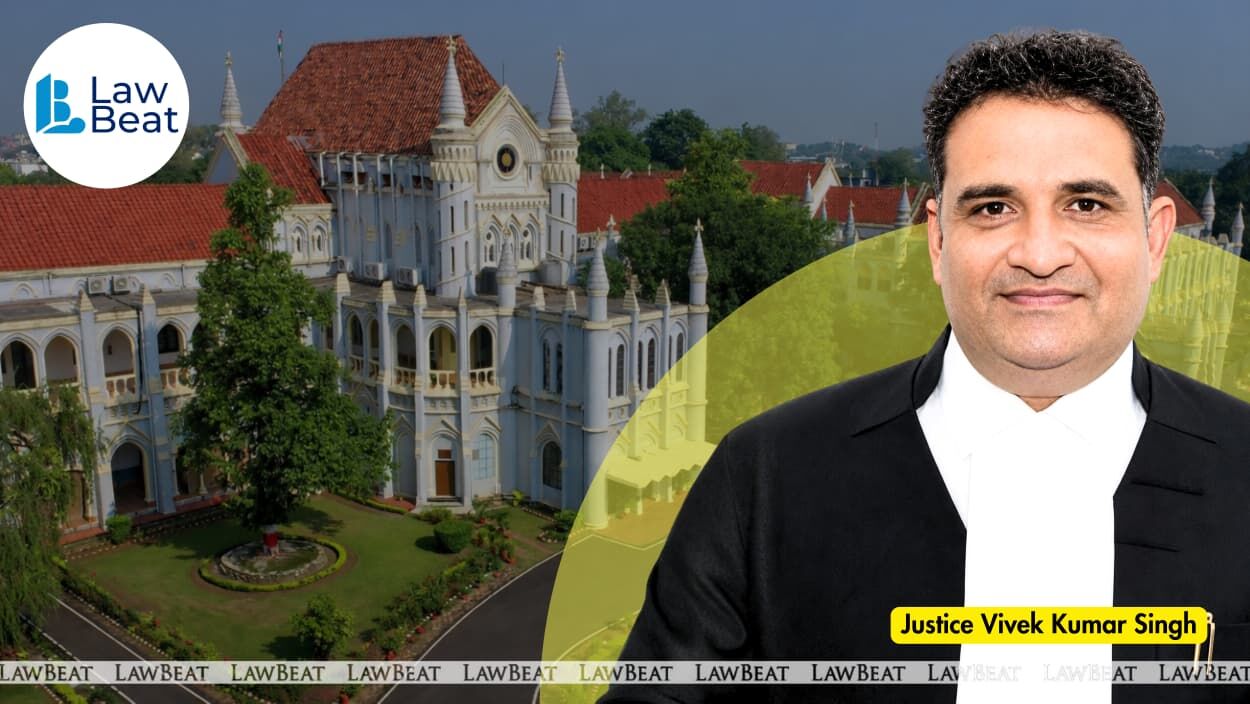
MP High Court: Quashes Employee Transfer Citing Personal Hardship
Summary
- The Madhya Pradesh High Court ruled that personal hardship is not a legal ground to quash an employee transfer order.
- State transfer policies are administrative instructions without statutory force, meaning their breach does not automatically invalidate a transfer.
- The court affirmed that transfer is an incident of service, and employees have no vested right to a specific posting.
- Judicial review of transfer orders is highly circumscribed, intervening only in cases of mala fides, incompetent authority, or statutory violation.
- The State Government retains power to transfer municipal employees under Section 94 of the Madhya Pradesh Municipalities Act, 1961, though it should be exercised sparingly for lower-paid staff.
Challenging a Transfer Order
The Madhya Pradesh High Court's decision firmly establishes that personal hardship, including the medical condition of a family member, is not a valid legal ground to quash a transfer order.
The Madhya Pradesh High Court, Jabalpur Bench, recently addressed a petition filed by Bharat Sharan Singh, a peon employed by the Nagar Palika Parishad. Mr. Singh, who was appointed on compassionate grounds on December 30, 1995, and had been posted at Dhanpuri, District Shahdol, since July 14, 2005, was transferred to Nagar Palika Parishad, Shahdol, via an order dated June 15, 2026. He was subsequently relieved of his duties on July 27, 2026.
The petitioner's legal team, led by Senior Advocate Sanjay Ram Tamrakar, argued that the transfer violated the State's transfer policy of May 22, 2026, specifically citing the absence of approval from the Minister-in-Charge. They also contended that the transfer breached Section 94 of the Madhya Pradesh Municipalities Act, 1961, asserting that Class-IV employees hold a "council-wise lien" and cannot be moved between municipal councils without compelling reasons. Further arguments included the lack of administrative exigency, as no replacement had been posted at Dhanpuri, and that the relieving order bypassed an earlier court directive. A significant point of contention raised by the petitioner was personal hardship, as he claimed to be the primary caregiver for his 65-year-old mother.
This was not the first legal challenge to the transfer; an earlier writ petition was disposed of on June 23, 2026. That ruling directed the competent authority to decide Mr. Singh's representation within 30 days and imposed a 30-day stay on the transfer. Mr. Singh submitted his representation on July 21, 2026. However, Government Advocate Yogesh Dhande, representing the State, and Advocate Siddharth Shukla, for the Nagar Palika Parishad, countered that the stay had lapsed on July 23, 2026, making the July 27 relieving order valid. They also emphasized that transfer is an incident of service, meaning the petitioner had no vested right to remain at a particular station, and noted the transfer was within the same district, implying no extreme geographical displacement.
Administrative Instructions vs. Statutory Force
In its ruling, the Madhya Pradesh High Court, presided over by Justice Vivek Kumar Singh, clarified the legal standing of the state's transfer policy. The court held that the Madhya Pradesh transfer policy, dated May 22, 2026, constitutes merely administrative instructions. Crucially, these guidelines do not possess statutory force.
Consequently, the court determined that a breach of such administrative instructions does not automatically render a transfer order illegal. This finding underscores the limited scope of judicial review in matters of employee transfer in India, with courts generally refraining from intervention unless an order is vitiated by mala fides, issued by an incompetent authority, or violates specific statutory provisions.
Legal Precedent and Employee Rights
The High Court reiterated the fundamental legal principle that "transfer is an incident of service," affirming that employees holding transferable posts do not have a vested right to continue at a particular station. Addressing the petitioner's argument concerning Section 94 of the Madhya Pradesh Municipalities Act, 1961, the court confirmed the State Government's power to transfer any officer or servant of a Municipal Council under this section.
This position was supported by the Supreme Court's ruling in State of M.P vs. Shankarlal. While acknowledging this authority, the High Court did offer a caveat, advising that such power, particularly over employees drawing small emoluments, should be exercised "sparingly and not as a matter of routine." The court also confirmed that the earlier stay on the transfer, which commenced on June 23, 2026, had a strict 30-day maximum and thus lapsed on July 23, 2026, making the subsequent relieving order issued on July 27, 2026, legally permissible.
Implications for Transfer Challenges
The Madhya Pradesh High Court's decision firmly establishes that personal hardship, including the medical condition of a family member, is not a valid legal ground to quash a transfer order. Such considerations are deemed matters for administrative authorities to evaluate, rather than a basis for judicial intervention.
This ruling reinforces that the scope for judicial review of employee transfers remains highly circumscribed. Challenges to transfer orders are unlikely to succeed unless petitioners can demonstrate clear statutory violations, actions taken by an unauthorized authority, or evidence of bad faith (mala fides), rather than relying on breaches of administrative policies or personal circumstances.
Practical Implications
Lawyers advising public sector employees in Madhya Pradesh should counsel clients that personal hardship is not a valid legal ground to challenge transfer orders. Furthermore, breaches of administrative transfer policies are unlikely to succeed unless statutory violations or mala fides can be proven, as these policies lack statutory force.
Source
Source: Original reporting via Live Law
How does this affect you?
Get an AI analysis of this article grounded in your jurisdictions, practice areas, and any policy documents you've uploaded to Wansom.
Finish Reading the Full Story and the Expert Analysis.
Wansom is AI and can make mistakes.