
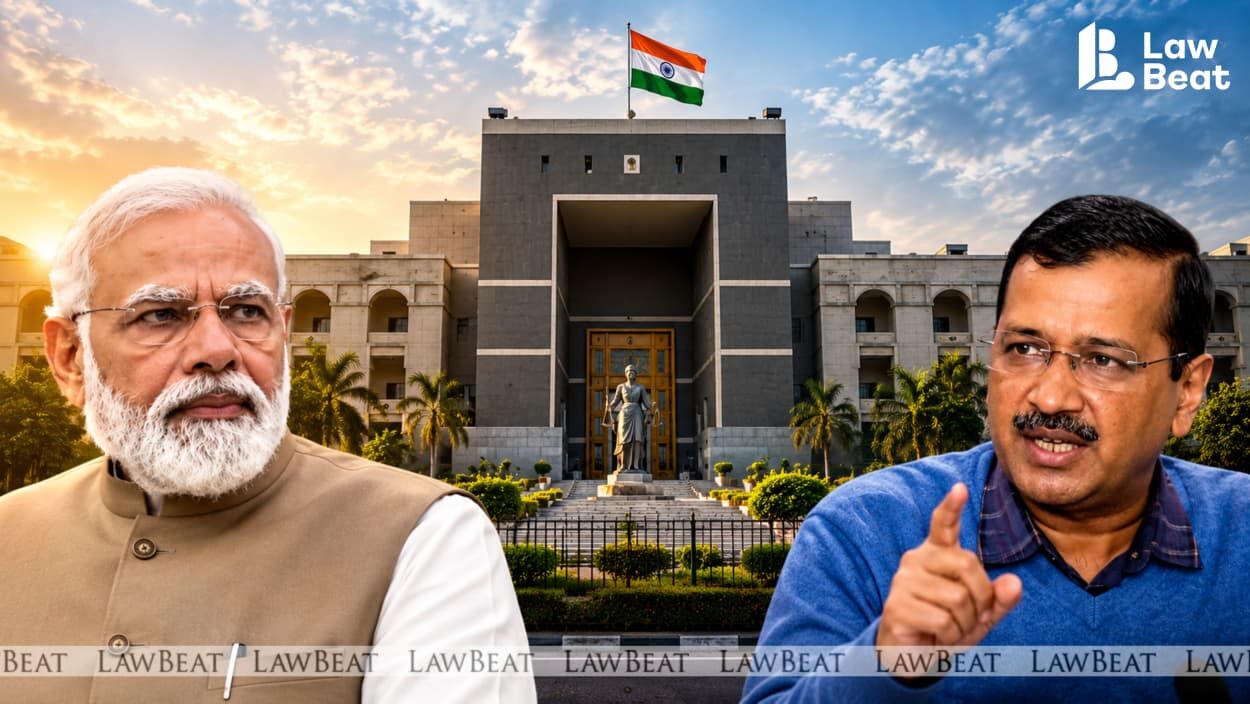
Gujarat High Court: PM Modi Degree RTI Disclosure Not Compelled
Summary
- The Gujarat High Court ruled that there is no public interest in disclosing the Prime Minister's educational qualifications.
- The court dismissed an appeal by Arvind Kejriwal, upholding a ₹25,000 cost imposed on him.
- Educational qualifications are considered "personal information" and are held in a "fiduciary capacity," protected under RTI Act Sections 8(1)(j) and 8(1)(e).
- The ruling clarified that public curiosity cannot be equated with genuine public interest for overriding RTI exemptions.
- No educational qualification is legally required for contesting electoral positions, diminishing the public interest argument for disclosure.
What Happened
The Gujarat High Court recently affirmed that there is no overriding public interest in compelling the disclosure of the Prime Minister's educational qualifications, particularly when such credentials are not a prerequisite for holding the constitutional office.
The Gujarat High Court recently affirmed that there is no overriding public interest in compelling the disclosure of the Prime Minister's educational qualifications, particularly when such credentials are not a prerequisite for holding the constitutional office. A Division Bench, comprising Justice Sunita Agarwal, now a Judge of the Supreme Court of India (she was Chief Justice of the Gujarat High Court at the time of the judgment), and Justice D.N. Ray, delivered this judgment while rejecting an appeal filed by Aam Aadmi Party convenor Arvind Kejriwal. This decision upheld a prior ruling from March 31, 2023, by a Single Judge.
The Single Judge's earlier verdict had set aside a 2016 directive from the Central Information Commission (CIC). The CIC's original order had instructed Gujarat University to release details pertaining to Prime Minister Narendra Modi's educational degree. Furthermore, the Division Bench declined to interfere with the ₹25,000 cost that the Single Judge had imposed on Mr. Kejriwal, solidifying the financial penalty associated with the appeal. This outcome in the Gujarat HC PM Modi degree RTI disclosure case clarifies the judiciary's stance on the public's right to information regarding elected officials' personal academic records.
Legal Context and Reasoning
Central to the Gujarat High Court's ruling was its interpretation of the Right to Information Act, 2005, specifically concerning exemptions under Sections 8(1)(j) and 8(1)(e). The court determined that educational qualifications, including degrees and marksheets, fall under the category of "personal information." Additionally, it found that universities and examining bodies hold such data in a "fiduciary capacity," thereby rendering it exempt from mandatory disclosure unless a "larger public interest" can be demonstrably proven. The bench explicitly rejected the notion that merely because the information pertains to the Prime Minister, it automatically qualifies as being in the public interest.
The court also scrutinized the Central Information Commission's previous reasoning in the Arvind Kejriwal PM Modi degree case. It highlighted that the CIC had failed to provide adequate justification for why the disclosure was necessary to override the exemptions stipulated in Sections 8(1)(e) and 8(1)(j) of the RTI Act. A critical distinction was drawn between "public curiosity" and genuine "public interest." The judges emphasized that public interest is not synonymous with the public's mere curiosity about a particular piece of information, even if that information is "of interest to the public." The argument that information about election candidates should be available for public scrutiny was deemed insufficient to establish the requisite public interest in this context.
Why It Matters
This judgment from the Gujarat High Court carries significant implications for the scope of the RTI Act 2005 and the disclosure of personal information concerning public figures. By asserting that there is no public interest in seeking the Prime Minister's educational qualification when it has no bearing on his election to a constitutional post, the court reinforces a narrow interpretation of what constitutes "larger public interest" sufficient to override statutory exemptions. The ruling underscores that the absence of a legal requirement for specific educational qualifications for electoral positions diminishes the public interest argument for their disclosure.
The decision also clarifies that the mere fact that information might already exist in the public domain does not automatically mandate its disclosure under the RTI Act if it falls under protected categories. This distinction between "of interest to the public" and "in the public interest" is crucial, setting a precedent that public curiosity alone cannot compel the release of personal data, even for high-profile individuals. The Gujarat University PM Modi degree case thus serves as a key reference point for future RTI requests involving personal information public figures disclosure, particularly regarding the stringent criteria for overriding exemptions.
Practical Implications
This ruling clarifies the narrow interpretation of 'public interest' under the RTI Act, particularly when seeking personal information of public figures. Lawyers advising clients on RTI requests or defending against disclosure of personal data, especially for elected officials, can leverage this precedent to argue that mere public curiosity does not satisfy the 'larger public interest' test required to override exemptions under Sections 8(1)(e) and 8(1)(j).
Source
How does this affect you?
Get an AI analysis of this article grounded in your jurisdictions, practice areas, and any policy documents you've uploaded to Wansom.
Finish Reading the Full Story and the Expert Analysis.
Get the latest legal & regulatory intelligence in India
Wansom is AI and can make mistakes.