
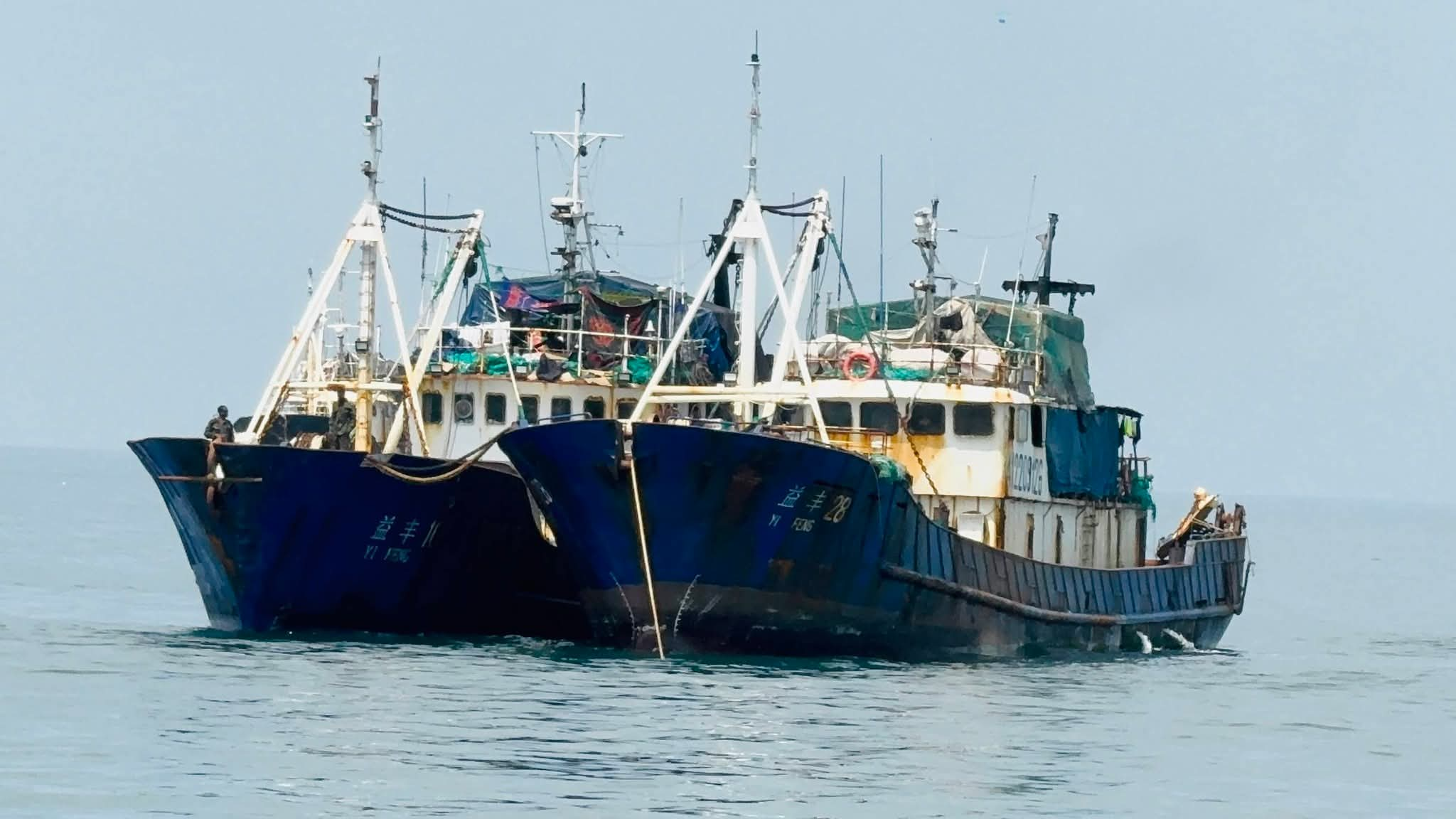
Guinée: Navires Étrangers Arraisonnés, 2 Bissau-Guinéens Interceptés
Summary
- Two foreign vessels were impounded in Guinean waters on October 28, 2026.
- The vessels were operating under Bissau-Guinean licenses when intercepted by authorities.
- Inspectors from the National Center for Fisheries Surveillance and Protection carried out the interception.
- The impounded ships were formally presented to the press on November 2, 2026.
- The vessels remain immobilized at the roadstead following the enforcement action.
Guinean Authorities Intercept Foreign Vessels
For companies engaged in fishing activities in West African waters, the incident serves as a stark reminder of the necessity for meticulous verification of all licensing requirements and geographical limitations.
Guinean maritime authorities recently undertook a significant enforcement operation, resulting in the interception and subsequent impoundment of two foreign-flagged vessels within the nation's territorial waters. This decisive action, carried out on Wednesday, October 28, 2026, by inspectors from the Centre National de Surveillance et de Protection des Pêches (National Center for Fisheries Surveillance and Protection), signals a robust stance against unauthorized maritime activities. The "arraisonnement navires Guinée" underscores the country's commitment to upholding its sovereign rights and protecting its valuable marine ecosystems from exploitation, particularly in the face of widespread concerns about illegal, unreported, and unregulated (IUU) fishing.
The specialized unit responsible for monitoring and safeguarding the nation's aquatic resources played a pivotal role in identifying and apprehending these "navires étrangers arraisonnés". Their intervention highlights the continuous efforts to detect and deter operations that may contravene national and international fishing regulations. The successful interception demonstrates the operational capacity of Guinean surveillance bodies in maintaining vigilance over the country's extensive maritime domain, ensuring that all activities within its jurisdiction adhere to established legal frameworks.
Scrutiny Over Bissau-Guinean Licenses
A critical detail surrounding the impounded vessels is their operational status under Bissau-Guinean licenses. These permits, issued by a neighboring state, raise questions regarding the scope and validity of their authorization to conduct activities specifically within Guinean waters. The interception of "navires bissau-guinéens interceptés Guinée" operating under such foreign documentation suggests a potential mismatch between their declared permissions and their actual operational zone or practices, which is a common challenge in cross-border fisheries management. This situation often presents complex legal challenges concerning jurisdiction and the interpretation of international maritime agreements, requiring careful examination of the specific terms of each license.
The presence of vessels with licenses from one nation operating in the waters of another, particularly when intercepted for alleged irregularities, emphasizes the intricate nature of fisheries management in shared regional seas. For companies engaged in fishing activities in West African waters, the incident serves as a stark reminder of the necessity for meticulous verification of all licensing requirements and geographical limitations. Ensuring full compliance with the specific regulations of each coastal state is paramount to avoid similar enforcement actions and the severe consequences of impoundment, which can include significant financial penalties and asset forfeiture.
Public Presentation Reinforces Enforcement Message
In a move designed to publicly affirm the government's resolve against illicit maritime operations, the two impounded vessels were formally presented to the press on Monday, November 2, 2026. This public display took place at the roadstead, where the vessels remain immobilized following their interception. The act of showcasing the detained ships to media outlets serves as a powerful deterrent, sending a clear message to other operators that unauthorized activities will be met with firm and visible consequences, thereby bolstering the nation's broader strategy against "pêche illicite Guinée".
The continued immobilization of the vessels at the roadstead underscores the ongoing legal and administrative processes initiated by Guinean authorities, which typically involve investigations into the nature of the alleged infractions. This sustained detention is a direct outcome of the enforcement action taken by the Centre National de Surveillance et de Protection des Pêches, reinforcing the gravity with which such violations are being addressed. Such public demonstrations of enforcement are crucial for transparency and for signaling a zero-tolerance policy towards any entity found to be operating outside the established legal framework for marine resource exploitation, protecting both the environment and legitimate economic interests.
Practical Implications
Lawyers advising fishing companies operating in West African waters, particularly those with Bissau-Guinean licenses, should note the increased enforcement against illegal, unreported, and unregulated (IUU) fishing in Guinean waters, necessitating a review of operational compliance and licensing validity to avoid similar impoundments.
Source
How does this affect you?
Get an AI analysis of this article grounded in your jurisdictions, practice areas, and any policy documents you've uploaded to Wansom.
Wansom is AI and can make mistakes.